





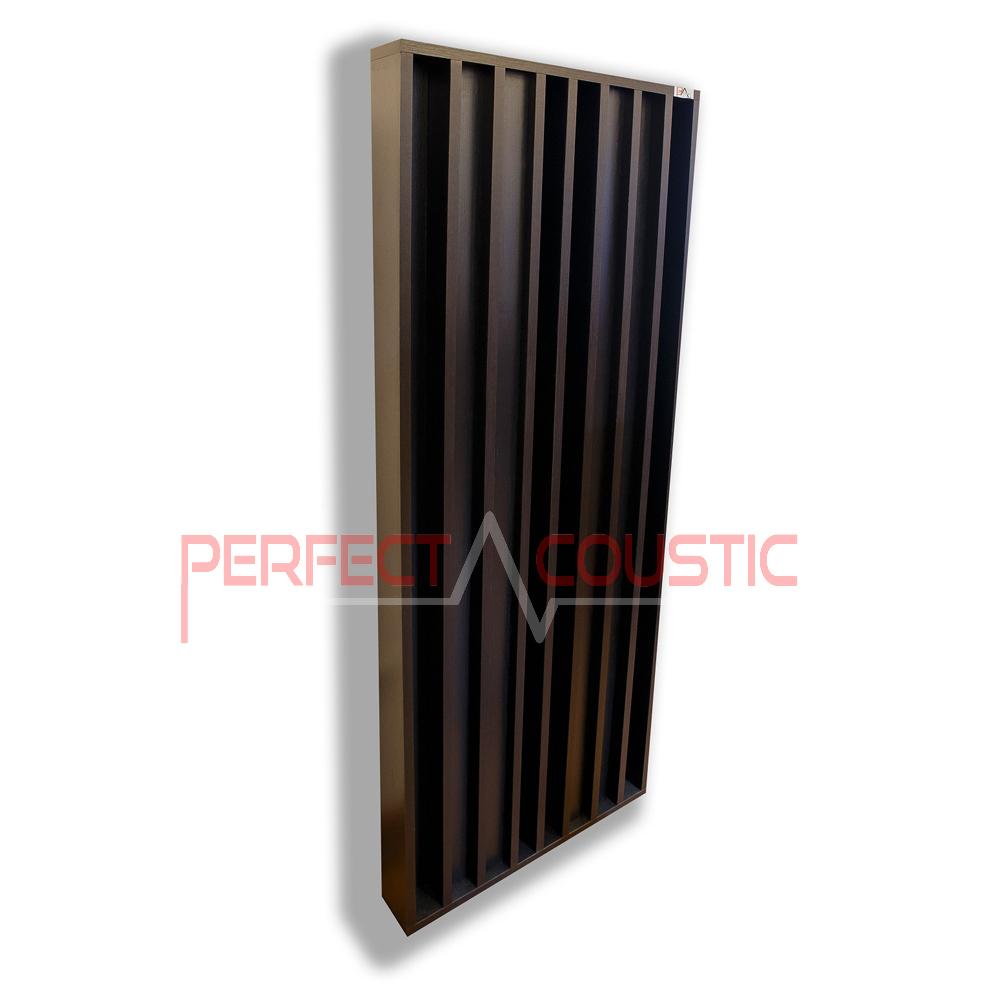
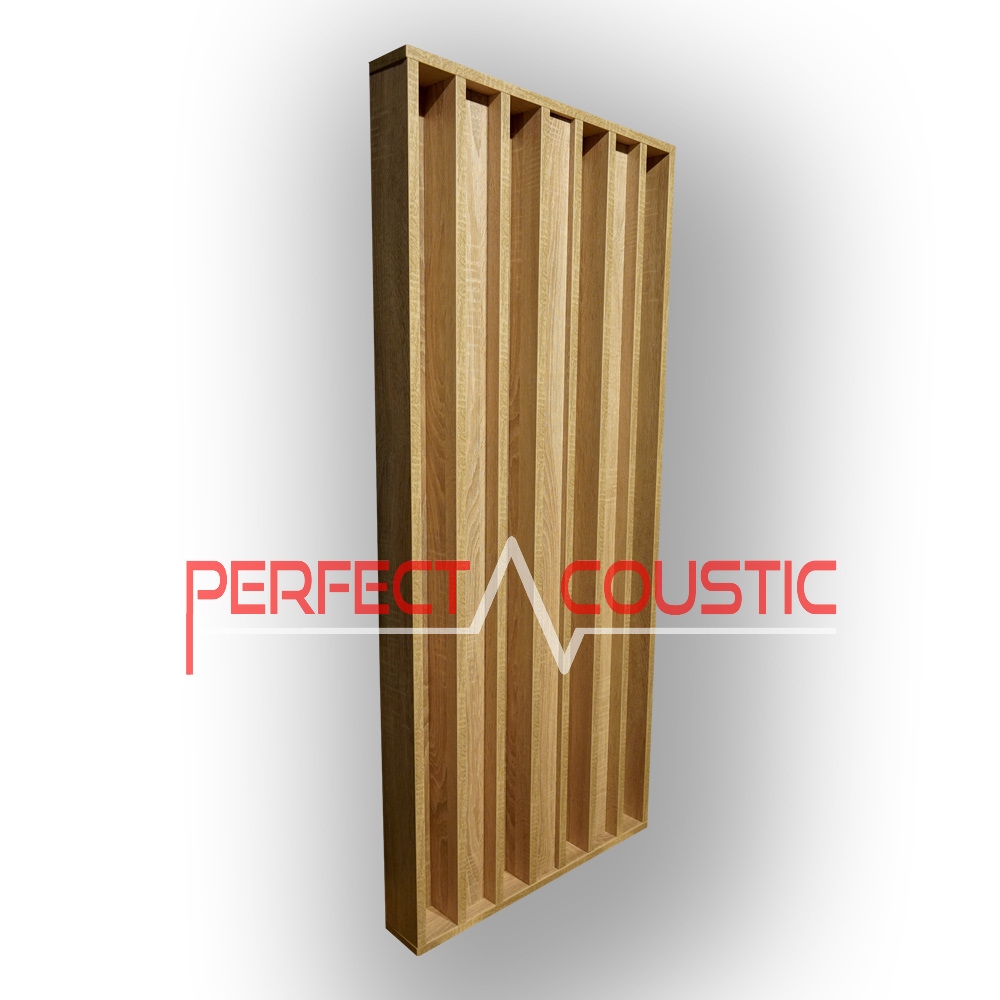
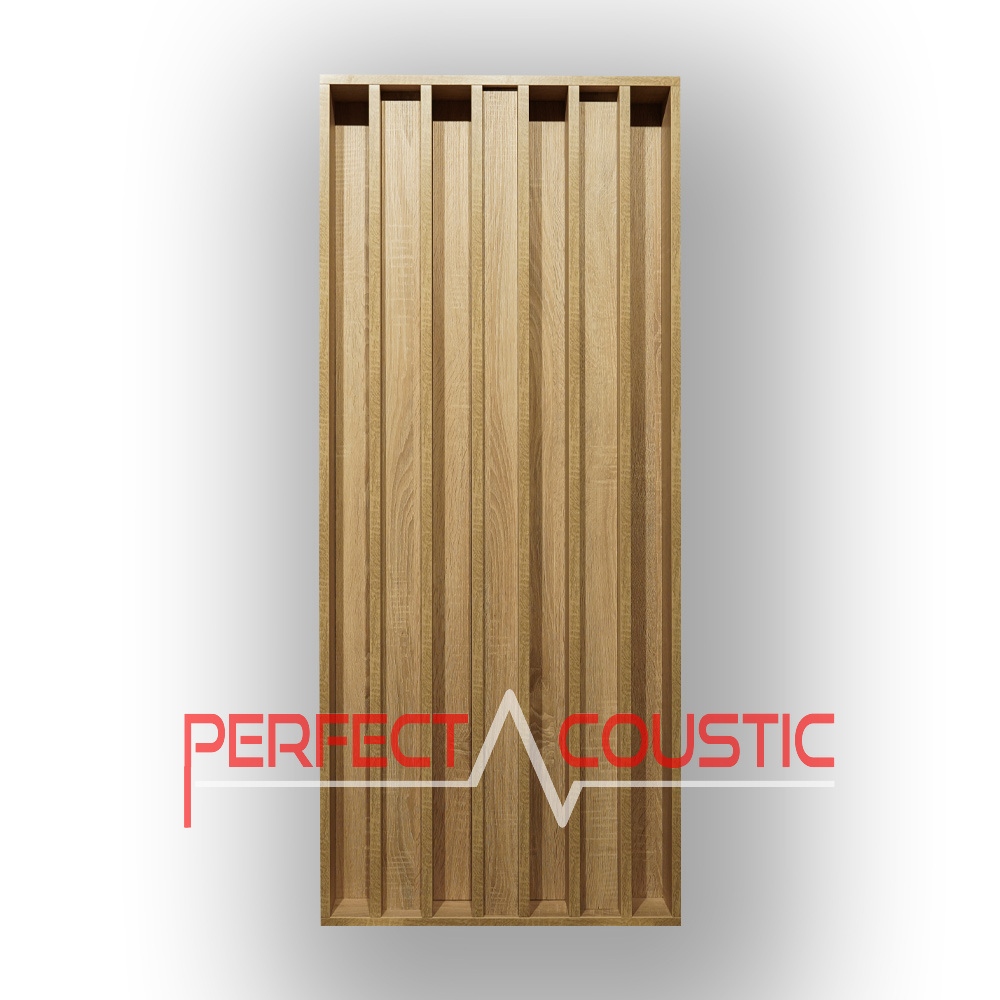
QRD Diffuser
171 € – 269 € +Vat
Size: 120x60x10cm 17kg, Size: 104x60x10cm 14kg. Our customers with an EU corporate tax number can buy tax-free!
Shop with Confidence: 14-Day Money-Back Guarantee!
In the case of a country outside the European Union, the buyer has to pay the customs charges on the parcels. The process and customs clearance is handled automatically by DHL Courier.
On weekdays between 07:00 and 15:10.
info@perfectacoustic.co.uk
- Free delivery to EU countries for orders over 200 € ! Free delivery to countries outside the EU for orders over 400 € !
- The production time for panels and carpets is 1 week, curtains 2 weeks.
Description
You can order a “Free” Online Acoustic Measurement here!
Measurement is 16 EUR without tax- but if you buy, we will deduct it from the amount of the product! So you will definitely order what you need!
The shipping cost of the ordered product (s) will be displayed after placing the product (s) in the cart!
Countries within the EU: Our customers with an EU corporate tax number can buy tax/VAT-free)!
Please indicate your registered business / corporate EU tax number in the comments when ordering. Once we’ve verified, we’ll send you a new tax-free invoice for payment.
Citizens of countries outside the EU that can buy without VAT: United Kingdom, Norway, Switzerland, Lichtenstein, San Marino have to pay customs duties according to their own country’s tariffs when receiving the product.
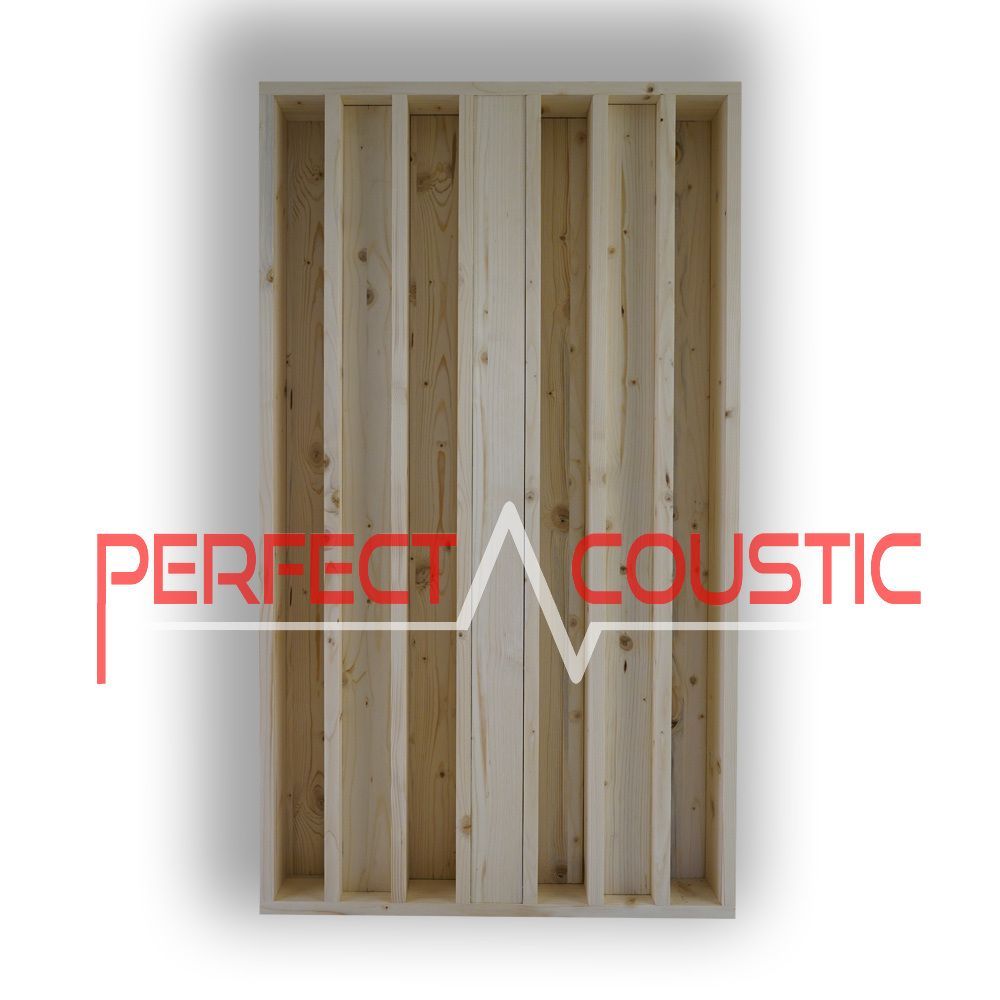
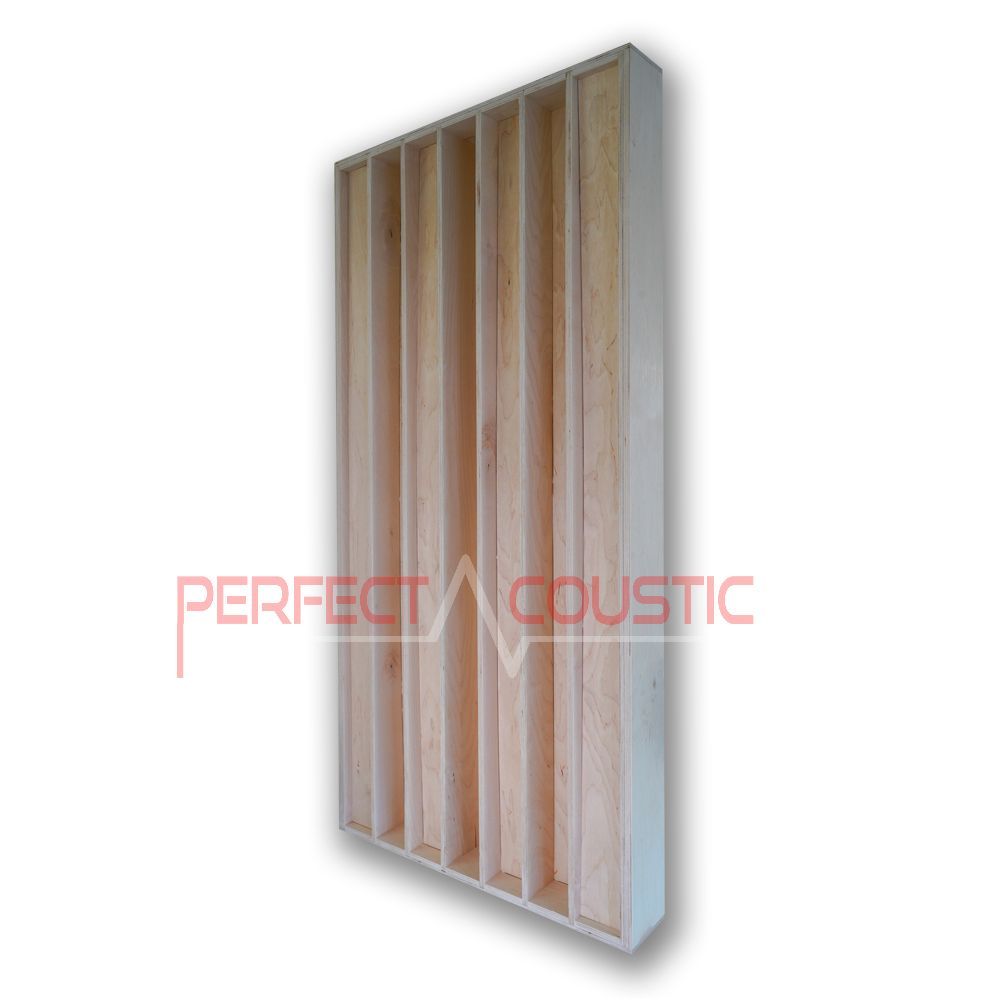
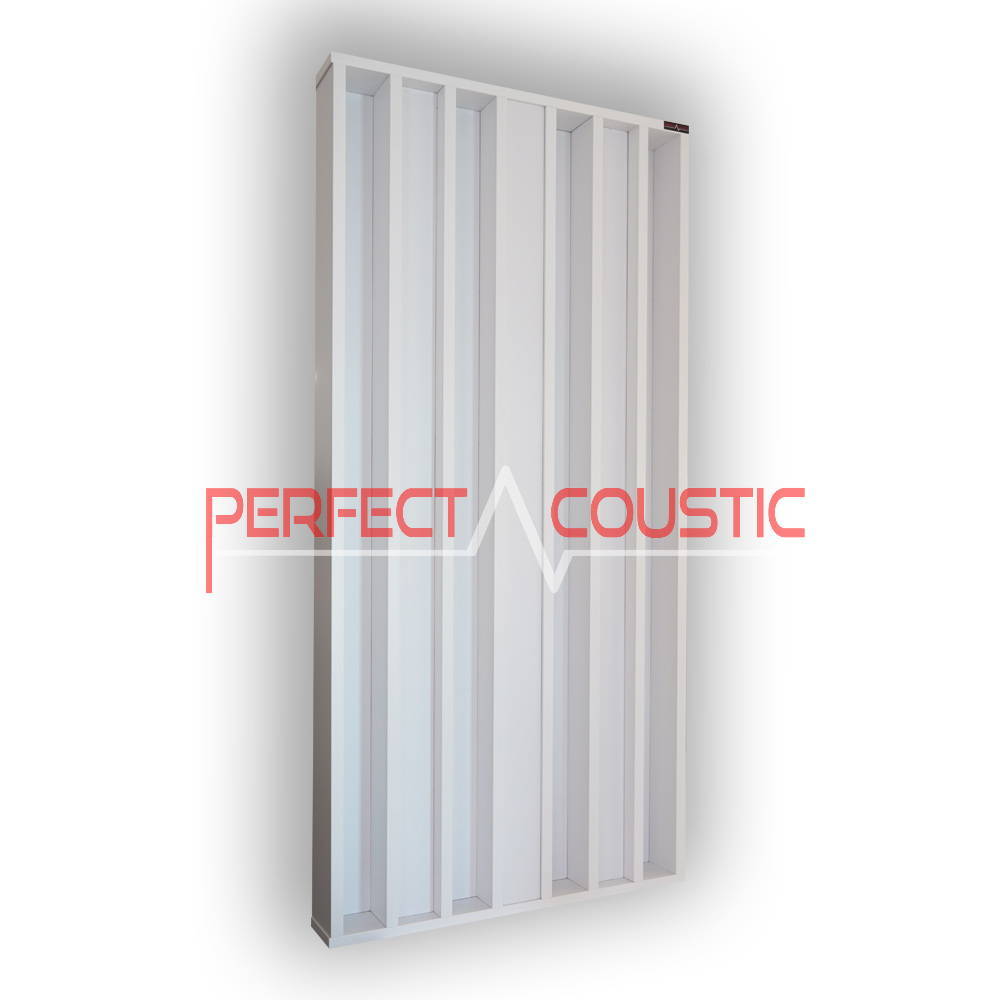
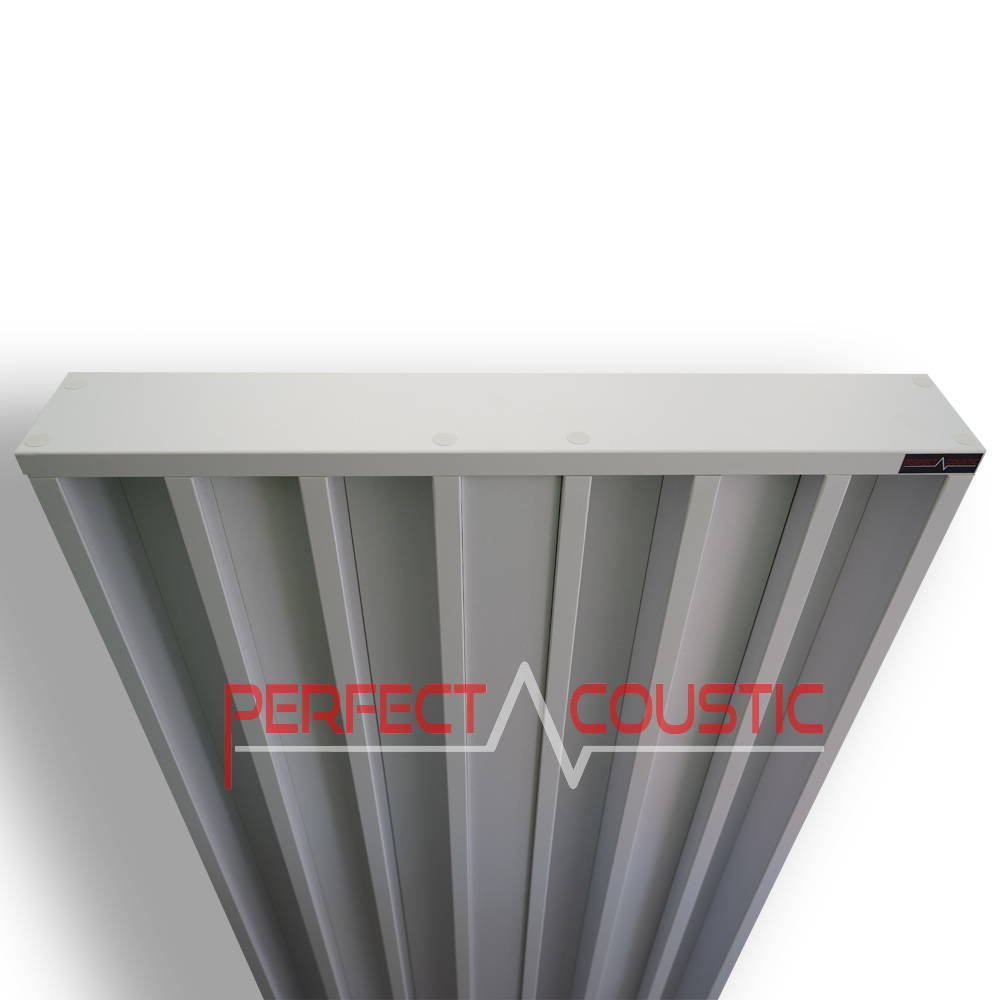
7 lamellae
- Size: 120x60x10cm Weight 17kg
- Size: 104x60x10cm Weight 14kg
The properties of QRD diffusers
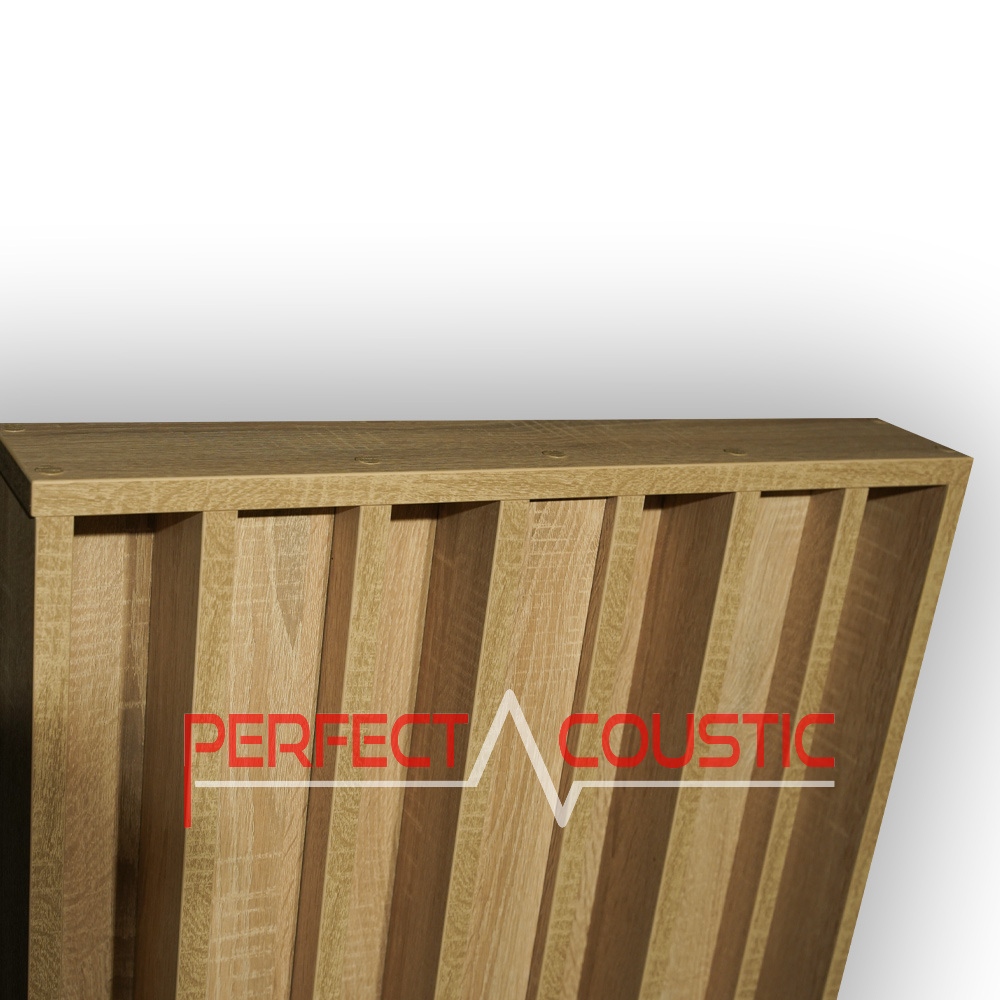
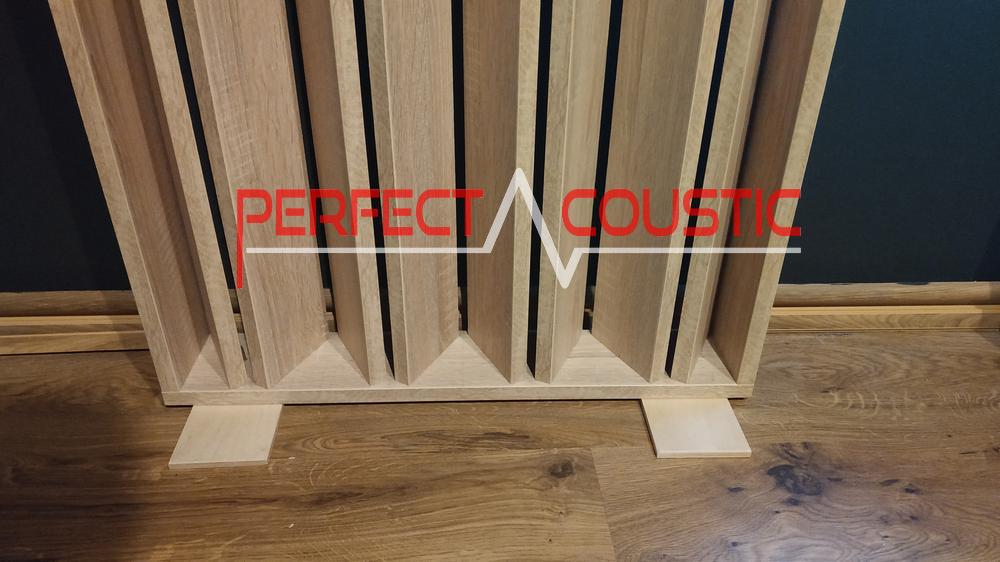
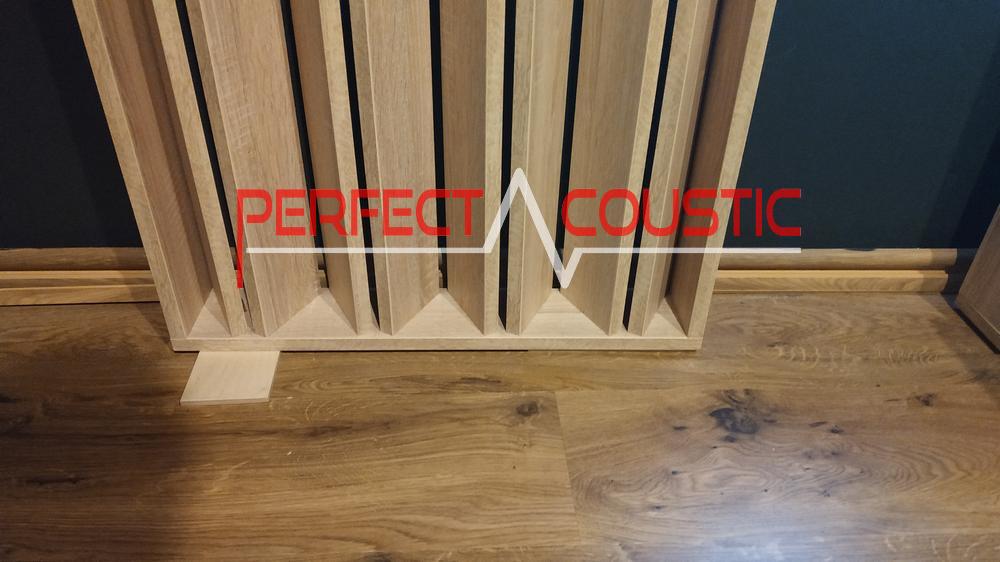
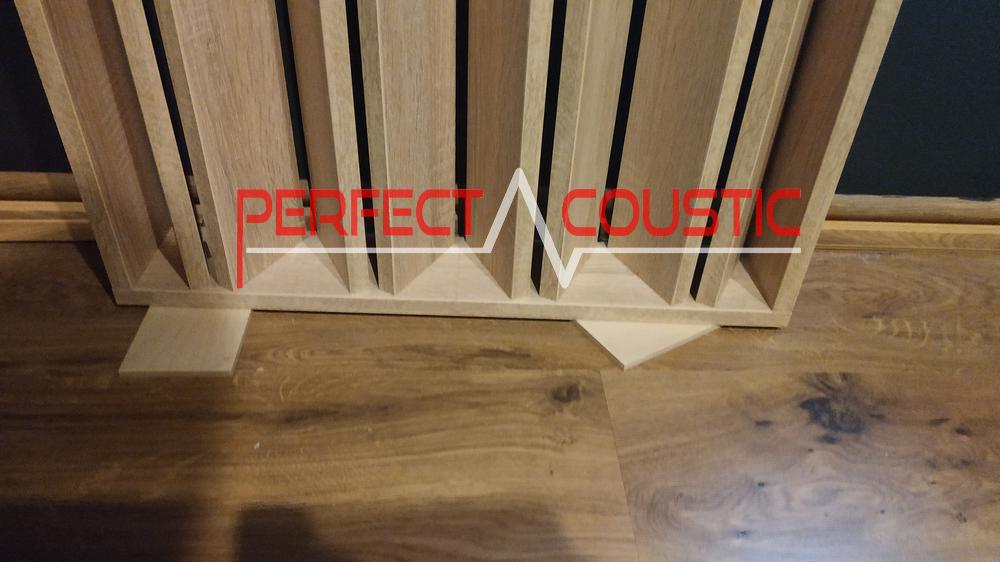
Diffusers are made of laminated blockboard or genuine pinewood.
With their design, we tried to achieve that it diffuses the sounds in the largest bandwidth while absorbing the bass.
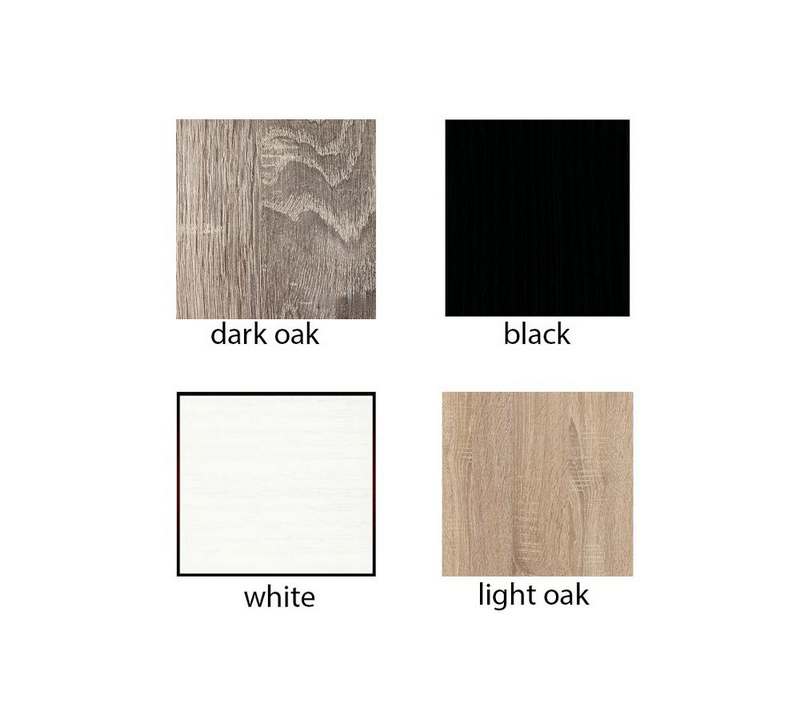
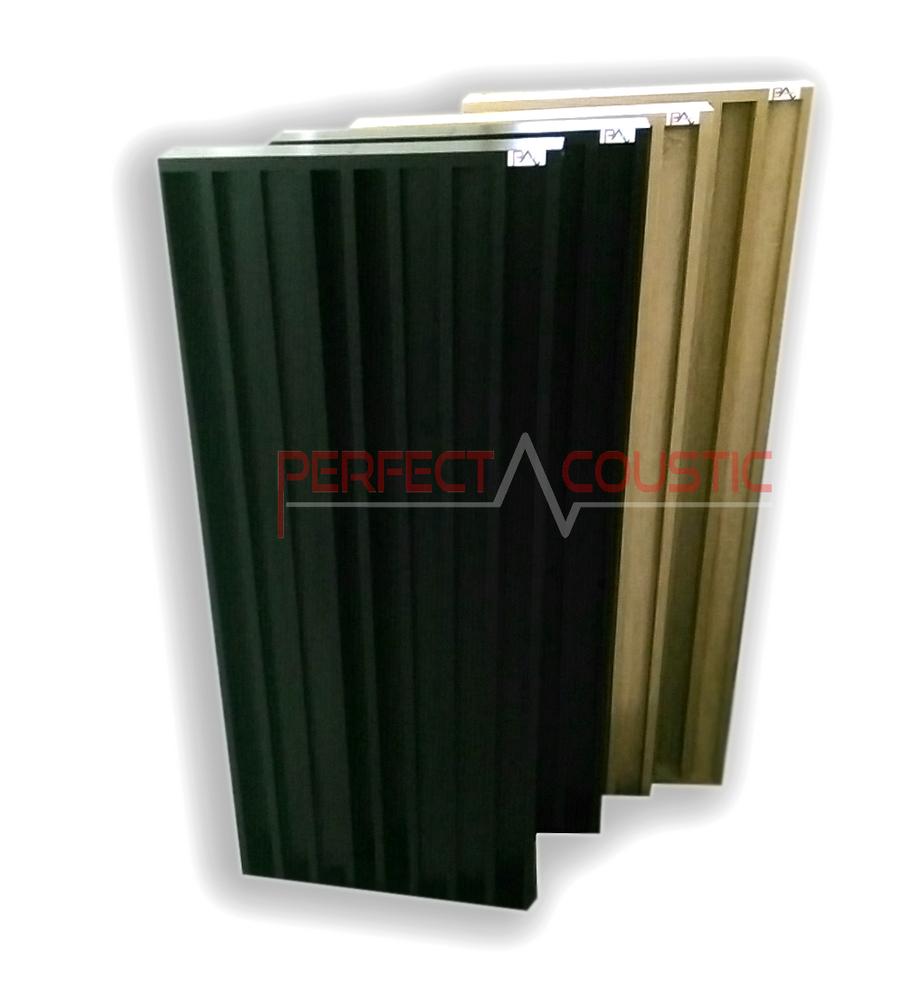
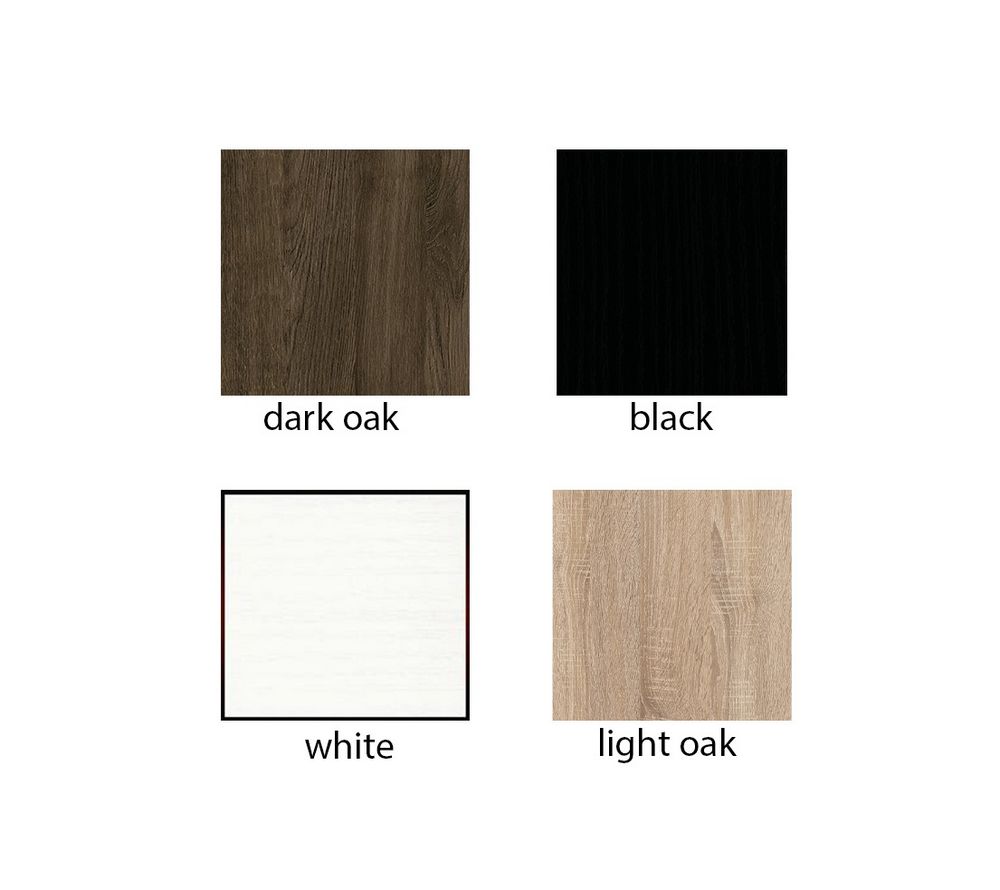
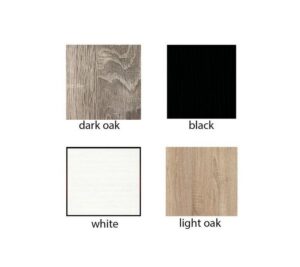
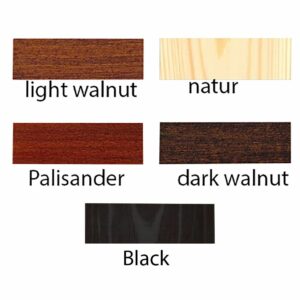
For those places where the average sound is not enough, there are colors:
- natur, real wood (pine) 104x64x10cm, 120x64x10cm size
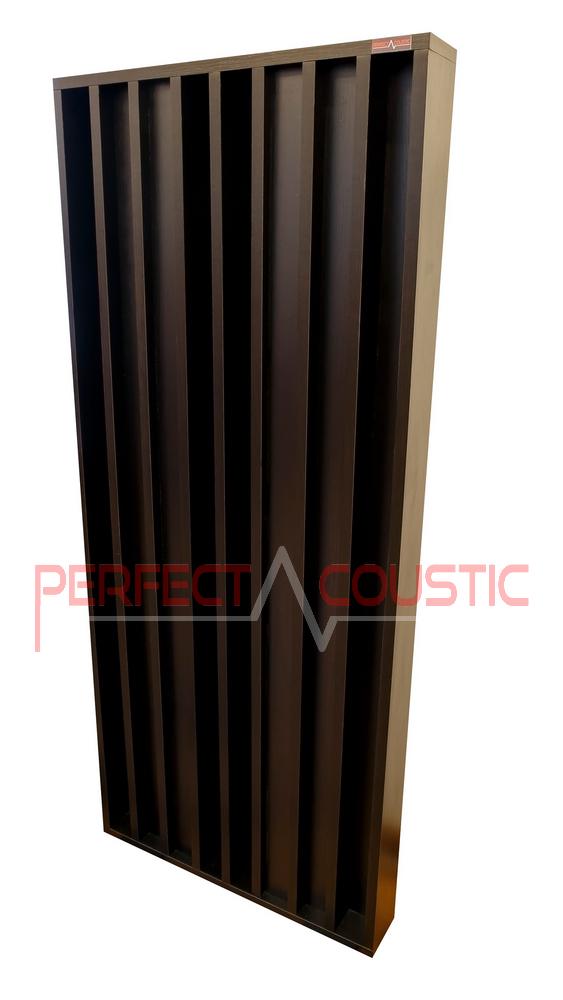
- dark, laminated board 104x64x10cm size
- light, laminated board 104x64x10cm size
- white, laminated board 104x64x10cm size
- black, laminated board 104x64x10cm size
Foldable wooden legs are also available on request.
Science behind diffusers
The diffuser is a first-order device designed to diffuse the directed, sound waves and decrease the primary reflections, the standing waves, and the rattling echo. It is excellent complementary advice for a sound absorption panel, as it’s not draining the sound energizer acoustic panel does.
The QRD reflects the energy into the room. However, contrary to the flat and straight reflective su aces, which reflect energy, tin diffusers diffuse the sound in wartimes directions and at different times thanks to the wells of varying depths. That eliminates the direct mirror point reflection and gives the impression that it is in a wider and larger environment.
Although people have used the funds since the Roman time modern mathematics created new designs in the past years, which have measurable results possible to calculate. The physician and M. Schroeder – the moving spirit of first-order diffusers – created a series of math man atically calculated wells of varying depths. These were set to diffuse an equal volume of the wavefront on pre-calculated dimensions.
Theory
The sound arrives and enters the phase grid of the diffuser where it will be reflected in energy exist As the depth of the wells varies the energy exists at different times relatively. This moves the relative phase orwavefrontdifference (time shift) and spreads the energy among the wells creating thereby a spatial diffusion.
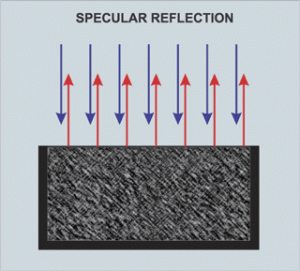
The sound arrives as wavefront (blue). Without diffusion, the flat and hard surface of the wall reflects the energy wavefront a mirror which causes echo. These can be even the first-orechoesreflections, which we hear in the form of a rattling echo.
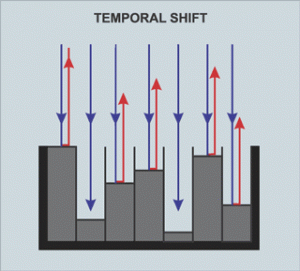
The wavefront enters – the energy strikes first into the shallow wells and is reflected into the room while the remaining part with timeless. Timeshift happens with time when it enters, then real frequencies enter the diffuser.
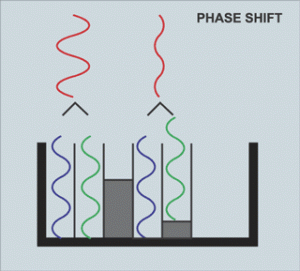
When identical frequencies enter and exit the same wells simultaneously, they are in phase and strengthen each both happen about the rent times the dip phase will happen about the frequency and the depth of the well.
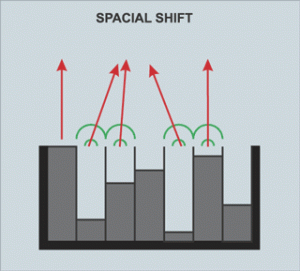
Once the sound waves exit the different wells they interact and the energy y will be diffused the setting of the low-frequencyich causes a horizontal “spatial shift”. This dissipates the sound in the room resulting greater sense of space.
The setting low-frequency performance
The sound consists of various air molecule compressions – which are wavelengths- that vary depending on the frequency. Lower frequencies have a shorter frequency than high ones.
This makes more energy at the same amplitude than the shorter high-frequency wavelengths, which make makes control even more difficult. In addition, it is generally accepted that the sound begins low-frequency tonal above the range of 300.
If a diffuser’s primary function is to break up directional sound energy then the optimal diffuser must reach down into this lower frequency range. These criteria determine the low-frequency performance objective for the users
What about planning?
When planning the first-order diffusers the deep density of the material and the specific gravity determine the lowest frequency that it is abused. It is so importcausingat the diffuser should be structurally rigid and heavy enough in told that the bass causes unexpected resonance and it should be of high weight enough for the en by not just passing through the wells.
This is rather related to the sound diffusing effect of the diffuser which does not stop at a given frequency but has a decreasing effect as the frequency decrease letting the sound operate smoothly from 150Hz. As most people agree that it can handle the sound even below that frequency range it is advisable to take into account also the lower frequencies.
High frequencies
Clap your hands for fun in an empty room and you will probably hear a series of echoes as they are bouncing on the wall, the ceiling, and, the floor and are reflected from there. We call that high-frequency which is very powerful in rectangular rooms with hard surfaces.
What you hear is the high-frequency waves bouncing back on these surfaces. High frequencies are rather directional compared to the low frequencies which are why they act as a bouncing ball. Compared to the bass they quickly lose their energy at the same amplitude when they pass through any agent such as air or solids.
How can I use the QDR diffuser?
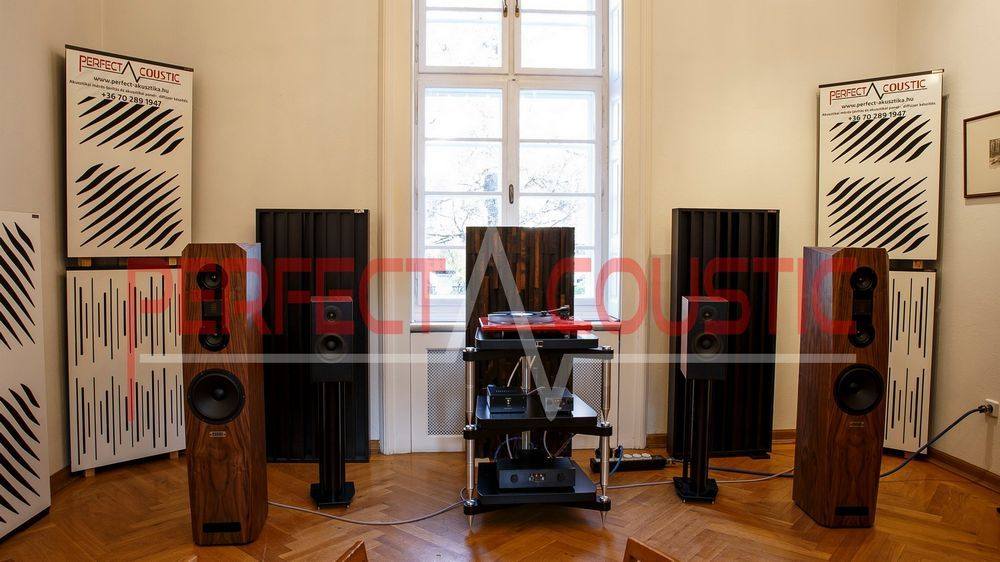
The diffuser is a high-performance diffuser designed for professional studios and more sophisticated home theatres and hi-fi rooms.
The QDR series is optimized so that it would be possible to mount several diffusers side by side. That enables the client to set the desired number of diffusers in a place that covers the desired wall. After installing them to their position the problems such as modal distortion, rattling echo and standing waves decrease significantly.
Composition:
The diffuser must be heavy and rigid to function well and also in a lower frequency. Of course, that leads to questions such as positioning or mounting. The good news is that we designed the QDR diffuser so that it can be easily and quickly mounted. You have to mount it with the same technique as in the case of a series of kitchen cabinets.
If you mount it on the wall you have to put it later level at a sitting position so that the center of the diffuser should be at the level of your ear. Of course, you do not have to mount these diffusers as they stay stable on the ground and fully do their center
Sound diffuser positioning
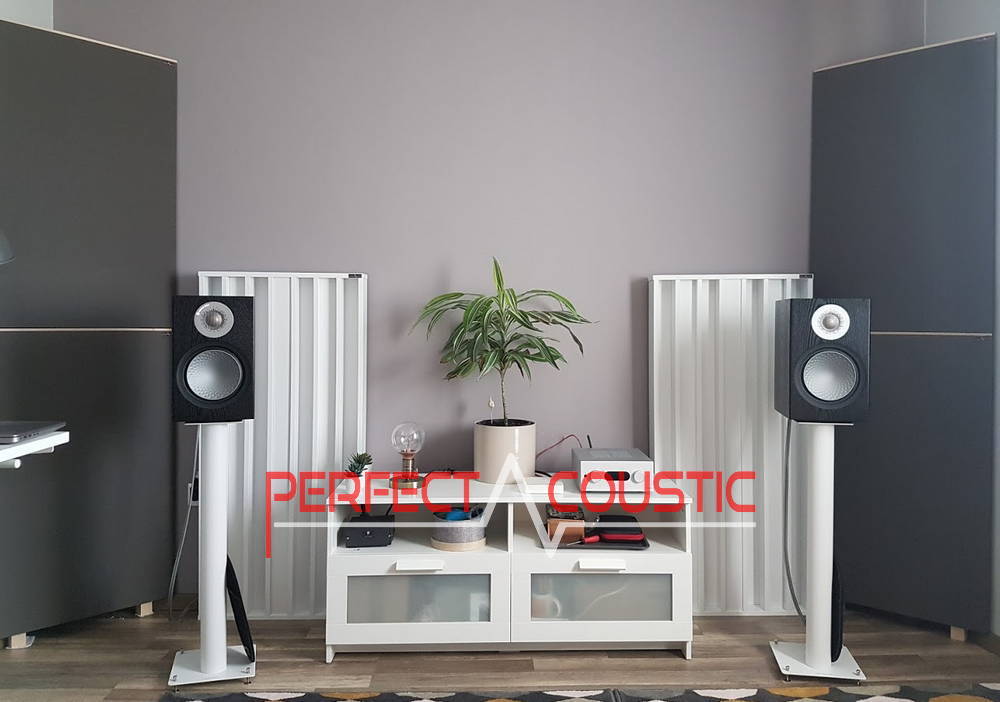
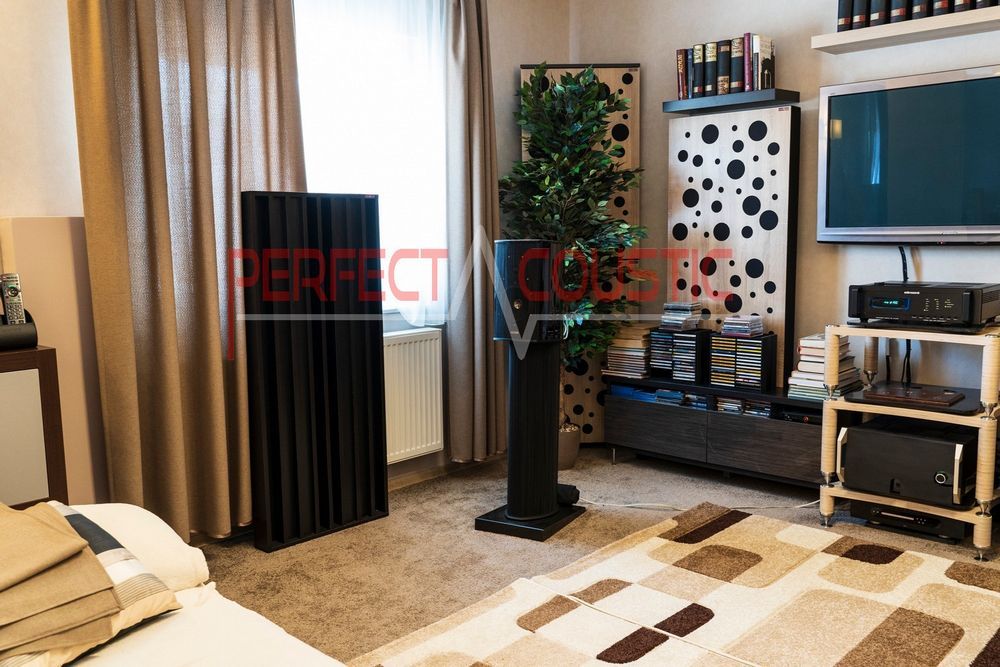
The optimal position in a room is usually behind the listening position or behind the loudspeakers on the right or the left side. Of course, a wider room will provide a wider diffuse area. In rooms with larger workspace, it is advisable to combine it with membranes or broadband acoustic panels to save money.
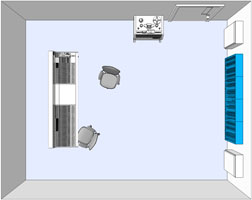
Wide wall spaces
In rooms where the wall behind the listening position is very wide, you can decrease costs by adding a broadband acoustic panel while it handles the bass. This is particularly important to improve the acoustics and AC, having a smooth sound in the listening position.
If you want the same while diffuser you can order a custom-sized panel as well. Custom size production does not increase the price. Its alignment will be simple and attractive, resulting in a balanced diffusion.
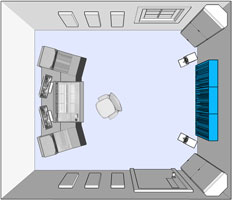
Flush mounting on the wall
Do you build a control room, home theater,tre, or, studio? You can mount the QRD diffuser just as easily as a shelf. The flush mounting does not affect the diffusion performance but it can improve the aesthetics of the room design if you are willing to do the framing. If the studio is already finished you can build a false wall for the mounting of the diffusers. It can be a great opportunity to provide acoustic isolation between the rooms or to install a big built-in bass trap.
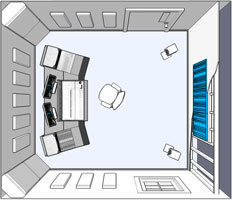
Audiophiles are probably the most demanding listeners. By adding QDR diffusers the disturbing reflections may be eliminated in such listening spaces while it maintains and may also increase the sense of space and air. This is particularly important when listening to jazz or classical music that has been recorded in an acoustically spacious area as the advantage of these recordings is the natural acoustic environment.
QDR diffuser FAQ
Do all diffusers function the same way?
No. The way the diffusers operate is that they reflect and diffuse the sound energy in the room. The massive diffusers of high density are capable to control the low frequencies while the thin and light diffusers can control only the higher frequencies. The size, weight, and design of diffusers play a very important role in their operation.
Why do certain companies state that the plastic or styrofoam or foam diffusers will be effective?
Because of the income, of course. The effect is not important for them but returning customers are. As these are generally cheaper (not always) everyone starts with them and only after they rerecognizehat these are ineffective, do r premium quality products come up. Their purse will be considerably smaller by then.
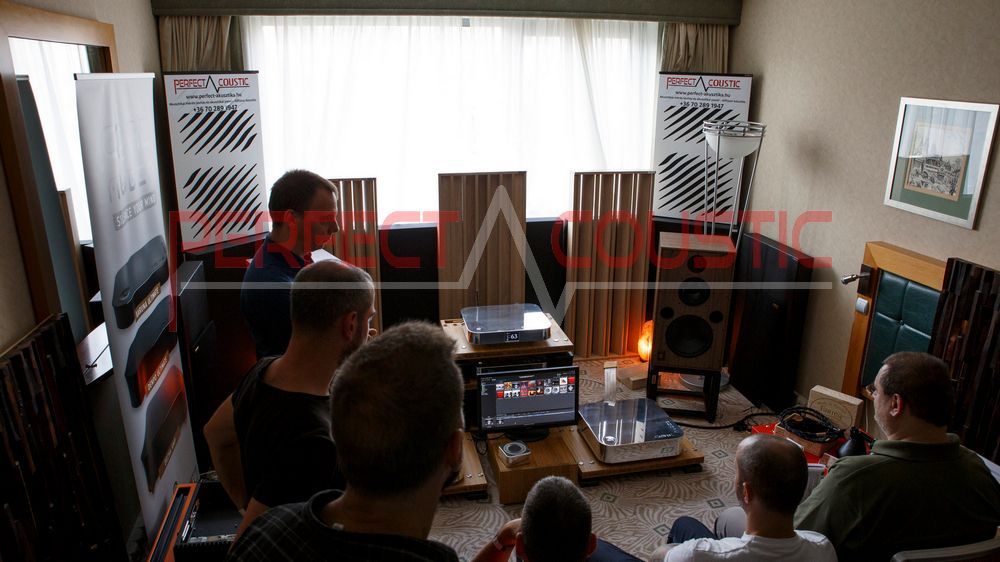
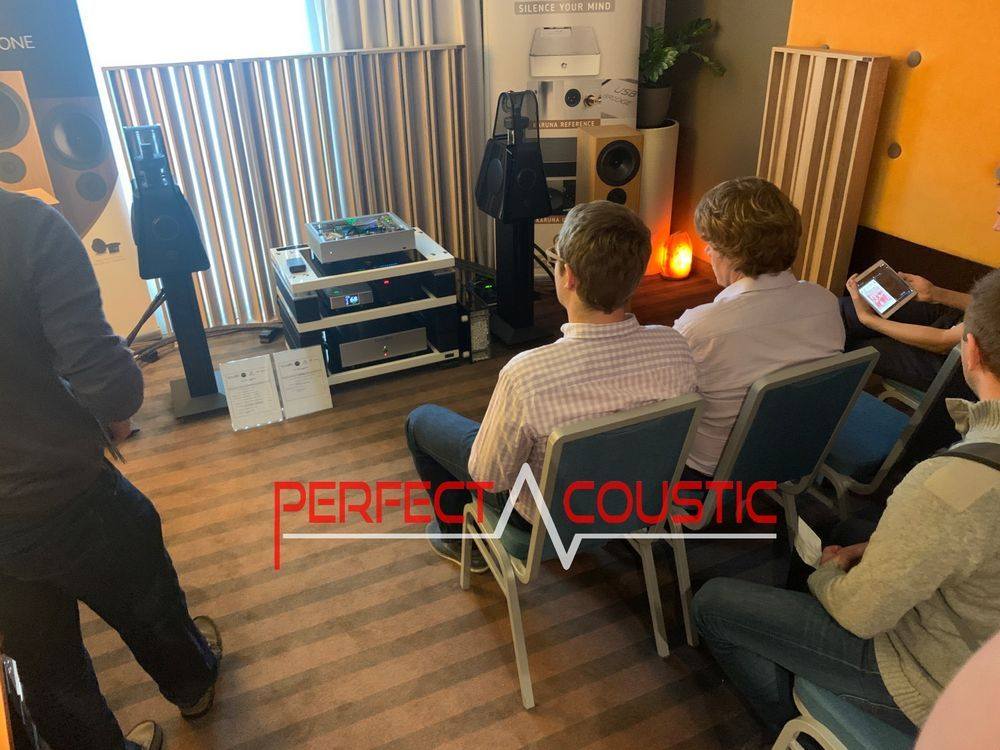
Why is the diffuser recognized?
The problem with the real do QDR differs is that there is no simple way for the production, it is not like a simple bookshelf. The QDR diffusers are mainly handmade, hand glued, hand assembled and hand packed which requires a lot of time. This is why it is so expensive.
Can I prepare my diffuser?
Yes, of course. But it is not sure that it will be efficient. If it is wrongly calculated and measured it will rather do wrong than benefit.
Where is e best place in the room to position the diffuser?
In particular in the primary reflection points, behind the loudspeakers on the right or the left mirror point or behind the listening position.
Can I repaint the diffuser?
Yes, of course, but we, sell it in 5 different cocolorolors natural colors that you can check in the photos.
How do you deliver the diffusers?
We deliver it assembled in 6-layer packaging, ready to use.
Are there any more colors besides the above?
We tried to create such an acoustic panel by which we can treat the entire bandwidth without damaging the high frequencies
We always put great emphasis on the use of materials.
Styrofoam, XPS, foXPS, etc. are not suitable for scattering the sound in the entire frequency range.
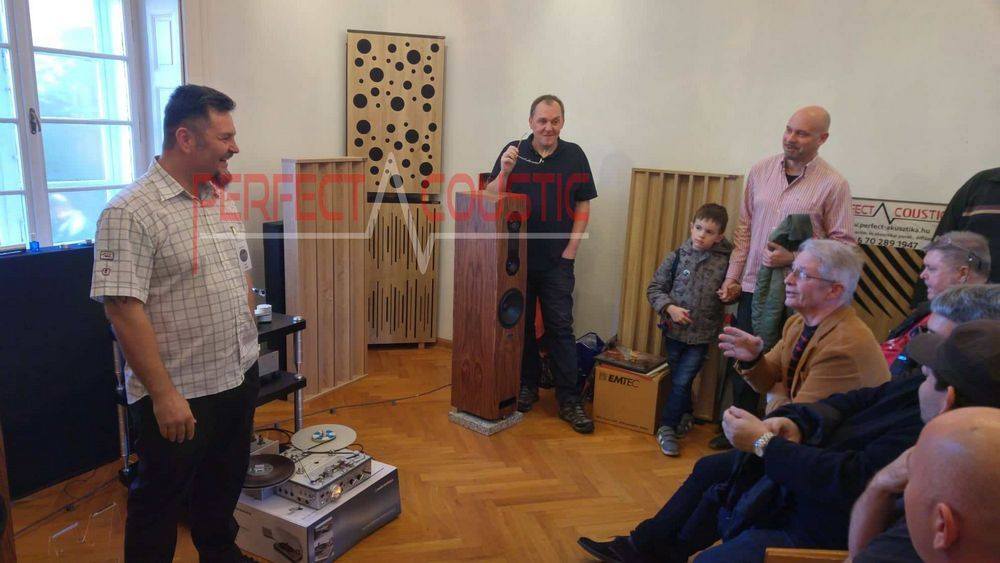
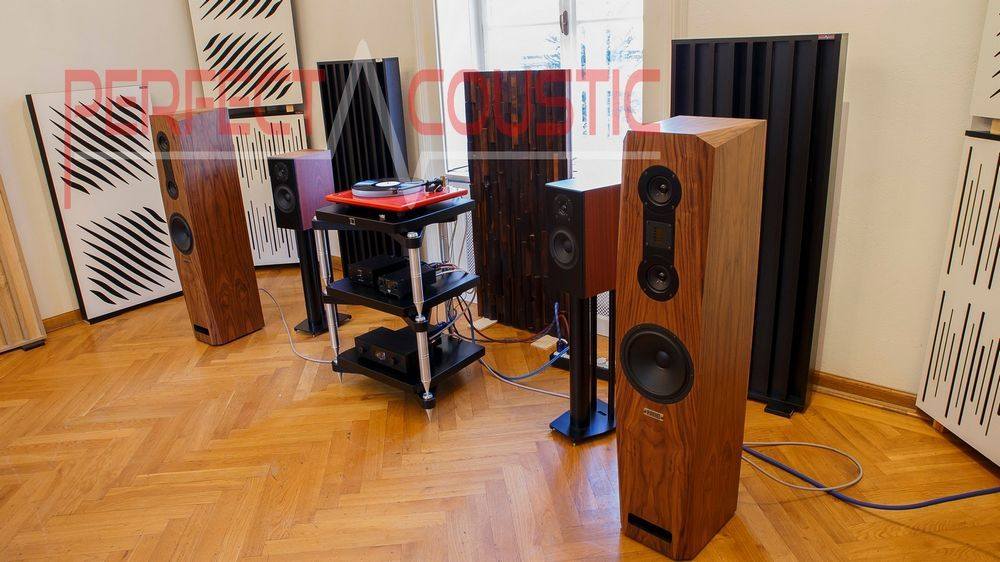
Our diffusers are made of real wood, due to the natural properties of the XPS structure of the wood material (knots, lumps, staining due to leaking resin), the pickling/painting will not be even, and the shades may be different on the entire surface of the diffuser, therefore we cannot accept complaints regarding this.
(The beauty and style of natural wood lie in the fact that due to the veining and the structure, special colors and shades can be achieved during painting/pickling.) SzG
Additional information
| Weight | 17 kg |
|---|---|
| Color | black, dark oak, light oak, natural, white |
| Size | 104x60x10cm, 120x60x10cm, 60x60x10cm |
6 reviews for QRD Diffuser
Questions and answers of the customers
There are no questions yet. Be the first to ask a question about this product.
Related products
-


Grid diffuser
133 € +VatSize: 60x60x6cm 6kg. Our customers with an EU corporate tax number can buy tax-free!
Shop with Confidence: 14-Day Money-Back Guarantee!
In the case of a country outside the European Union, the buyer has to pay the customs charges on the parcels. The process and customs clearance is handled automatically by DHL Courier.
-

3D acoustic diffuser 70x70x10cm
122 € – 139 € +VatShop with Confidence: 14-Day Money-Back Guarantee!
In the case of a country outside the European Union, the buyer has to pay the customs charges on the parcels. The process and customs clearance is handled automatically by DHL Courier.
-

Helio curtain for front door – customized sizes
Density 510g/m, Duplex layer: 1020g/m, Thickness 2mm. Duplicate layer 4mm soundproof level: 10-15dB
30-40% thermal insulation
In the case of a country outside the European Union, the buyer has to pay the customs charges on the parcels. The process and customs clearance is handled automatically by DHL Courier.
-
Flexi acoustic panel with adjustable wooden slats
194 € – 287 € +VatDimensions: 120x60x18cm 22kg, 104x60x18cm 20kg.
Shop with Confidence: 14-Day Money-Back Guarantee!
In the case of a country outside the European Union, the buyer has to pay the customs charges on the parcels. The process and customs clearance is handled automatically by DHL Courier.


Kazi –
You make a very good sound.Nice workmanship.I can only recommend!
Gábriel –
Many have recommended these panels.
I thought after that many reviews I wouldn’t shoot next.
And they were right.
Like service as the quality of the product is excellent!
Go to the 5 stars!
Kazi –
There is only such qrd diffuser in my studio.I can only recommend!
Endri –
Since I bought 4pc QRD diffusers, I love working on oth.Go to 5 stars.
Thanasis Tsiroukis –
My new real wood qrd diffuser just arrived today. I already own 2 qrd’s of the previews model, and i must say that the new one’s are even better!!! Great work perfect acoustic!!!
admin –
Thanks! Glad you are satisfied!
Peter D. –
Very good quality. I am maximally satisfied.