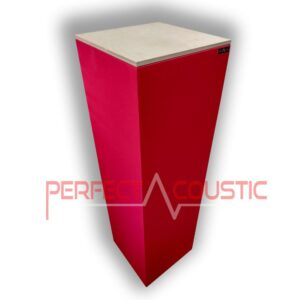
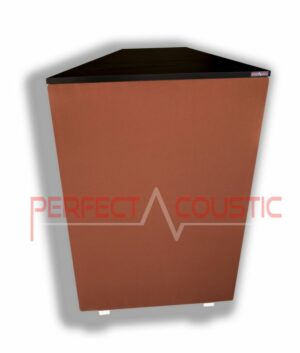
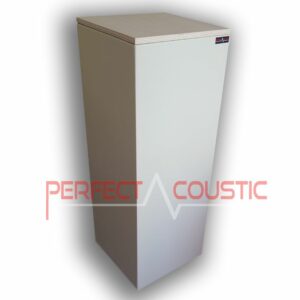
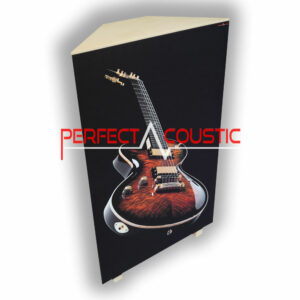
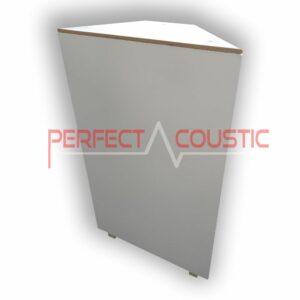
Broadband and diaphragm bass traps are the most common sound absorbers. They are distinguished by their design and material. Broadband panels are filled with acoustic cotton built into a strong wooden structure. This cotton weighs 90 kg/m³. It is then covered with a very dense acoustic silk. This silk does not allow dust to pass through. These acoustic bass traps can be made in trapezoidal and cubic shapes. Both shapes fit perfectly into the corner of the room. Another type of bass absorber is the sound absorber with membrane sound absorption. Here too, we distinguish between 2 types:
One is the leather membrane sound absorber.
This bass trap is covered with a high-density artificial leather. This leatherette has an air gap underneath it, so that there is nothing to prevent the leather from shaking. The deep sound that moves heavy leather reduces the sound below 600Hz to a great extent.
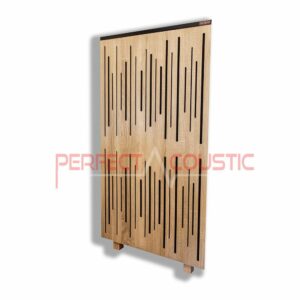
Another membrane solution is the wood membrane.
This type of bass trap is also very popular. It works on the same principle as the leather membrane, except that it can absorb a little more bass but only below 200Hz. The reason for this is that the wooden diaphragm only allows sounds below 200Hz to pass through. Of course, like the leather and the wood diaphragm, the same wood structure and the same sound absorbing material is used behind the wood diaphragm as in the wide-band corner bass traps.
Why is too much bass a problem?
The corner bass trap is one of the most important elements of acoustic treatment. Too much bass can cause the reverberation time to increase below 150 Hz. The result is distorted bass, which detracts from the experience of listening to music or watching a movie.
How do bass absorbing diaphragms help improve acoustics?
Walls, ceilings and corners cannot absorb deeper sounds. Instead, they reflect them. Membrane corner bass traps are effective at attenuating bass sounds even in the lowest ranges. They are effective from as low as 30Hz. This also optimises standing waves in the room. This results in a clearer, more dynamic, realistic and more captivating bass.
Why are our corner bass traps better than bass absorbers made by others?
Only porous materials with a dense structure are suitable for absorbing deep sounds. We only use such materials in the manufacture of our panels. Wood and faux leather membranes, acoustic wool is the best quality you can use, so it is excellent for absorbing deeper sounds. Lightweight cellular foam or sponge materials, on the other hand, are not at all capable of absorbing bass.
From how many hertz are membrane panels effective?
Diaphragm bass traps are available with either a wood or leatherette diaphragm. Wooden diaphragm panels attenuate low frequencies between 30 and 200 Hz, while leatherette diaphragm absorbers attenuate low frequencies between 30 and 600 Hz.
How do membrane bass absorbers work?
Bass traps attenuate the sound that hits their surface by vibrating. They not only attenuate the sound coming into the room, but also the sound coming back out of the wall. It is therefore advisable to move not only the edge panels but also the corner panels a few centimetres away from the wall. This is because deep sounds will travel along the wall and bounce back again. So if you pull the panels further away from the wall you can double the sound that is already moving.
Where can corner panels be used most effectively?
The key is to treat the corners, front and behind the listening position with bass traps. It is worth stacking the panels on top of each other to double the effect. There are times when you want to treat the room with sound absorbers from floor to ceiling. Of course, this would be ideal. But the size of corner panels doesn’t always fit if you stack more on top of each other. In this case, ask us for a custom size for the top bass trap. This will create a perfectly flush corner element column. Place deep sound absorbing panels on the ceiling as well. Either broadband or membrane panels. If possible, leave at least 10 cm between the wall and the bass absorbers. This will double the absorption of sounds below 200Hz.
If you order it, the back of the panels have pre-drilled holes so they can be easily mounted on the wall or ceiling. As they are thick enough in the 11-12-23cm version they are very stable and will stand up to the floor. These dimensions are for the panels.
They can also be used as decorative home accessories.
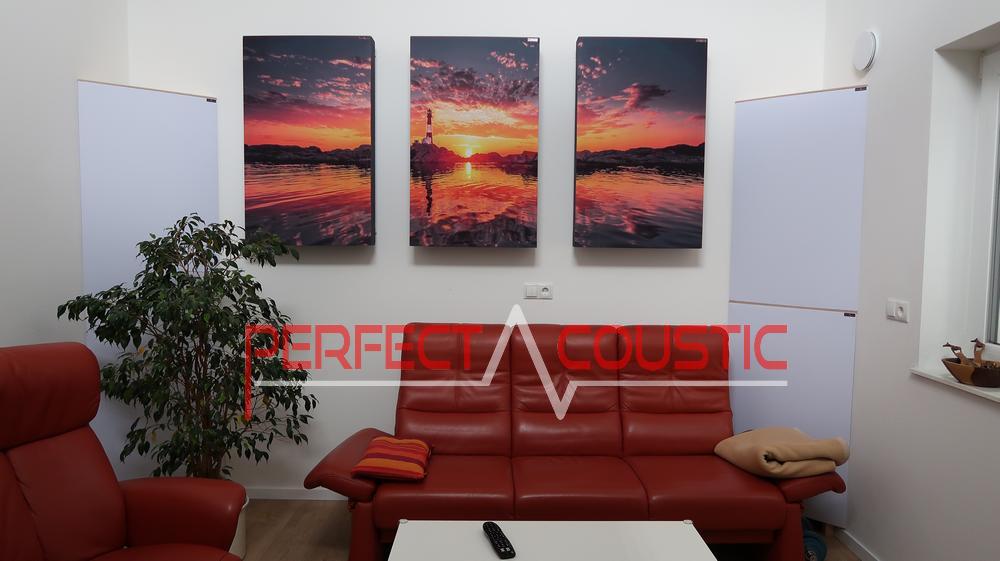
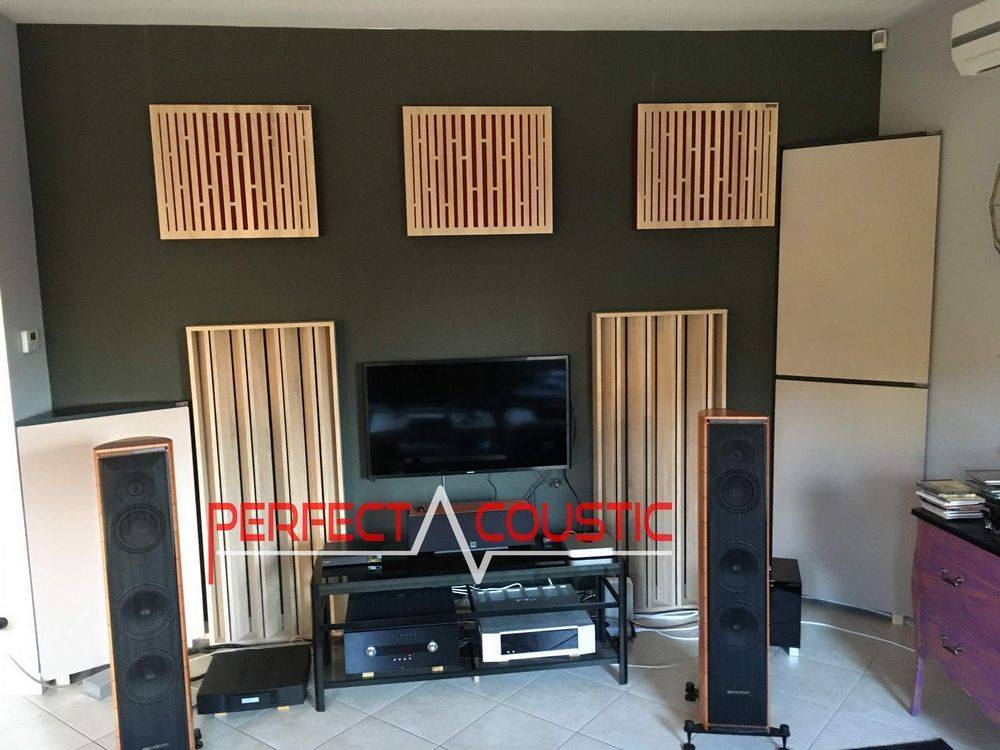
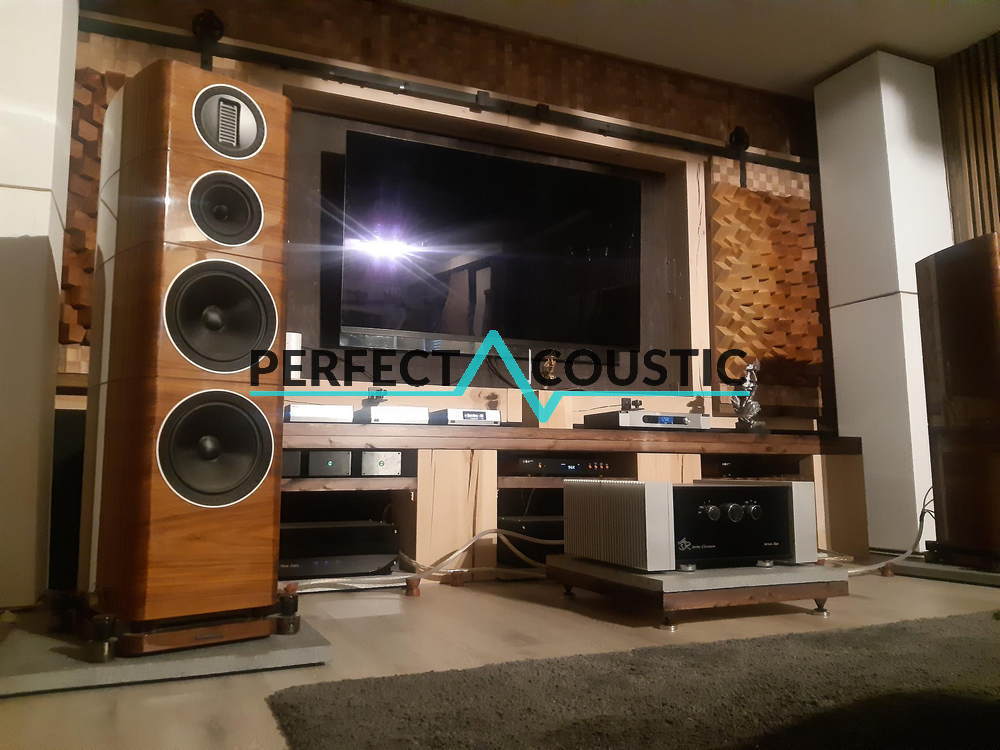
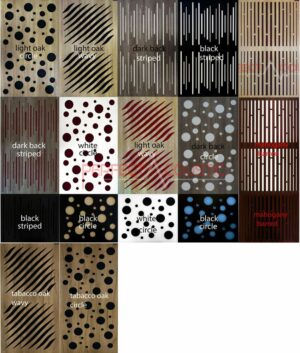
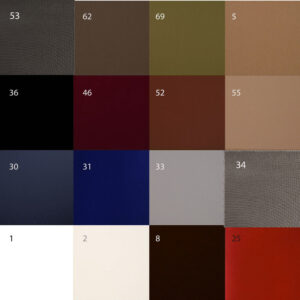
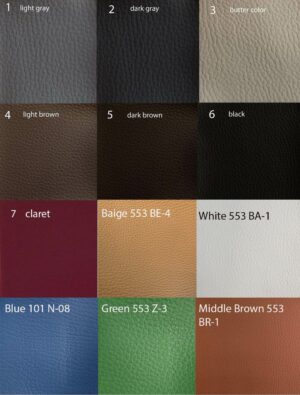
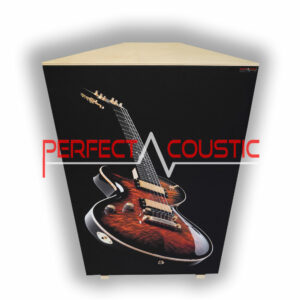
Aesthetic design is an important aspect in the production of bass traps. Almost everyone can find a panel in a style to suit their room. They are available in a variety of colours and sizes, with diffuser fronts or photo prints.
In what type of room is it recommended to use corner elements?
Diaphragm bass traps are recommended for studios, home cinema and living rooms where good acoustics are important and the reverberation time is too long or the high frequencies are too damped.
Our customers with an EU corporate tax number can buy tax/VAT-free!
Shop with Confidence: 14-Day Money-Back Guarantee!
In the case of a country outside the European Union, the buyer has to pay the customs charges on the parcels. The process and customs clearance is handled automatically by DHL Courier.
Our customers with an EU corporate tax number can buy tax/VAT-free!
Shop with Confidence: 14-Day Money-Back Guarantee!
In the case of a country outside the European Union, the buyer has to pay the customs charges on the parcels. The process and customs clearance is handled automatically by DHL Courier.
Shop with Confidence: 14-Day Money-Back Guarantee!
In the case of a country outside the European Union, the buyer has to pay the customs charges on the parcels. The process and customs clearance is handled automatically by DHL Courier.
Shop with Confidence: 14-Day Money-Back Guarantee!
In the case of a country outside the European Union, the buyer has to pay the customs charges on the parcels. The process and customs clearance is handled automatically by DHL Courier.
Shop with Confidence: 14-Day Money-Back Guarantee!
In the case of a country outside the European Union, the buyer has to pay the customs charges on the parcels. The process and customs clearance is handled automatically by DHL Courier.
Shop with Confidence: 14-Day Money-Back Guarantee!
In the case of a country outside the European Union, the buyer has to pay the customs charges on the parcels. The process and customs clearance is handled automatically by DHL Courier.
Shop with Confidence: 14-Day Money-Back Guarantee!
In the case of a country outside the European Union, the buyer has to pay the customs charges on the parcels. The process and customs clearance is handled automatically by DHL Courier.
Shop with Confidence: 14-Day Money-Back Guarantee!
In the case of a country outside the European Union, the buyer has to pay the customs charges on the parcels. The process and customs clearance is handled automatically by DHL Courier.
Our customers with an EU corporate tax number can buy tax-free!
Shop with Confidence: 14-Day Money-Back Guarantee!
In the case of a country outside the European Union, the buyer has to pay the customs charges on the parcels. The process and customs clearance is handled automatically by DHL Courier.
Our customers with an EU corporate tax number can buy tax-free!
Shop with Confidence: 14-Day Money-Back Guarantee!
In the case of a country outside the European Union, the buyer has to pay the customs charges on the parcels. The process and customs clearance is handled automatically by DHL Courier.
Shop with Confidence: 14-Day Money-Back Guarantee!
In the case of a country outside the European Union, the buyer has to pay the customs charges on the parcels. The process and customs clearance is handled automatically by DHL Courier.
Shop with Confidence: 14-Day Money-Back Guarantee!
In the case of a country outside the European Union, the buyer has to pay the customs charges on the parcels. The process and customs clearance is handled automatically by DHL Courier.
Broadband and diaphragm bass traps are the most common sound absorbers. They are distinguished by their design and material. Broadband panels are filled with acoustic cotton built into a strong wooden structure. This cotton weighs 90 kg/m³. It is then covered with a very dense acoustic silk. This silk does not allow dust to pass through. These acoustic bass traps can be made in trapezoidal and cubic shapes. Both shapes fit perfectly into the corner of the room. Another type of bass absorber is the sound absorber with membrane sound absorption. Here too, we distinguish between 2 types:
One is the leather membrane sound absorber.
This bass trap is covered with a high-density artificial leather. This leatherette has an air gap underneath it, so that there is nothing to prevent the leather from shaking. The deep sound that moves heavy leather reduces the sound below 600Hz to a great extent.
Another membrane solution is the wood membrane.
This type of bass trap is also very popular. It works on the same principle as the leather membrane, except that it can absorb a little more bass but only below 200Hz. The reason for this is that the wooden diaphragm only allows sounds below 200Hz to pass through. Of course, like the leather and the wood diaphragm, the same wood structure and the same sound absorbing material is used behind the wood diaphragm as in the wide-band corner bass traps.
Why is too much bass a problem?
The corner bass trap is one of the most important elements of acoustic treatment. Too much bass can cause the reverberation time to increase below 150 Hz. The result is distorted bass, which detracts from the experience of listening to music or watching a movie.
How do bass absorbing diaphragms help improve acoustics?
Walls, ceilings and corners cannot absorb deeper sounds. Instead, they reflect them. Membrane corner bass traps are effective at attenuating bass sounds even in the lowest ranges. They are effective from as low as 30Hz. This also optimises standing waves in the room. This results in a clearer, more dynamic, realistic and more captivating bass.
Why are our corner bass traps better than bass absorbers made by others?
Only porous materials with a dense structure are suitable for absorbing deep sounds. We only use such materials in the manufacture of our panels. Wood and faux leather membranes, acoustic wool is the best quality you can use, so it is excellent for absorbing deeper sounds. Lightweight cellular foam or sponge materials, on the other hand, are not at all capable of absorbing bass.
From how many hertz are membrane panels effective?
Diaphragm bass traps are available with either a wood or leatherette diaphragm. Wooden diaphragm panels attenuate low frequencies between 30 and 200 Hz, while leatherette diaphragm absorbers attenuate low frequencies between 30 and 600 Hz.
How do membrane bass absorbers work?
Bass traps attenuate the sound that hits their surface by vibrating. They not only attenuate the sound coming into the room, but also the sound coming back out of the wall. It is therefore advisable to move not only the edge panels but also the corner panels a few centimetres away from the wall. This is because deep sounds will travel along the wall and bounce back again. So if you pull the panels further away from the wall you can double the sound that is already moving.
Where can corner panels be used most effectively?
The key is to treat the corners, front and behind the listening position with bass traps. It is worth stacking the panels on top of each other to double the effect. There are times when you want to treat the room with sound absorbers from floor to ceiling. Of course, this would be ideal. But the size of corner panels doesn’t always fit if you stack more on top of each other. In this case, ask us for a custom size for the top bass trap. This will create a perfectly flush corner element column. Place deep sound absorbing panels on the ceiling as well. Either broadband or membrane panels. If possible, leave at least 10 cm between the wall and the bass absorbers. This will double the absorption of sounds below 200Hz.
If you order it, the back of the panels have pre-drilled holes so they can be easily mounted on the wall or ceiling. As they are thick enough in the 11-12-23cm version they are very stable and will stand up to the floor. These dimensions are for the panels.
They can also be used as decorative home accessories.
Aesthetic design is an important aspect in the production of bass traps. Almost everyone can find a panel in a style to suit their room. They are available in a variety of colours and sizes, with diffuser fronts or photo prints.
In what type of room is it recommended to use corner elements?
Diaphragm bass traps are recommended for studios, home cinema and living rooms where good acoustics are important and the reverberation time is too long or the high frequencies are too damped.
This website uses cookies to provide you with the best possible user experience. Cookies store information in your browser and perform functions such as recognising when you return to our website and helping our team understand which parts of the website are interesting and useful.
Essential cookies
Cookies that are strictly necessary must always be enabled so that we can save the settings for further cookie management.
If this cookie is not enabled, we will not be able to save the selected settings, which will result in having to re-enable cookies on each visit.