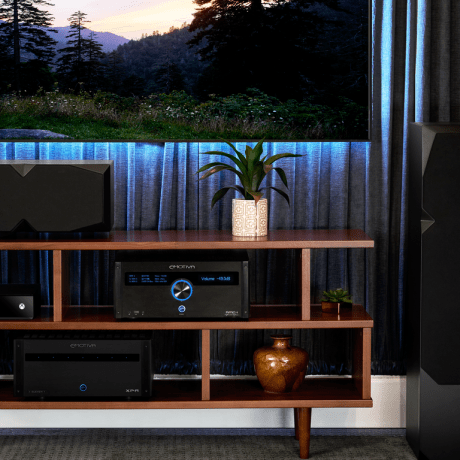
We have tested the Yamaha RX-V581 av-receiver!
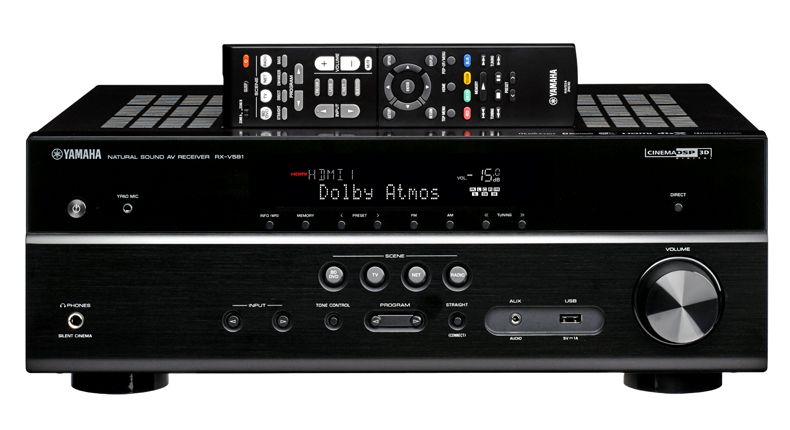
Except the 2 pairs of speaker outputs and 2 parallel amplifiers for subwoofers, the Yamaha RX series V581 model has the same number of analog and digital inputs and outputs as its predecessor. The RX-V581 handles the two plug-in subwoofers in sync with each other, similar to other manufacturers’ 7.2 receivers. HDMI connectors are 4K compatible, and there are 3D, CEC, HDR, HDCP 2.2, 3D, CEC, BT.2020 colour space, 21: 9 picture format, as well as ARC support. For a 7.2 channel home theatre amplifier, the 4 inputs are not too many.
-
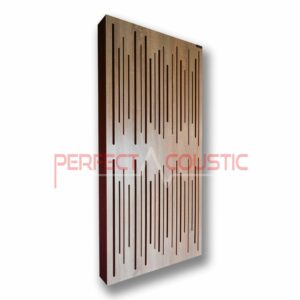
 Art diffusers 60x60x6cm129 € – 168 € +Vat
 -

 Corner bass trap with membrane-108x64x23cm135 € – 142 € +Vat


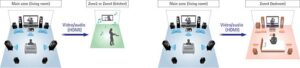
With the help of MusicCast, the AV receiver can be connected to a home network together with other Yamaha devices, so music can be streamed in all rooms of your apartment or house. This requires downloading the MusicCast APP and using a mobile phone, or another mobile device you’re ready to control it. The AV Controller is another application that can be downloaded to your mobile phone wish you replace the remote control. The amplifier has WiFi, AirPlay and also Bluetooth connections. Putting the Bluetooth bi-directional data transfer to purpose, you can also stream from a mobile device and pair headphones with this amplifier. From your home network, you can access shared music on your PC or NAS, as well as online services from the Internet, such as vTuner Net Radio, Spotify, or Pandora.
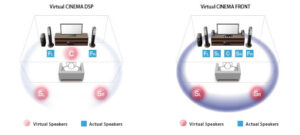
The RX-V581 AV receiver performs audio decoding via the Burr-Brown DACs with a resolution of 192 kHz / 24 bits per channel. It can decode all music audios (CD, SACD) and videos (DVD, Blu-ray), moreover, supports playback of various formats. Lossy files (MP3, WMA, etc.) and lossless formats (FLAC, AIFF, ALAC) are not a problem for this amplifier either. Yamaha receiver has 17 sound enhancement DSP programs, lossy compression music is enhanced by Compressed Music Enhancer, Virtual Cinema DSP and Virtual Cinema Front settings simulate the rear speakers, which is very beneficial if there is not enough space in the room to place the speakers behind the listening position. In this case, the amplifier tries to adjust the surround sound with the front speakers.
Design
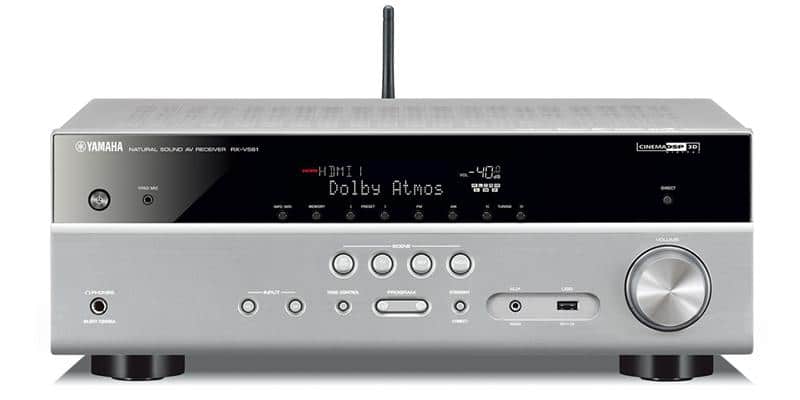
With a nice, elegant design, this device is solid, well built and gives evidence of high quality. The digital and analog circuits are provided with an independent power supply, which is important so that the digital signals do not interfere with the analog settings. The power amplifiers have a restrained design, and thanks to Anti Vibration Technology, the heat sinks have vibration damping. When driven by two channels simultaneously at a load of 6 ohms, the amplifier is capable of 80 watts of power, which is absolutely ideal for use in a medium-sized room.
-
 Bass sound dampening panels with wood membranes91 € – 268 € +Vat
 -
Absorption panels with diffuser-Two in one62 € – 296 € +Vat

Dolby Atmos and DTS: X formats are also supported. So far, almost all the amplifiers we have tested required a firmware update to make the device DTS: X compatible, this receiver has this capability by default.
Room acoustic correction is performed by the YPAO measuring microphone calibration program. When adjusting the speakers, only one “overhead” option can be selected, which means that this setting only applies to the area above the listening position. Other brands on the other hand offer several adjustment options, such as the “top front”, “top middle” or “top rear” positions, which significantly facilitate the positioning and configuration of the speakers.
The sound of the Yamaha RX-V581
While listening to MP3 music, we weren’t completely satisfied, the RX-V581 didn’t meet our expectations in this concern. Besides, the Yamaha receiver delivers dynamic, well-distinguished sound with adequate power, both for music and movies. The basses and sound effects sound very compelling, which is an important consideration for home theatre owners. Of course, the sound of music and movies can only be optimal with proper acoustics! When designing a home theatre room, be sure to pay due attention to the acoustics of the room itself as well!
Our tests took place in a larger cinema room set up in the basement, with printed sound-absorbing panels on the walls and diffuser front panels. Acoustic carpets have been placed on the floor covered with stone, which significantly contributed to the ideal acoustics of the room due to their high density and thickness. We paired the Yamaha receiver with a pair of Definitive Technology D15 speakers and a JTR Captivator RS1 subwoofer.
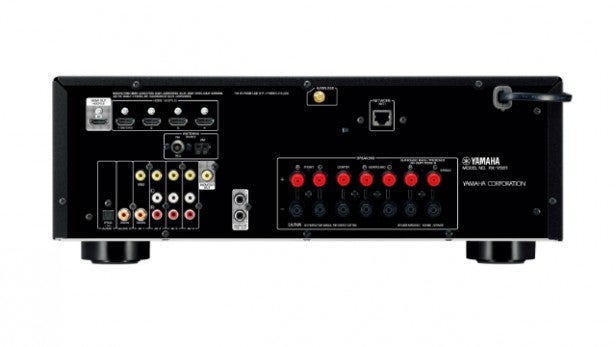
The disadvantages of this AV receiver are the few HDMI inputs (Denon and Pioneer offer seven to eight HDMI inputs and at least two outputs as standard at this price), the overly simple menu graphics and the poor quality of the media player program, moreover, it doesn’t help either that the integration of Dolby Atmos speakers is not flexible at all.
If we were to compare it to a product from another brand, we would think of the Denon AVR-X2300W as an example. But the Yamaha RX-V581 is not as accurate as the Denon AVR-X2300W.
-
 Bass acoustic wall panels with double leather membrane83 € – 260 € +Vat
 -
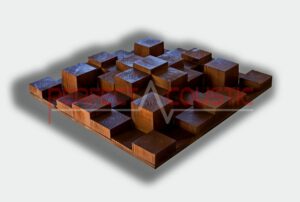
 3D acoustic diffuser 70x70x10cm122 € – 139 € +Vat
For the Yamaha, the mid-range is not fine and firm enough compared to that of Denon. And Denon’s disruptive dynamics in the field of music certainly surpasses the Yamaha.
On the plus side, we shall note that all HDMI connections are Ultra HD 4K / 60p and HDR compatible. They are also HDCP 2.2 certified, which means that 4K Blu-ray discs and sources can be played without any problems.
The RX-V581’s remote control is very responsive, interacts quickly, but the Yamaha AV Controller APP — free to download — makes it much easier to adjust settings.
Conclusion
Its sophisticated appearance and stylish design will be liked by many. The dynamics, details, basses and sound effects are extremely compelling. This AV receiver is DTS: X compatible, which is a major advantage over its competitors, as is its affordable price. The number of inputs was found to be slightly few, and the setup of the Dolby Atmos ceiling speakers is still not flexible enough.
G.H.
Written by Róbert Polgár