Bose Soundbar 700 Sound Projector Test
The Bose Soundbar 700 sound projector is a smart speaker thanks to Amazon Alexa and Google Assistant. However, the lack of HDMI inputs and Atmos/DTS:X support, and the glass panel that reflects the TV screen, are not so attractive at this price.
Advantages:
– Extensive stage set
– Amazon Alexa, Google Assistant apps
– ADAPTiQ audio calibration
Disadvantages:
– No Atmos / DTS: X
– No HDMI input
– Reflective surface
Like the other models, the Bose Soundbar 700 uses QuietPort and PhaseGuide technologies. Equipped with the company’s ADAPTiQ automatic audio calibration system, the speaker cabinet is the same as the previous 300 model. The 700 also features HDMI connectivity, eARC, Apple AirPlay 2 support, a redesigned universal remote control and the Bose Music app. Amazon Alexa and Google Assistant are also built-in, making this speaker fully intelligent.
Unfortunately, however, this device does not have HDMI input and does not support Dolby Atmos and DTS:X. These are pretty serious negatives for a speaker that falls into this rather high price range and doesn’t even have a separate subwoofer.
-

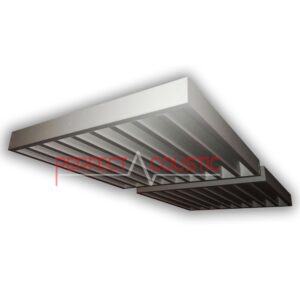
 Grid diffuser133 € +Vat
 -
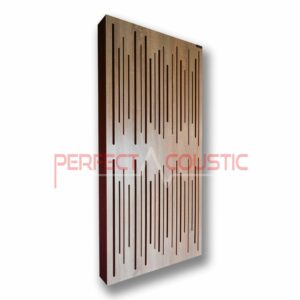
Absorption panels with diffuser-Two in one62 € – 296 € +Vat


Bose Soundbar 700 sound projector features:
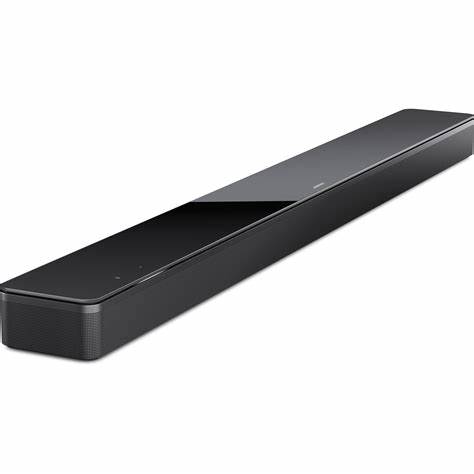
The Bose Soundbar 700 looks like a high-end speaker with a stylish speaker cabinet and excellent build quality. It has a perforated aluminium surround grille and tempered glass panel, and is available in a choice of gloss black or white. Unfortunately, the design leaves something to be desired. At the slightest touch, the glass is covered in fingerprints, and as soon as you turn on the TV, it reflects what’s on the screen – which is very distracting.The Soundbar 700 is just 57mm high, so it’s no problem to place it in front of your TV. It is wide enough for TVs with larger screens, and there’s an optional bracket for those who want to mount it on the wall.
The design is minimalist and clean, with just two touch-sensitive controls: one for power and the other for muting the built-in intelligent assistants. There is virtually no display, just a light bar, and you would have to be a super-spy or a code breaker to recognise the light bar’s signals… It would have been more fortunate to have a clearly legible display on the sound projector.
Connections and remote control
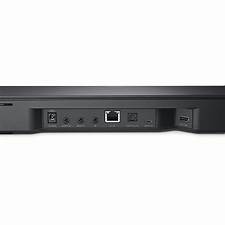
All of the connections on the Bose Soundbar 700 are located in the two recessed areas on the underside, but unfortunately another design flaw means that there is limited space for connecting various cables. To Bose’s credit, they do at least include optical and HDMI cables with the speaker. One recess houses an HDMI port, an optical digital input, an Ethernet port and a micro USB port, while the other shelters the power cable socket and four 3.5mm jacks for the subwoofer, infrared extension and ADAPTiQ headset.
Surprisingly for the price, there are no HDMI inputs, just one output. The good news is that it supports eARC , which sends lossless sound from the TV to the Soundbar. Of course, this also requires the TV to support eARC. Wireless connections include Wi-Fi (2.4GHz and 5GHz bands), Apple AirPlay 2 and Bluetooth. The latter is limited to SBC codes, so for those who want the best quality sound, the first two options are a better choice.
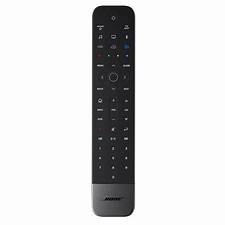
The Soundbar is also equipped with a well-designed, metal universal remote control with motion-activated backlighting. It can be paired with a wide range of devices, including TV, Blu-ray player, games console, video streamer or set-top box, with a single remote control. Unfortunately, the remote control has its flaws. Too big, the soft rubber buttons attract dust and lint. You can’t even see when the backlight is off, and it does not always make sense when illuminated.
-
3D Sound absorbing panels – Size: 60x60x10cm 3kg49 € – 59 € +Vat
-
Cubic Sound Diffuser 60x60x10108 € +Vat

At the very least, the Bose Music App is well-designed with an intuitive interface that makes it easy to navigate the settings. It allows for fine-tuning such as mid, bass, treble settings, and the remote also gives you access to Spotify, Amazon Music, Deezer, TuneIn, AirPlay and Bluetooth.
The Bose Soundbar 700 boasts a range of features, many of which focus on the capabilities of the smart speaker: once set up, you get a fully functional smart speaker, you can listen to the news or weather, play music, radio is available and voice control is also possible. There are four music services to choose from: Spotify, Amazon Music, Deezer and TuneIn Radio.
The speaker itself uses Bose’s proprietary PhaseGuide and QuietPort technologies; the former is designed to transmit sound to the sides of the Soundbar for a wider stage image, while the latter is designed to transmit deeper, clearer and distortion-free basses.
This sound projector is capable of decoding 5.1 Dolby Digital and DTS formats, but does not support lossless codecs such as Dolby TrueHD or DTS-HD Master Audio, let alone Dolby Atmos or DTS:X.
Considering the price, this seems like a major omission.
In our opinion, the 700 is better suited to TV and music, not to movies. If you want to upgrade the bass notes or add surround channels, you’ll need to spend more. This means that it will cost a lot more to set up a full 5.1 system.
.
Power
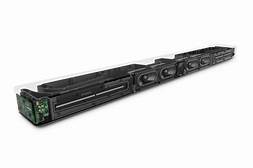
The Bose Soundbar 700 uses four mid-range drivers, two on each side of the central tweeter. On the far left and right are PhaseGuide technologies, designed to widen the front soundstage.
Fortunately, the speaker is easy to install: just place it in front of your TV, plug it in and it’s up and running. Setting it up is just as simple: launch the Bose Music app and follow the instructions, which will guide you through the ADAPTiQ automatic calibration process. This includes using the microphone.
ADAPTiQ analyses the frequency range, adjusting for distances, levels and negative acoustic effects caused by the room. There are five measurements in total.
There is no doubt that ADAPTiQ certainly improves the overall sound quality of the 700, with a pleasant sense of balance and a lively sound with an expansive width and even depth. There is also good stereo effect, resulting in nice imaging. It should be noted, however, that for perfect sounding, room acoustics are essential, with bass absorbing panels and acoustic panels with diffusers required for walls, ceiling and corners.
The testing was done in a large room with quite a few windows and glass doors opening to a patio, so reverberation was quite a problem. We recommended the owner to install acoustic curtains to reduce and remedy acoustic issues.
The 700 is certainly best for listening to music, with ideal midrange and nice highs. The sound frequencies are well defined and human speech reproduced by it is clear and focused.
The speaker struggles though when it comes to games and movies. Here, the soundstage seemed more limited, with immersive effects and surround sounding, without limited basses. PhaseGuide technology widens the sound field, but does so at the expense of imaging, so effects are often less accurate. Essentially, this means that average performing movies sound quite good, with detailed music and dialogues, as well as testifying a clear audio. But a more serious soundtrack lost much of its accuracy. The same was true for games.
The lack of a separate subwoofer is also a problem, and despite QuietPort technology, this speaker is not capable of intense, punchy basses. The lack of low frequencies means that some sound effects are not reproduced, which detracts from the experience.
The Sonos Playbar is a better alternative in our opinion because it sounds good, is incredibly easy to set up and works well as a TV speaker and as a standalone Sonos speaker. It takes advantage of all the features that come with Sonos, including an intuitive control app, voice control via an Alexa-enabled or Google Assistant-enabled device, and multiroom and additional TV features.
If you’re a movie fan or gamer, the Samsung HW-Q70R is a much better choice. This stunning soundbar and subwoofer combo delivers immersive Atmos and DTS:X performance, and features HDMI input. It doesn’t have a built-in smart assistant, but the speaker works with Alexa and crucially, it delivers dedicated basses.
-
 Sound absorber leather membrane49 € – 253 € +Vat
 -
 Column Diffusers179 € – 288 € +Vat



In summary
It’s obvious that this sound projector is designed to compete with Sonos, so the emphasis is on music and smart features. But the multi-room system that is one of Sonos’ main attractions is not available on the Bose Soundbar 700. It lacks multichannel support and powerful basses, so movie fans and gamers will be disappointed.
The inclusion of Amazon and Google assistants seems more like window dressing, and if you really need a smart speaker, there are plenty of cheaper options.
Overall, this is a fairly well designed speaker and generally sounds quite good, with decent surround sounding, but if you like really deep basses and accuracy you have to make concessions.
G.H.
Written by Róbert Polgár