Testing The Bang and Olufsen Beoplay E8 3.0 Earphones
Bang and Olufsen was founded in Denmark in 1925 by two engineers, Peter Bang and Svend Olufsen. The brand that has become world famous is well known for its beautiful design and perfect sound.
Beoplay E8 3.0
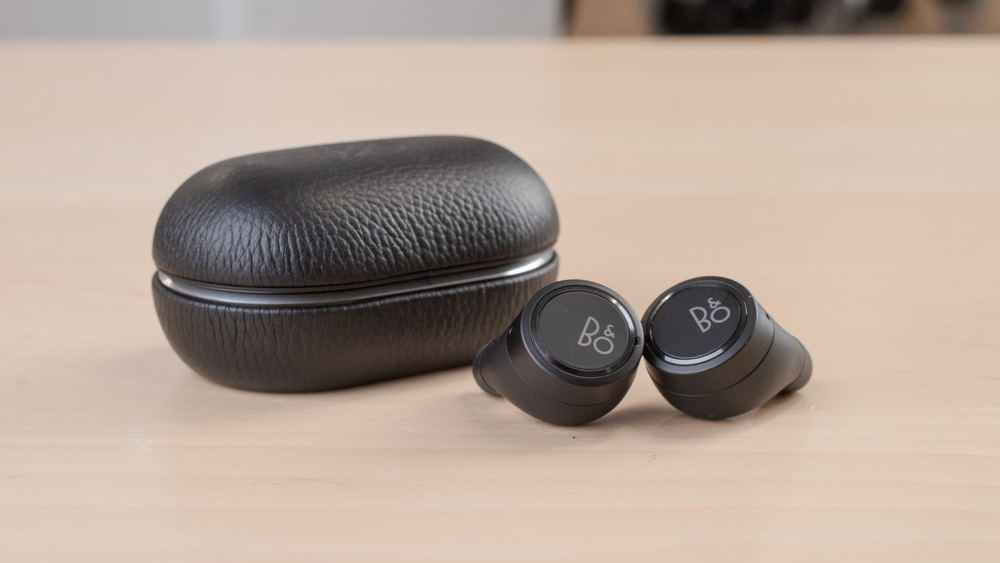
The Beoplay 3rd generation wireless earphone has undergone quite a few changes compared to its predecessor. It fits virtually any ear size, comes with several sizes of silicone and foam tips, a total of four pairs twice that don’t slip or fall out of the ear. The Beoplay E8 can run for up to 35 hours or 7 hours of continuous playback.
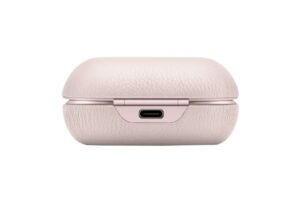
The extremely elegant, premium quality leather case, in which the earbuds can be stored, closes magnetically, and can recharge the earphones several times. When the case is opened, an orange LED indicates the charging process, and when it is fully charged, it glows green. There is even a USB-C type input on the back of the case, which is less convincing. Qi wireless charging is also possible. The device was equipped with four microphones. It also got new bass connectors, allowing the drives to move much more freely and produce more accurate and intense basses.
-

 Giga bass panel with membrane94 € – 129 € +Vat
 -

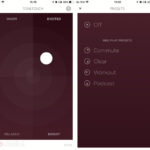
You can download the Beoplay APP and use the ToneTouch feature to adjust the tone as well. Downloading and using the APP is really easy.
It has a Bluetooth 5.1 connection, the battery consumption is quite minimal. The SBC, ACC and APTX codecs guarantee clear sound through iOs and Android devices as well.
Why is the type of codec important for Bluetooth audio and hi-fi products?
Codecs compress audio data in a variety of ways. The SBC codec, i.e. Subband Coding, works at a very high loss rate and only further fractures sound quality. The ACC codec is not lossless either, but it is one degree better than SBC. The most popular and best codec is the APTX, which has a bit rate of 352 kbps, performs its work in a much wider bandwidth than the SBC, so it can move more data in better sound quality. It transmits far fewer bits, smaller files, and thus improves the sound. In practice, according to the manufacturer, it provides CD quality.
For the time being, the Beoplay E8 3.0, which is IP54-rated, is available in black and grey, which means that it is protected against dust and splashing water, but it wont resist immersion or tolerate swimming in water.
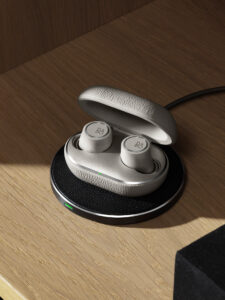
Fast charging is also possible. This takes about an hour and a half. There is a wireless charging pad already available for the device. As soon as you remove the earphones from the case, they turn on automatically. Headphones can be controlled with a single touch, but this also has its drawbacks, because of fat fingers effect we may accidentally launch unwanted commands. This can be quite annoying after several try.
Thanks to the Transparency mode, you can mute the left earbud with one touch. The Beoplay E8 3rd generation earphones also have a passive noise filter. It transmits ambient sounds when needed, and can be controlled with a single touch or application. Unfortunately, the NFMI, i.e., Near Field Magnetic Induction connection, has proved to be unstable sometimes, with the left ear losing the connection or simply not turning on.
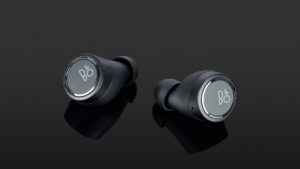
The connection between the right and left earbuds is shaky. The sound was clear and sharp, but the basses proved to be much weaker than the previously tested Bose Soundsport Free earphones.
Compare the Beoplay E8 2.0 and the latest E8 3.0!
Both in-ear and wireless headphones, designed by Jakob Wagner, have a rechargeable battery and wireless charging. The frequency is the same for both types, between 20 and 20,000 Hz. The leading sensitivity is 107 decibels and the impedance is 16 Ohms. Both the E8 2.0 and 3.0 have an adaptive audio function that controls the output volume.
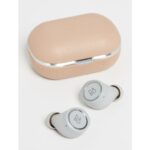
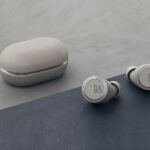
The leather filling case and brushed aluminium inserts show high quality. The Bang and Olufsen Signature Sound application and the ToneTouch tone control function can also be used for both earphones. Both types are IP54 certified, which protects the devices against dust and splashing water.
-
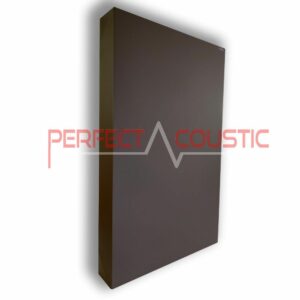
Sound absorber leather membrane49 € – 253 € +Vat
-

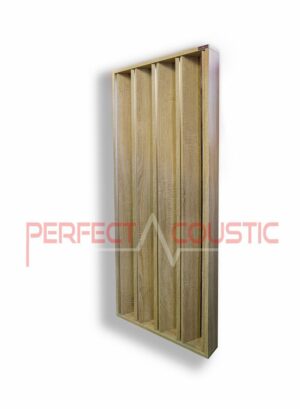
 Column Diffusers179 € – 288 € +Vat
Let’s look closer at the differences!
The latest, third-generation earphones have been given 17 percent smaller size and 11 percent less weight than its predecessor. Battery life, on the other hand, increased from 16 hours to 35 hours, and earphone battery life increased from four to seven hours. Instead of the previous Bluetooth 4.2 connection, the third-generation headset uses a Bluetooth 5.1 connection.
The Beoplay E8 3.0 also got four microphones and an enhanced DSP, so the microphones are able to gather your voice from all directions. Thanks to the Microsoft Swift Pair function, pairing with Bluetooth devices is extremely fast, and it is even possible to pair quickly with Google. It also got a new bass connection, thanks to which, as mentioned earlier, we get more accurate and intense bass notes.
The newer model has a newer, more advanced APTX codec. It has a USB -C connection, in the case of the third generation earphones the passive noise filtering is provided by a Gen noise filter. The newer model weighed heavier at 55 grams instead of 45. The E8 3.0 model is currently only available in two colours, black and grey, while the 2.0 model is available in many more colours.
Conclusion

The Danish premium price category and quality earphones have not the best price/quality ratio, in our opinion we can find better performing and more stable connection earphones, such as JBL or Bose Soundsport Free. Compared to the 2.0 model, the sound has been improved somewhat, and the connection has also been made better, but communication between the right and left earphones is still often unstable and uncertain. Transparency mode and application control, on the other hand, are commendable and very useful, simplifying the use of the headset. We were a little disappointed when testing the Danish-made device, despite its rather spicy price and the brand’s reputation, we experienced quite a few problems.
G.H.
Written by Róbert Polgár