We have tested the Focal Shape 65 studio monitor!
Among the near-field monitors, the Shape 65 active two-way studio monitor speakers fall into the affordable category and are considered the reference speakers in the Focal Shape series.
If you like the Shape series speakers, but want it at a lower price or in a smaller size, you can choose between the Shape 40 and the Shape 50. The Shape twins have two drives. The Shape series itself is at the heart of Focal’s studio’s offer, with the Alpha models offering entry-level performance and the SM6 and SM9 tending to be in the top category.
Design
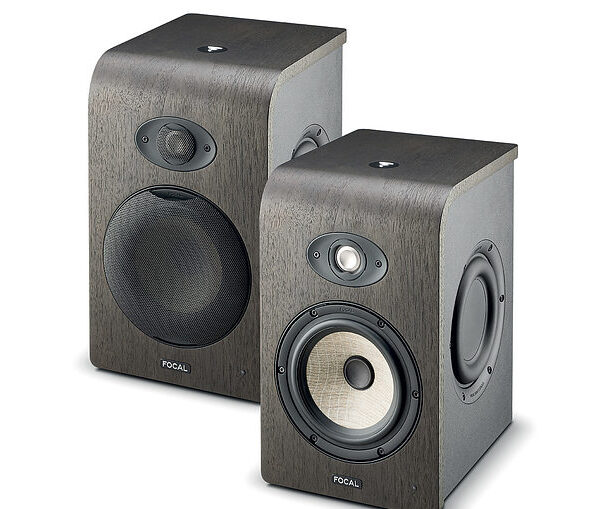
These monitors are not cheap, but quality workmanship comes at a price. The immaculate surface of the MDF cabinet and the walnut veneer also indicate premium quality. The Shape 65 is practical and attractive. The side panels feature dual passive radiators instead of a reflex port that allow the monitors to be placed directly against the wall.
-
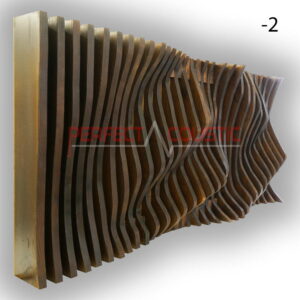
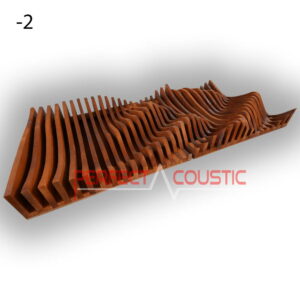
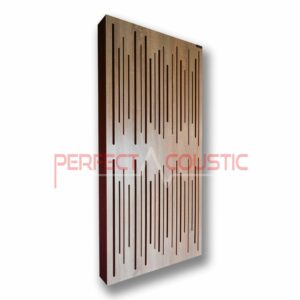
 Parametric Wall Art Panel (Diffuser)327 € – 426 € +Vat
 -

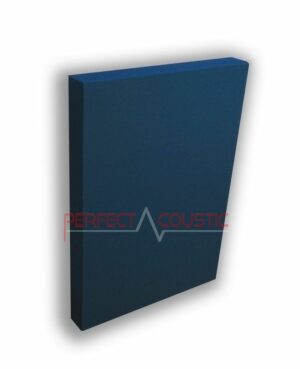
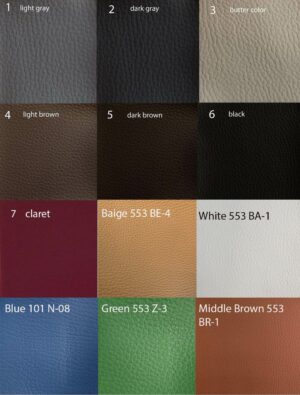
 Bass acoustic wall panels with double leather membrane83 € – 260 € +Vat
The Focal speakers can be mounted on a stand, wall or ceiling. There are mounting options on the back and bottom of the monitor, meaning the Shape 65 can be placed almost anywhere.
However, it is important to note that these are close-up monitors designed for smaller rooms. Just because these could be mounted on top of a huge hall doesn’t mean they should.
Features of the Focal Shape 65
The Shape 65 has a frequency response of 40Hz to 35kHz, measures 35.5 x 22 x 28.5 cm, and weighs 8.5kg. The maximum sound pressure is -SPL 109 decibels, the power is 105 watts.
Focal also paid attention to build the speakers with optimal sound quality for different listening positions. Take, for example, the 25 mm aluminium-magnesium tweeter. The “M” profile of this inverted dome tweeter means that it is even less controllable than a normal inverted dome, which in turn allows more flexibility for the listening position. In addition, the “M” provides greater rigidity for the dome, reducing unwanted distortions.
Below it is a 16.5cm mid and bass unit – 10cm for the Shape 40 and 12.5cm for the Shape 50 – using a flax sandwich cone. It is a combination of materials that Focal has been using since 2013: high-quality flax fibers are surrounded by two thin glass fibers. These materials offer high internal cushioning and stiffness, while flax is twice as light as fiberglass. As Focal procures the flax from France, this can also help reduce costs for both the company and its customers.
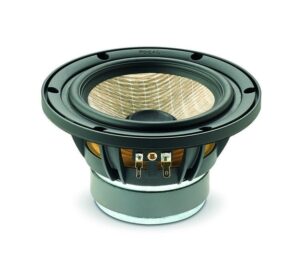
The manufacturer also used Focal Neutral Inductance Circuit technology for these speakers, a technology that uses an optimised Faraday ring to overcome the inherent instability of the magnetic field. The Tuned Mass Damper network has a pair of tubular rings designed to stabilise the dynamics and avoid cone deformation. Inside, there are a pair of Class A / B amps that provide 80 W of power for the mid / deep bass drive, and 25 W for the tweeter.
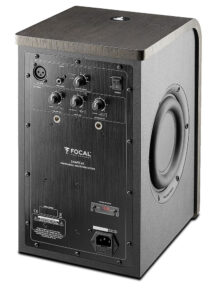
On the back of the Shape 65 you will find balanced XLR and unbalanced RCA inputs – which means you can technically connect any wired source to the monitor – as well as a high-pass filter and an adjustable crossover (to 160 Hz). There are also buttons to adjust bass and treble, but it’s worth noting that it is all manually controlled.
Sound
Shape 65 requires at least 10 hours of “warm-up” before use. During testing, the monitors were paired with an Arcam amplifier. We tried the Shape 65 speaker pair in a small studio. The acoustics of the studio were fine as we had done acoustic treatment here before. Diffuser front panels, cube diffusers and wood membrane sound absorbing panels were placed on the walls. Since there are quite a few windows on one side of the studio, the reflective properties of the glass surfaces can be a problem. Therefore, soundproof acoustic curtains have been placed in front of the windows. In a sound studio, handling acoustics is essential if you want the perfect result. Only materials with a high density, a flexible structure and a certain weight are suitable for this. Although styrofoam or sponge materials may seem like an obvious solution to many people to improve acoustics due to their low cost, in reality if we mount them on the walls we only degrade sound quality as they are unable to absorb deep sounds.
The sound of the Shape 65 was clear and accurate, and these monitors are exceptionally detailed for both mid-range and treble.
-
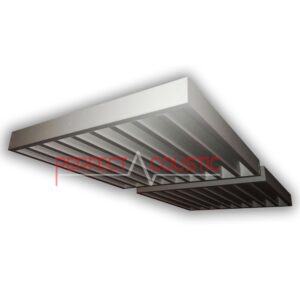
 Grid diffuser133 € +Vat
 -
Absorption panels with diffuser-Two in one62 € – 296 € +Vat
Stereo imaging was also good during the tests, as M-shaped tweeters are extremely versatile in all listening positions, and this comes in handy as they can be placed in an average room or a studio. There are no powerful basses, but what you hear is at least percussive and tight.The treble is a little too sensitive. The dynamics of the Shape 65 are pretty low, but for studio monitors, it’s not that surprising.
If it is important for you, as a musician or producer, that the speaker does not interfere with the mixing, then this speaker is an ideal choice. It procures to the music material the true sound required.
Summary
The levels of detail are excellent, and even aspects like sensitive treble and dynamics are enjoyably transmitted to the appreciation of many musicians and producers. Bass sounds are tight, but anyone who wants rumbling basses shouldn’t choose this model. We were also satisfied with its accuracy. Perhaps the main advantage of these speakers is that they provide an ideal sound for any listening positions and offer a myriad of options for placing them around.
G.H.
Written by Róbert Polgár