It may seem that dreaming of the optimal parameters of the curtain is not such a big art. After all, the dimensions of the window or door are given, so a tailor is enough, and the data can be recorded. Yes, but if the basis is the centimeters of the doors and windows, then the result will almost certainly not show what is most desired and desired. This is especially true if the curtain not only performs a decorative function but also has an acoustic function. In this case, increasing the amount of sound absorption is an emphatic goal, which is not surprisingly driven primarily by the ideal dimensions. But still, what is it worth paying attention to for a visibly, audibly perfect choice?
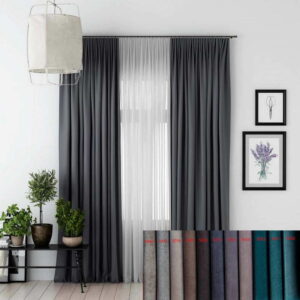

Prepare with a tape measure!
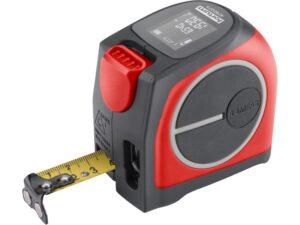
The tailor is worth keeping close at hand because this is not the area where the eye level is playing. Betting is a good thing, a smartphone app can be a winner, and it’s extraordinary for someone to guess perfectly, but accurate scaling doesn’t fall into the gambling category. So there is no place for approximate values here. Anyway, most of the time no one wants to change curtains every two weeks, so that’s so much energy and time sacrificed to fit in anyway. Here, too, “Measure twice, cut once!” saying, even if the cut will in many cases be done by a professional.
It is recommended that the width of the curtain be at least twice the width of the window, but the truth is that it is best to use a multiplier of two and a half. The urban legend that the right curtain is exactly the size of a window or a door is a very wrong idea to do just one thing. Forget it, if possible permanently! A more serious mistake cannot be made!
What is a good idea to pay attention to for perfect sound absorption?
The curtain, whether it is a variation tailored to a door or a window, not only performs spectacularly well but also make the difference audible acoustically, precise sizing is essential. What do we think? For example, the larger the gap between the curtain and, say, the wall or the door jamb, the more sound waves can escape through it, and the less appropriate the sound-absorbing property is. So hanging to the ground is a very good idea, and you can even touch the wall, and we even recommend this solution, as this is the best way to maximize sound insulation. Although the ring is a very popular solution, it is not an ideal solution in this respect. Sound can and does flow freely through the holes, so if sound absorption is an essential option, this method is worth setting aside.
The best solution is a curtain retractor tape.

The pull-in strip is good because the hook that is on the cornice is hooked behind the curtain. Therefore, the upper part of the curtain is raised by up to 2-3 cm, which reduces the formation of gaps. Remember, even the smallest gap can get through the sound, which reduces the serenity of the room.
Then it is advisable to pay a little attention to the thickness of the material. The thicker the material, the logically better the sound absorption. So the dense, multi-layered curtains are an advantage, and their wavy fall pampers the eyes as well.
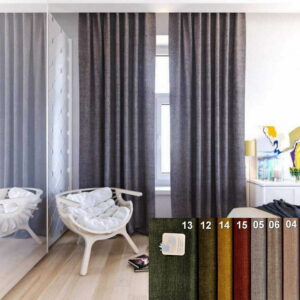
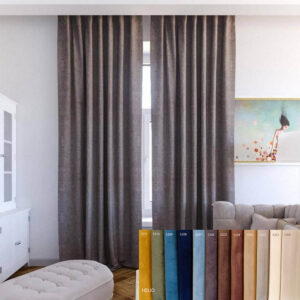
It is clear from the above that these models are not only exceptionally good choices in terms of functionality. In practice, it is not a question of a textile that is, of course, a practical and acoustically excellent decision, but it leaves much room for criticism anyway. No way! On the contrary! The practical properties of acoustic curtains are accompanied by aesthetic features, which make them extremely attractive accessories for dressing the environment. A well-chosen piece can be a focal point in any room, as it instantly attracts attention.
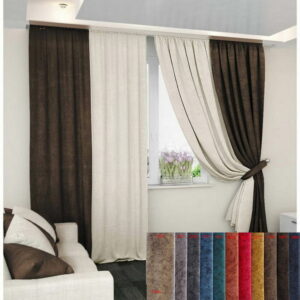

When and how can the difference be heard?
In light of the above, the only question is how is sound insulation perceived in everyday life? This question may seem too simplistic, but at an age when many people don’t even notice noise pollution, highlighting the specifics is still important. Let’s look at these at a basic level!
Acoustic curtains can be used in offices, households, or even studios, as they are excellent at absorbing sound waves. In some cases, noise absorption of 20-30 decibels is not uncommon, which is certainly not a small result. Noise pollution often has only the negative consequences that can be detected: loss of attention, difficulty concentrating, unreasonable fatigue, insufficient sleep at night, inadequate rest, and the list could go on for a long time.
These symptoms appear in the lives of almost every person these days, yet very few people know why. One of the most tangible consequences of sound absorption is that the speech signals listed above are either reduced or eliminated. While the physically audible acoustic experience can be greatly improved, for example, while watching movies or listening to music.
Add to this the obvious benefit that acoustic curtains are a colorful, stylish choice that dresses up the space, so there’s no question whether it’s worth living with the positives that drive away the noise and improve your quality of life. A modern, trendy, high-quality piece is no exceptionally expensive pastime, so it can be easily obtained in any home. SzG