Can the acoustic treatment be replaced with an electronic device?
We undertook a great test! We decided to take a mini DSP and see what it can do. The Chinese manufacturer’s product can’t be called cheap, so we ran the test with pretty high expectations for it. Plus, we slammed into the letcho and, of course, the sound waves with that undisguised intent to find out if the premium technology background was enough to organize the acoustics of the room. Interesting dilemma right? The good news is that we have found the answer!
For the first time, like everyone else, I tried to save on acoustics. Because that’s the part that’s not as tangible as a good speaker. So it seemed easier to buy a tone control program.
-

 Sound traps with diffuser- If a good look is important146 € – 155 € +Vat
 -
 Flexi acoustic panel with adjustable wooden slats194 € – 287 € +Vat
I wonder why I write that tone control?
Because any EQ program can only adjust the frequency of the sound pressure and the time offset of the sound. That’s why the question arose as to what could be taken out of it if I used it on empty walls. Or with acoustic panels, acoustic mats, and diffusers, what results can we get?
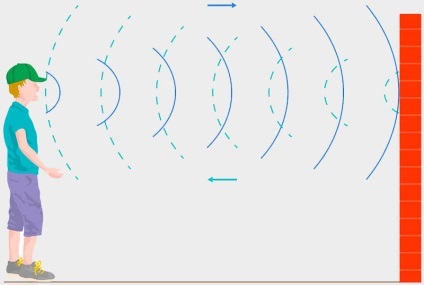
Because if a room is ringing, the reverberation time is high (echo) then you can reach out to it. No way!
So here’s the mini DSP that offers the maxi experience!
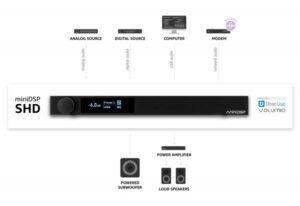
Let the dry technical parameters come first! Processor: 32-bit floating point 450 MHz analog devices with SHARC DSP. 32-bit audiophile converters: AK5574 / AK4490EQ. Dirac Live room acoustics correction. Quad-core ARM processor for network audio streaming – pre-installed with Linux-based Volumio.
As for its appearance, we can’t report any extra complications. The designers probably haven’t spent too many sleepless nights figuring out the design, though on second thought, it’s not all the exterior, and the mini DSP is the best example of that. So at first glance, we find ourselves facing a black rectangle that is flat, not too deep, but even wider. Then, after second or many glances, the situation does not change. The universal rotary knob on the left is responsible for switching between inputs and controlling functions. Next to it is an eye-catching OLED display with pampering light, which has excellent readability while fully brightening its brightness.
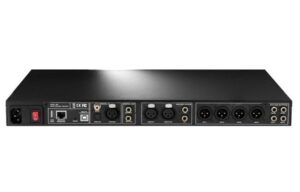
Well, it’s worth looking at the little one from a different angle, because it offers a more attractive view from the back. Seen from left to right, a standard IEC power connector, power button, USB host, LAN connector, USB-B input, three digital inputs; optical, coaxial, AES-EBU, and two coaxial outputs can be detected in the digital section. An extra positive is that in addition to these analog inputs are also given, an RCA and XLR. While the outputs have not been parked, they are now lined with two XLR and RCA connectors. Icepick Chinese during or oddity that these are not marked with a left or right channel, but a numbering from one to four provides some clue.
-
Skyline diffusers 60x60x14cm118 € +Vat
-
Decorative acoustic panels (corner bass)175 € +Vat

Simply great?
Somehow. The truth is that its application is very simple, it is not an exaggeration to say that it is child’s play. At the same time, the manufacturer doesn’t skimp on features that already make the formula more interesting and complicated. So it’s simple and great at the same time, and can be combined indefinitely.
Commissioning is not just about physical assembly. We need to select the type we own on the manufacturer’s website. The selection is huge, so just be patient! If you have it, you can download the compatible driver and Dirac, without which you will be completely silent despite all the prompting. But it’s not over yet. Connecting to the integrated Volume is a must-have, and although automatic DHCP is provided, if more than one device is connected to the router, the available IP address is incorrect. So the manual setting can follow.
The story of Dirac cannot be sorted out with a single sentence. It must be installed from the download page, which can be used free of charge with the coupon code that came with the device. It is strongly recommended that you read the descriptions and watch the videos on offer, especially before using them for the first time. These substances can dispel clouds of doubt and uncertainty. After all, no one is born with an edge in the system.
What is the sound quality without Dirac?
From the above, it turns out that this little box has huge potential, with some compromise. However, the basic function was used to analyze the quality of the sound. The sound experience that can be detected with the ear obtained in this way is completely free of excesses and extremes. The bass goes deep, while the open mid and not over-emphasized open high range becomes duller. The performance is characterized by calmness and restraint, so brutality is not the world of the mini DSP. As the dynamics of all this were a bit dulled, boredom or excessive sterility came to the fore. The result is a sound that is not perfect, but very enjoyable.
We tried it with the space furnished with acoustic panels.
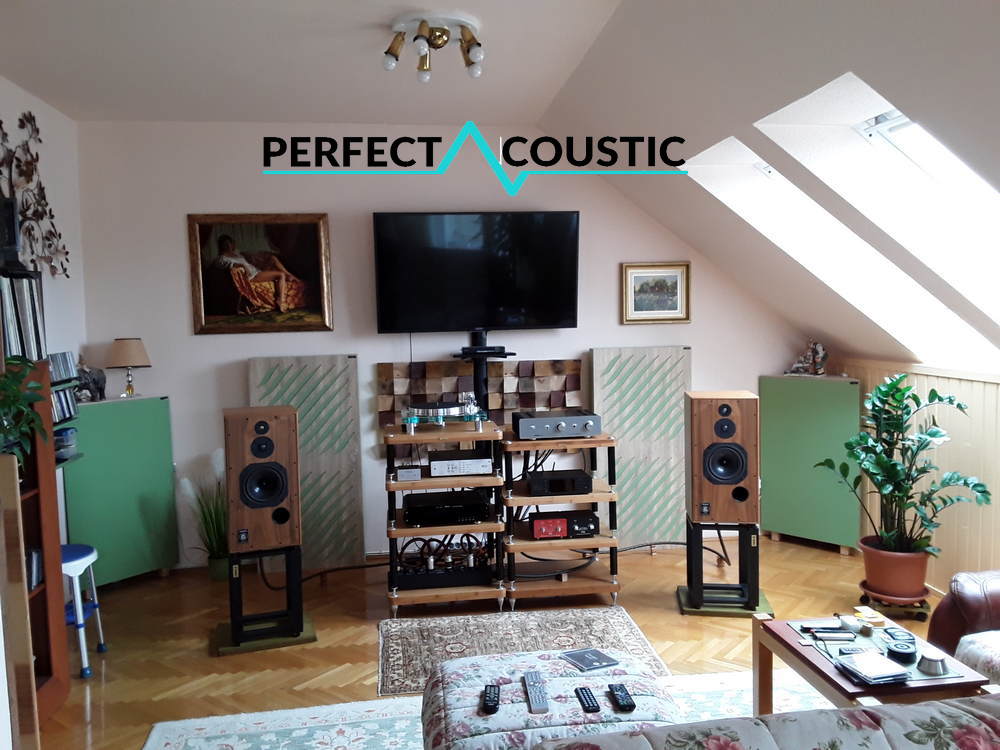
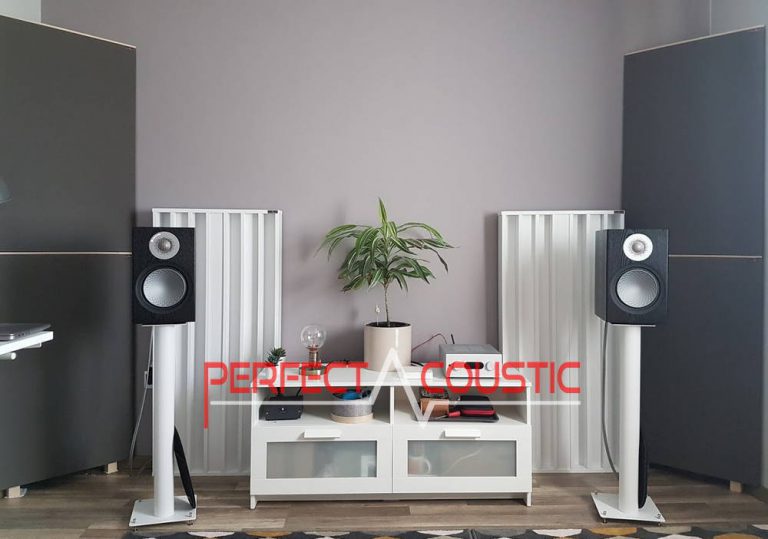
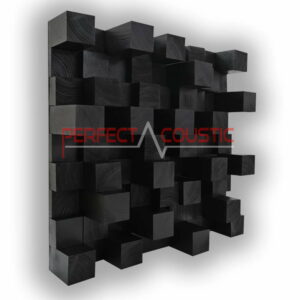
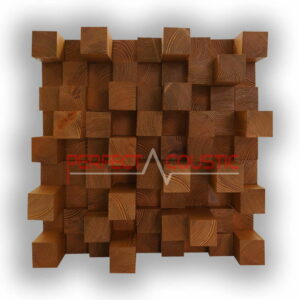
Leather membrane bass traps and diffuser acoustic panels were placed primarily in the corners and primary reflection points. We laid a 2x3m Silent carpet on the floor.
So we listened to the system with the EQ program turned off!
This pair of panels alone was enough to surpass the sound of the mini DSP. I only tried to put in as many acoustic products that rivaled the price of a mini DSP. Precisely to decide the dilemma of which direction to go. On first hearing, the acoustic panels won.
What did I hear?
The sterility that the mini DSP designed is gone. The dynamics have intensified. The spatial effect has changed dramatically but in a good direction. With a mini DSP, the space was left somewhere in front, but not definable. With panels, the sound filled the room. A 3D feeling is formed. The instruments were able to determine where the sound came from, noticeably and tangible. This can be achieved mainly by covering the primary reflection points. The bass got bigger, louder, and faster. The growl of the room is gone.
-
Cubic acoustic sound panels80 € – 109 € +Vat
-
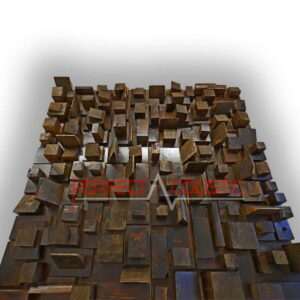
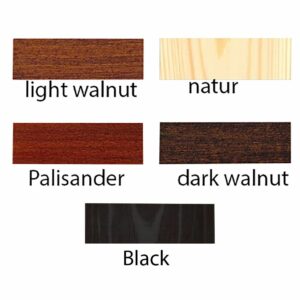
Rustic-Vintage sound diffuser-Made of real pine65 € – 129 € +Vat
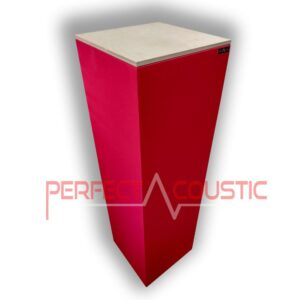
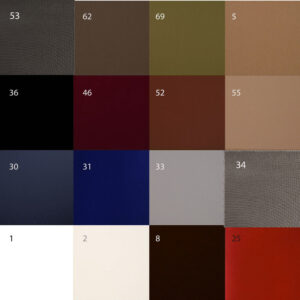
So from now on, the acoustics of the room will be checked?
No, not quite. It may seem that not all acoustic deficiencies can be compensated with this small device with a guarantor. But the use of wall panels is by no means unavoidable. In fact! We can say with absolute certainty that even the most luxurious, high-performance, luxury hi-tech systems cannot perform perfectly without the support of wall acoustic panels.
The dilemma introduced in the introduction was thus enriched by a clear answer. It’s great to have a technical background. Even better, the system fully meets quality requirements. But that alone isn’t enough to envelop the perfect sound. And as we alluded to, not just the mini DSP. Nonetheless, it is the right decision to always vote for maximum quality when choosing a device, but it is not a good idea to expect a miracle from technological advancement alone. But with a little help, wall panels can already create the long-awaited wonderland. SzG