JVC DLA-RS3000 Home Theatre Projector Test
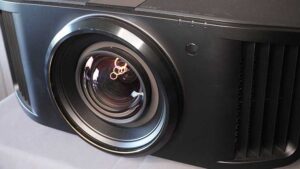
The DLA-RS3000 is the world’s first 8K home cinema projector with a high-resolution of 8192 x 4320, featuring a 100 mm diameter genuine glass lens with an extremity in aluminium.
LCOS technology
D-ILA or Direct Drive Image Light Amplification is a technology developed by JVC that provides unrivalled image quality, natural colour reproduction, and clear and vibrant colours. The first D-ILA projector was introduced in 1997, and since then this advanced technology has been used, giving the clearest, sharpest, and most accurate image quality. This is actually a liquid crystal technology that is very different from the liquid crystal display in other products i.e. LCD technology. The liquid crystal used in products featuring DLA technology is silicon based (LCOS-Liquid Crystal on Silicon) that combines the advantages of LCD and DLP technologies alike.
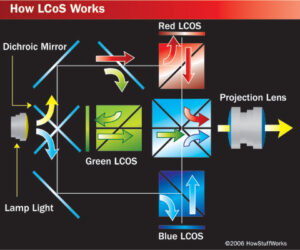
In LCOS, the liquid crystal is placed between a reflective base plate and a light-transmitting layer. The path of light is either open or closed depending on the polarisation of the crystal, consequently the light is reflected from the mirror surface or not. One of the most important advantages of LCOS technology is that the image it produces is completely free of pixelation, as this technology provides such high resolution that the distance between the pixels is reduced to the minimum. LCOS provides more natural, smoother images. This technology is based on three chips each being identified with one of the three base colours (green, blue, and red) that are projected simultaneously. This improves colour saturation and allows to avoid the annoying rainbow effect of DLP’s rotating colour wheel. The relatively short lamp life – and the rather expensive price of it when it comes to replace it – seems to be the only disadvantage of the LCOS technology.
-
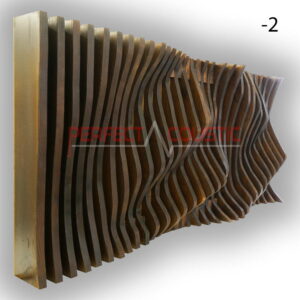
 Parametric Wall Art Panel (Diffuser)327 € – 426 € +Vat
 -
Wood Acoustic Diffuser 60x60x6cm108 € – 140 € +Vat
JVC DLA-RS3000 projector features
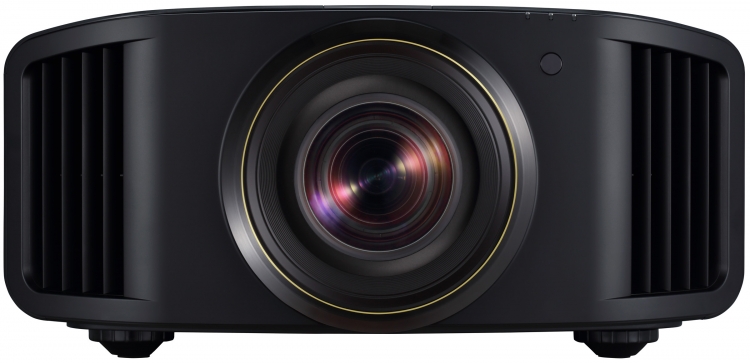
The high-power lamp of the native 4K D-ILA projector has a brightness of 2200 lumens, the native contrast ratio is 100000: 1, and it is made of hand-selected components. There are two 18 Gbps, HDCP 2.2 compatible HDMI inputs on the device. The projector is HDR10 compatible thanks to the Auto Tone-Mapping function.
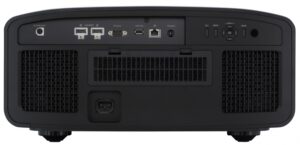
Enhanced Clear Motion Drive and Multiple Pixel Control features, as well as Low Latency Mode, further improve the images and reduce distortion. New Installation Mode simplifies the settings, and the device is able to memorise 10 image settings. It also has LAN, RS232, 12V Trigger outputs and 3D synchronous output.
It provides true 4K resolution and can faithfully reproduce all 8.8 million pixels in 4K content. Estimated lamp life is 4500 hours in low mode. But, even in low mode, the projector can produce enough light for a home theatre or auditorium to enjoy screenings.
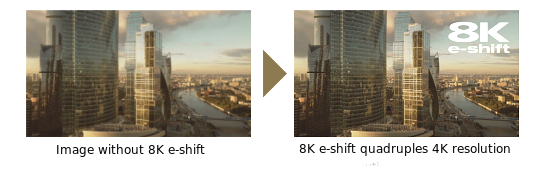
JVC’s own 8K Shift technology converts roughly 0.5 pixels into pixels. Although it cannot receive 8K signals and is not equipped with HDMI 2.1 inputs, it can convert 4K content to 8K.
Features and settings
It delivers extremely rich, vibrant colours and, according to the manufacturer, can reproduce 100% of the DCI P3 (Colour Gamut) colour space even when the Cinema Filter is turned on. A true glass lens provides a high-resolution, sharp-focus image in full screen. The combination of the Adaptive HDR Sound Map and the Theatre Optimiser eliminates the problem of the lack of brightness, as this feature dynamically measures the brightness of HDR10 content and automatically adjusts it for the best HD picture. The contrast and black levels are simply perfect.
Mentioning a competitor, the Sony VPL-VW915ES laser projector would highlight the same 4K resolution, but the JVC with higher native contrasts and better optics is available at a better price. HR also performs better, but Sony requires almost no maintenance as it is equipped with a laser. The JVC 8K projector would clearly win a hypothetical competition as it produces stunning images, mostly thanks to the improved optics, increased brightness and contrasts, resulting in much more realistic, more natural reproduction of colours.
As for the downsides, only a few small disadvantages can be mentioned. When the device is operating in full power, it has proven to be a bit noisy. Moreover, the lamp life is limited and replacement can be very expensive. And at last but not least, the image projected by the JVC is limited in size.
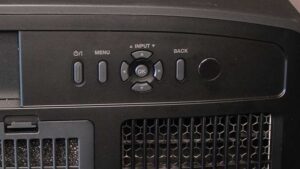
It is also compatible with the hybrid log Gamma device, it offers wireless transmission options and a 6-axis matrix control system for 3D viewing. Additional settings can be made using the automatic calibration function, the optional sensor probe and software. The low delay improves the image and speeds up the operation, reducing frame delays when used for video games. Moreover, the Motion Enchants Technology reduces fuzziness.
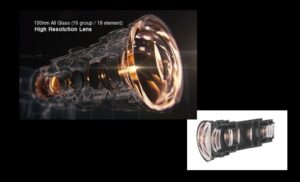
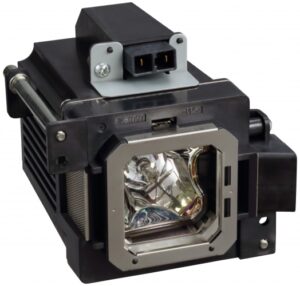
The mercury lamp has a power of 265 watts, features electric focus and zoom, and weighs 21.8 kg. The design of the projector is simple, as far as the aesthetic goes, the projector does not want to innovate. The remote control has been given the style of standard JVC projector remotes: simple, ergonomic and easy to use.
-
Wall Panel – Diffuser 140x70x8cm235 € – 271 € +Vat
-
Hexagonal acoustic panel -Size: 60x60x6cm52 € – 61 € +Vat
Projection test
The testing site was a well-equipped home theatre room set up in the basement of a family home.
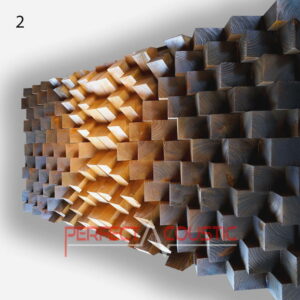
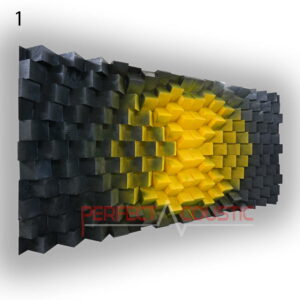
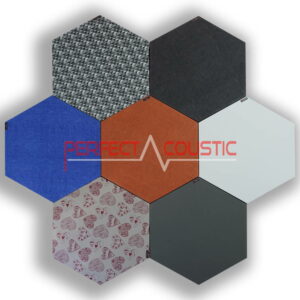
The DLA-RS3000 projected sharp images and vivid colours even under lamp light, but since we’re talking about a movie theatre, total darkness is required, which can be solved with thick, densely woven curtains. When designing our home theatre room, you may want to consider acoustic treatment of walls and ceilings with sound-absorbing and diffuser panels that reduce all sound reflections. If we cover the floor surfaces with thick, densely woven carpets, we shall not only create a cozy and comfortable environment, but also improve the acoustics of the room.
We watched the The Chronicles of Narnia : The Voyage of the Dawn Trader adventure movie of 2010 in 3D. The projector delivered an impressive performance, the black level and colours as well as the contrasts were flawless. The device was a bit noisy though. Placing and setting was relatively quick and easy task to do, we did not encounter any difficulties at all.
Our opinion
JVC’s premium home cinema projector is the best projector on the market today. The disadvantage compared to laser projectors is the limited lamp life, and the price of the replacement lamp that is not cheap. Laser projectors have virtually no maintenance costs, but the quality of the images projected is inferior than that of a JVC D-ILA projectors with real glass lens or real glass optics. The black level, contrasts, and colours are flawless and can be further enhanced thanks to fine tuning. It provides natural and realistic colours and images; but you need to pay quite a high price for all that.
G.H.
Written by Róbert Polgár