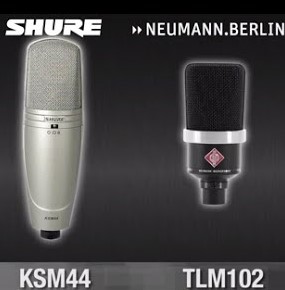
Shure KSM44A And Neumann TLM102 Studio Microphones Test
Shure
Shure has been making high quality hi-fi and audio products for nearly a hundred years. The KSM44A is an extremely powerful microphone, offering several polar patterns: cardioid, circular and bidirectional patterns, thus offering a wide range of applications. Its own noise level is very low and it produces extremely good performance and sound quality.
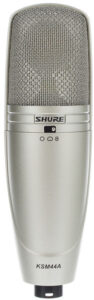
The premium quality condenser microphone has features that makes it perfect for almost any recording, and a lot of sound engineers use this microphone in their work. Made of aluminium, the large diaphragm design is ideal for vocals, while the internal pop filter and transformerless output plus the Prethus Advance Preamplifier technology ensure clear sound and quiet operation.
This studio microphone has a double diaphragm, 3-pole pattern, and is also equipped with a damping pad and an optional surface-pass filter. The frequency response is between 40 and 20,000 Hz, the impedance is 100 Ohms, and the maximum sound pressure level (SPL) is 131 decibel. Also perfect for professional use.
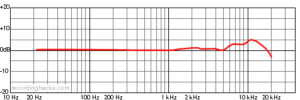
According to reviews, this is the flattest, clearest, most neutral-sounding microphone, super quiet to operate, not noisy at all, and very easy to use. The disadvantage of the microphone is the excessively neutral sound.
For sound to be perfect, as a matter of fact, it is important where and how we place the microphone.
-
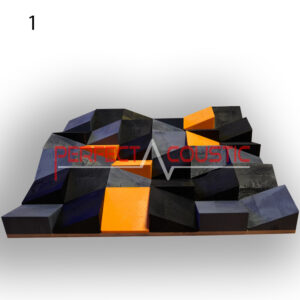
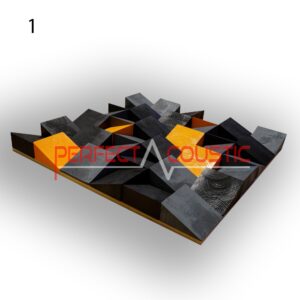
 Art diffusers 60x60x6cm129 € – 168 € +Vat
 -

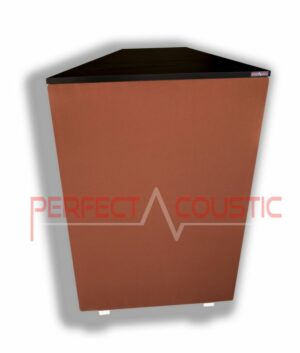
 Corner bass trap with membrane-108x64x23cm135 € – 142 € +Vat

Condenser microphones are best for recording vocals as they record more sonic details, but sound pressure management is limited. Dynamic microphones, on the other hand, can handle louder sources, and noise filtering is better on them, moreover, condenser microphones require a phantom or their own power supply. Cardioid microphones are mostly used to record sounds coming from the front. Pop filters actually filter out excessive air movement, as these sudden incoming movements can cause unpleasant volume jumps that degrade the quality of the sound recording. The adjustable attenuation pads included with the microphones allow you to create distortion-free sound at higher volumes and larger sound sources.
It can also be used for live performances. It is also great for recording background music thanks to the different recording patterns that you can choose according to the type of audio you are recording with it. It does an excellent job with any instruments. It can also be used as the upper microphone for choirs or percussion orchestras.
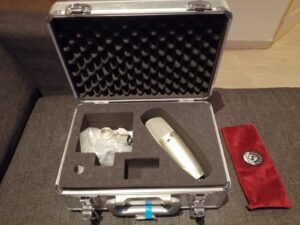
It features a wide frequency range, a high output signal level and a wide dynamic range, as well as uniform polarity. It has gold-plated connectors. The three-position, switchable, low-frequency filter reduces unwanted rack vibrations. Equipped with an ultra-thin 2.5 micron thick 24 carat Mylar diaphragm and a shock absorber that reduces resonance issues. Made of durable zinc material and a carbon steel grille.
Neumann
A competitor to the Shure microphone is the Normann TLM 102 studio microphone. It contains a large membrane capacitor capsule, and is equipped with a capacitor without a transformer. It has a single cardioid pattern, it hasn’t been given any extra features that would limit its versatility, but it makes the job easier because there are no different settings to deal with. It was specially designed for singing and vocal recordings, with an emphasis on sounds coming from the front. The frequency response is between 20 and 20,000 Hz, the impedance is 50 Ohms, the maximum sound pressure (SPL) is limited to 144 decibels.
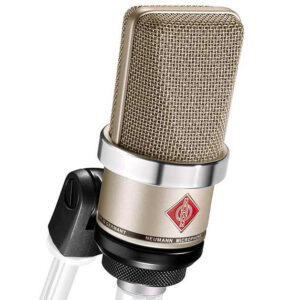
The compact size of the solid, rugged microphone can be appreciated by many, but its streamlined design wont be appealing to everyone.
This microphone is made with more cost-effective manufacturing methods, so the pad and filter switches should be omitted, but this does not affect the sound quality. The newly developed large-diaphragm capsule is designed primarily for vocal microphones, but is also suitable to record louder instruments. The microphone is made with a flexible suspension that makes it easier to disengage the vibrations of the housing. It comes in black and nickel finish housed in a simple, foam-lined cardboard box including a swivel stand.
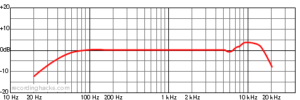
The design is very stylish and beautiful, with a silver bar and a red Neumann logo below the basket. The noise level is slightly higher than that of the Shure microphone, but this can still be said to be a low noise level. The TLM 102 has a balanced sound.
Which one is the best microphone?
The Neumann microphone provided a very fine, spacious sound, the middle and deep ranges were perfectly unambiguous and unobstructed. When using musical instruments, it produced less depth than some other types of microphones, but it was still able to produce vivid, bright sounds. Proper placing of the microphone is very important, depending on whether you want to use it for instrumental or vocal recordings. Despite having only a cardioid pattern, the TLM102 is surprisingly versatile compared to the more expensive microphone, and shall not be at all ashamed of that. The price is also cheaper than that of the Shure microphone, but when we unpacked it, we missed the storage case that came with the Shure microphone, but that’s ok. Neumann also has a more expensive microphone, but the TLM 102 produced excellent performance for its price tag.
-
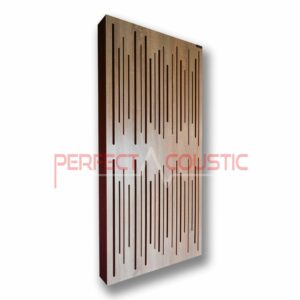
 Bass sound dampening panels with wood membranes91 € – 268 € +Vat
 -
Absorption panels with diffuser-Two in one62 € – 296 € +Vat
Conclusion
The KSM44A studio microphone is much more expensive than the Neumann, but thanks to its multiple polar patterns, it is also much more versatile to use. It can also be used as the upper microphone for stage, vocal or instrumental recordings, but if you can’t or don’t want to spend that much money on a microphone, you won’t be disappointed with the Norman TLM 102 either; but remember that the cardioid microphone is designed primarily for vocal recordings.
Keep in mind that if you want to create perfect quality sound recordings or music mixes, it is not enough to buy premium quality hi-fi and audio products. If a studio has poor acoustics, unfortunately the sound recordings will also be of poor quality. Subsequent adjustments and refinements using computer software will not be enough to ensure proper sound recordings. It is essential to deal with reflections and standing waves, and to ensure that the reverberation time is adequate, and this can only be solved with acoustic elements specifically designed to improve acoustics.
G.H.
Written by Róbert Polgár