Panasonic DP-UB9000 Blu-Ray Player Review
The Panasonic Blu-ray player is listed as a high price range product among similar Blu-ray players, but once we have tried it, we can say for sure this is the one, the must have one!
Let’s take a closer look!
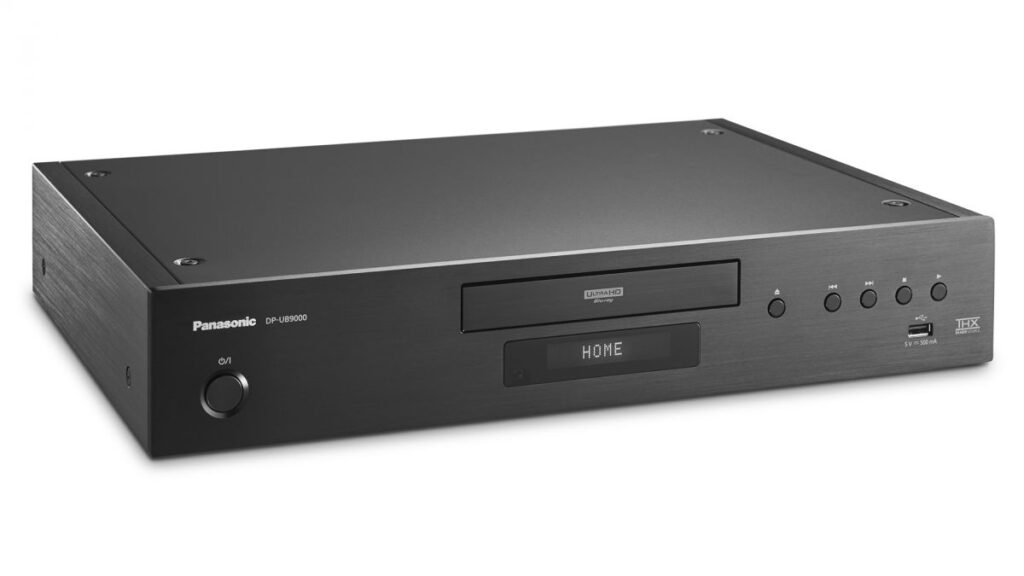
The front and sides of the player are made of thick aluminium, the design is puritanical, simple in appearance. The back has many outputs, 7.1 outputs, optical, coaxial, and HDMI outputs for integration with home theatre systems, and dedicated stereo RCA and XLR connections for audio systems.
-
 Pyramid acoustic diffuser 60x60x11cm118 € – 153 € +Vat
 -
 Bass sound dampening panels with wood membranes91 € – 268 € +Vat



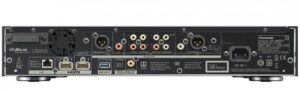
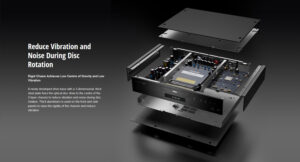
There is also a separate HDMI connection that can be selected from the menu system that functions as a separate audio output. Two USB 3.0 ports can be discovered on the front panel, an Ethernet connection on the back panel and a Wifi connection are also available on the device. The disk drive was manufactured with a two-layer chassis, fixed to the thick steel plate to reduce vibration.
Extra function
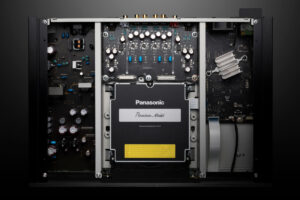
The audio circuit has been given its own dedicated power supply in order to maximise the sound quality and bring out the best possible sound. The analog outputs are also equipped with a special circuit for that player. HCX, or Hollywood Cinema Experience image processing engine, guarantees vivid, perfect images.
HR Optimiser improves the tone map of the HDR image, takes into account the brightness limits of the display, and adjusts the image to give the player the most detailed image possible, especially for white and light details. The player also recognises Dolby Vision movies and bypasses the HR Optimiser function.

It also has WAV, FLAC, AIFF, ADC functions and works with a 32-bit / 768 kHz DAC chip and weighs 7.8 kg. Also supports Dolby True HD, Dolby Atmos, DTS-HD Master Audio, and DTS: X
Streaming is also possible, so for example Amazon Prime Video, BBC iPlayer, Netflix are also installed on the device.
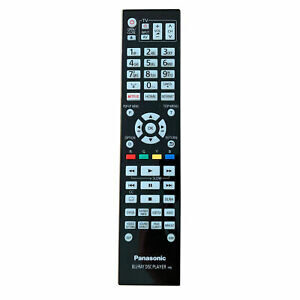
The remote control is backlit with chunky and touch-sensitive buttons.There are 6 setting options in the menu, which in turn is quite complicated and some settings are unnecessary. (For example, there is no need to turn Dolby Vision and HDR10 + support on or off in the menu if you can turn on the player automatically.) There is no DVD Audio and SACD support. The image enhancement feature is capable of an impressive performance, although the Pioneer UPD LX500 player in a category with similar features works with a hair’s breadth of even more perfect image enhancement.
Isn’t Blu-ray players out of date?
It’s true that services based on the Internet and streaming service providers have taken over the control and dominate the market providing series and movies for fans today, but the time for Blu-ray players is far from over yet. Of course, nowadays only Blu-ray players that have extra features and have adapted to modern technology can survive ruthless trends. Because the new types of DVDs are not compatible with the old types of Blu-ray players, the manufacturers have upgraded the DVD players and also allowed some online streaming service applications to run on them.
A Blu-ray quality movie can produce a much nicer, clearer, higher resolution image on a good quality modern player than online streaming providers could ever do. They also sell very cheap categories of players. When buying a Blu-ray player we have to consider whether we have a projector or 4K TV, or how often we will use the player, because if we only watch a movie on it once or twice, it is unnecessary to invest in a more expensive piece. On the other hand, time works against Blu-ray players, because the movie offerings of Netflix and other streaming providers are many times the number of DVDs available for purchase. If, on the other hand, we want a true 3D, realistic and genuine cinema like experience, the scales are clearly tilting towards Blu-ray players, as an online streaming service provider will never be able to broadcast the same picture and sound quality as a Blu-ray player can produce.
Test
We tested the Panasonic player in a mid-sized movie room. The historic film drama Mary Queen of Scots hit theatres in 2018, we began our player tests by playing the movie. We witnessed very beautiful, clear images, an accurate and dynamic reproduction. The first movie was followed by the war film Free State of Jones from 2016, starring Matthew McConaughey. Panasonic provided a vivid, unambiguous picture quality, we experienced excellent colour balance, and the player performed quite well in terms of sound.
The acoustics of the home cinema were adequate: sound-absorbing and diffuser elements on the walls and ceiling, and sound-absorbing curtains in front of the window ensured the ideal sound quality.
However, we weren’t completely happy with the music quality it delivered, the Pioneer UDP LX500 Blu-ray player performs better in this respect. Panasonic lags a bit behind the competition in terms of accuracy, rhythm and dynamics, but in terms of image resolution, sharpness, performance and sound the Panasonic DP-UB9000 tips the balance for better performance.
-
Parametric Wall Art Panel (Diffuser)327 € – 426 € +Vat
-

 Bass acoustic wall panels with double leather membrane83 € – 260 € +Vat




Don’t miss a cue
The era of Blu-ray players is not over, as evidenced by the fact that the manufacturer upgraded Panasonic Blu-ray player with cutting edge technology. Products have their own evolution, which is why modern Blu-ray players have been equipped with extra features such as access to online streaming services. Panasonic’s image resolution is stunning, producing very beautiful, balanced colours, clear and sharp sound, and delivers an excellent performance. It lags slightly behind some of its competitors in terms of accuracy and dynamics, and missing DVD Audio and SACD support. There is also better music players than Panasonic on the market. The menu options are complicated and easy to get confused with, and some menu options are even completely unnecessary.
For those who insist on a true cinematic experience and perfect picture quality, it is worth choosing Panasonic’s rather expensive Blu-ray player.
G.H.
Written by Róbert Polgár