NAD T758 V3 Home Cinema Receiver Review
We’ve tested a NAD-branded home theatre receivers before, and we were curious to see if the T758 V3 really delivers as stunning surround sound as the manufacturer claims.
Brief overview
There is a possibility for later updates, Dirac has a room correction software, we can also do streaming thanks to the BluOS audio function. The Atmos 7.1.4 is also capable of working with external amplification, as there are 7 output stages on the device.
Unfortunately, there are only three HDMI inputs on the device, no DTS: X function, and Dirac is more complicated to operate than most auto room EQs.
-

 Bass sound dampening panels with wood membranes91 € – 268 € +Vat
 -
Absorption panels with diffuser-Two in one62 € – 296 € +Vat


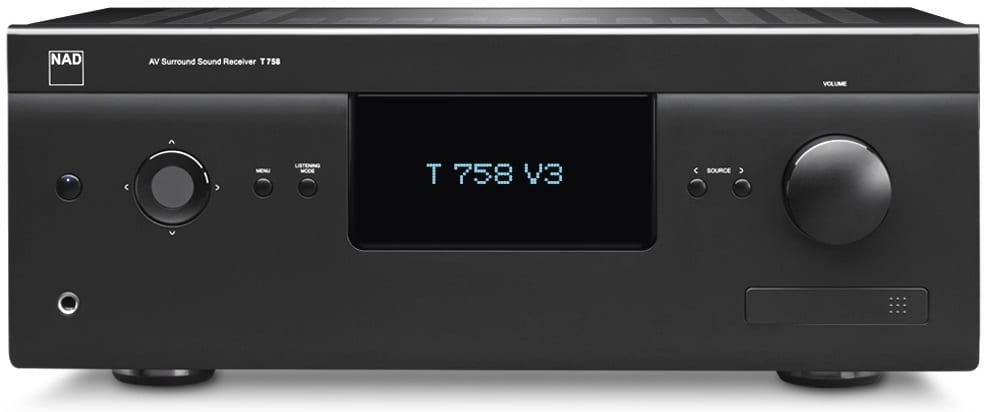
NAD T758 V3
The biggest advantage of this model is its versatility, we can make upgrades to the receiver, so there is no need to worry about the device becoming obsolete over time. With the help of the room correction system, we can improve the sound according to the conditions of the room. Equalizer room correction programs are useful if we have provided the ideal acoustics in the room previously. Acoustic treatment requires special acoustic sound-absorbing panels and diffusers. It is important that bass sounds do not predominate and that echoes do not alter clear sound. If the room acoustics are appropriate, using the room correction software we can further refine the sound, and the acoustics become excellent, providing hassle-free times to enjoy our favourite movie or music.
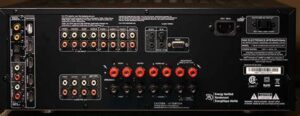

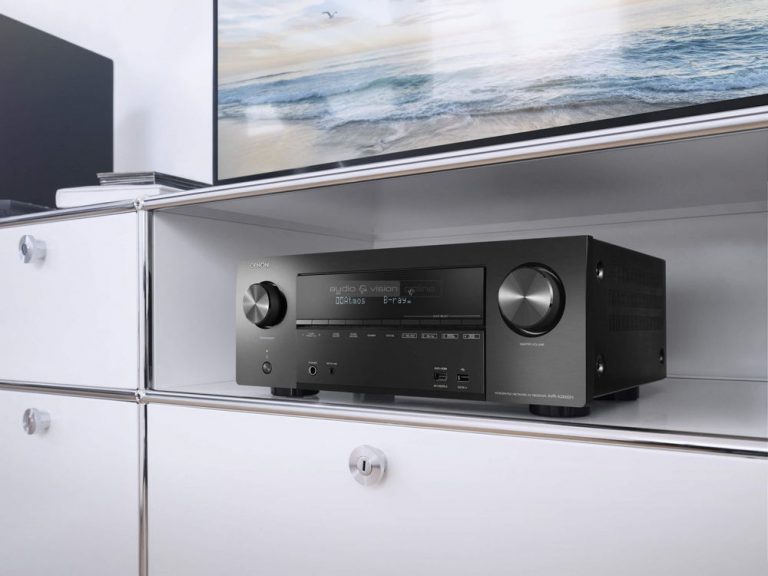
The T758 V3 was designed by combining VM130 video and AM230 audio modules, Ultra HD video and Dolby Atmos features. It has USB, Wi-Fi, as well as Bluetooth connectivity. With the V3 Receiver, the manufacturer regrettably replaced the previously used Audyssey room correction system (which was quite convenient to handle) with a bit of a weird Dirac Live LE room correction software. This acoustics improvement software seems much more complicated than was the Audyssey program. The V3 received only three HDMI as well as two digital audio inputs (plus an ARC compatible output). Three HDMI is enough to serve a TV set-top box or a Blu-ray player, and even a streaming video player (Roku, Apple TV, etc.), but also a game console. Old, composite video inputs are completely missing, but that’s not a big downside. A second zone can also be controlled and is capable of stereo and multi-channel performances. The 12-volt trigger output and RS-232C sockets, plus an infrared remote control are also included.
It is also possible to use the TuneIn Internet radio via the BluOS function, so the FM tuner has been abandoned.
Reasonable price – top quality
NAD, a British-Canadian audio brand, first became famous for its legendary 3020 stereo integrated amplifier. It is also part of the Lenbrook Group, which also sells PSB speakers and Bluesound streaming audio products, offering dual-channel and products capable of surround sound.

The T758 V3 is made in a classic NAD style with a smooth front panel and the least possible of controls. Apart from the volume, navigation and menu keys, only the source up / down and the listening mode selection switches are available. The buttons are very small, but you can also control the device via a remote control or using a new control APP. The remote control has a simple, ergonomic layout.
With twice the rated power of 110 watts, NAD is one of the few manufacturers to provide specifications based on all channels. Suitable for accessing a 5.1.4 system, but the maximum 7.1.4 configuration is also available, completed with two additional external power channels.
The VM130 / AM230 upgrade module includes all of the above video and audio connections as well as a USB port. Thanks to Modular Design Construction (MDC) technology, the circuits for the various functions are hosted in replaceable modules, so there is no need to replace the receiver itself for an upgrade, just replace the given module.
Ultra HD passthrough has up to 60 frames per second, 4: 4: 4 colour sampling (in other words, no colour compression) and HDR10 image optimisation to cope with.
Dirac Live
Dirac Live is capable of full pulse response correction, but limits the frequency response corrections to frequencies below 500 Hz. Expect the bass range be in most dedicated rooms with the biggest impact on performance.
-

 Bass acoustic wall panels with double leather membrane83 € – 260 € +Vat
 -
 3D acoustic diffuser 70x70x10cm122 € – 139 € +Vat



Most receivers have a combined auto-tuning and room correction programs. Dirac works differently: the speaker settings must be entered manually by the user and only room correction is performed. Therefore, the speaker characteristics must be specified in the Speaker Configuration Menu for this receiver, and then the amplifier channels must be assigned to the pitch or rear speaker in the Amplifier Menu. This is a bit unusual to tell the truth. Failure to set both menus properly may result in the Dirac software not “hearing” its pitch or rear speakers and may result in error messages!
Running Dirac was not as easy as most AVRs. The VM130 module on the back panel must be connected to the USB socket of the device. The USB microphone preamplifier can also be connected directly to the computer, although the firewall and antivirus software may need to be disabled for Dirac to recognise the receiver, and the AVR and computer must be on the same local network.
You can save up to three versions in the software and select them on the receiver’s interface.
Sound
During testing, the receiver was connected to Dali Rubicon 6 floor standing speakers, JL Audio Gotham G213 V2 subwoofer, and a Panasonic DP-UB9000 Blu-Ray player.
After on-site correction and adjustments, we experienced a reasonably neutral sound with no material errors. For Dirac, the most obvious difference was the improvement in bass. The frequency balance in the room was acceptable, if not flawless, and the speakers were pretty neutral. Impulse response correction was rather fine, and as far as room correction goes, this fineness is a real advantage.
We started testing with the live-action fantasy adventure film The Little Mermaid of 2018, and then chose the exciting thriller-crime series Mindhunter offered by Netflix. The receiver produced vivid, clear, delicate and spacious sounds. The dialogues were detailed and clear. We experienced an airy and extensive stage image. The basses were intense and full, we got a natural, dynamic and balanced sound production.
We listened to the hit “Bed” of Joel Corry and David Guetta after that. During our musical test, we had a tight, vibrant experience. The high frequencies were vivid and clear, and the middle and deeper ranges were also ideal.
Bluesound was easy to install, with 16 supported streaming services available, Pandora was not one of them, but Radio Paradise was a good replacement.
-
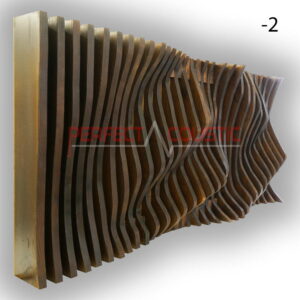
Parametric Wall Art Panel (Diffuser)327 € – 426 € +Vat
-
Wood Acoustic Diffuser 60x60x6cm108 € – 140 € +Vat


Specifications
Power: 110 watts (8 ohms, 2-channel drive); 60 watts (8 ohms, for all channel control), automatic room correction: Dirac Live LE, video processing: 4K dubbing, HDR10, 4: 4: 4, 60 fps, size 17.13 x 6.81 x 15.81 , weight 15.4 kg, video inputs: 3 pcs HDMI 2.0a, audio inputs: 2 pcs coaxial digital, optical digital (3, 1 front), stereo analog RCA (4, 1 front), 7.1 channel analog ( 1), Ethernet (1), USB (1) connections, video outputs: HDMI 2.0a (1), audio outputs: stereo analog (1), 11.1 channel preamplifier (1), headphones, RS-232 (1), 12 volt trigger (1), connections, IR (1 on, 2 outputs).
Conclusion
This home theatre receiver really delivers what the manufacturer promised. You can expect great surround sound, clear, powerful tons, and detailed performance if you choose this device. The Direc Live room correction settings are a bit cumbersome, and you need to specify the speaker information and room characteristics separately for this program to work properly. The exterior looks typical of NAD design, so it’s no surprise. We can get premium quality at an affordable price with really great sound.
G.H.
Written by Róbert Polgár