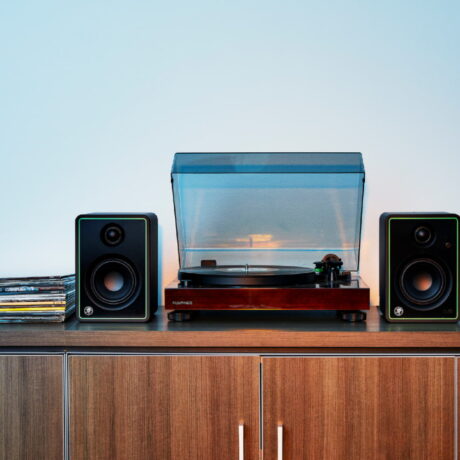
Testing the Denon AVR-X2700H AV-receiver
Denon has become one of the best manufacturers of AV receivers and is extremely popular. This time we tried the Denon AVR-X2700H. The first thing that caught our attention was the design, which has hardly changed compared to the AVR-X2600H. However, it has undergone some small changes compared to its predecessor. The X2700H supports 8K resolution, but the number of HDMI inputs is reduced from eight to six. The number of HDMI outputs remains unchanged.
-

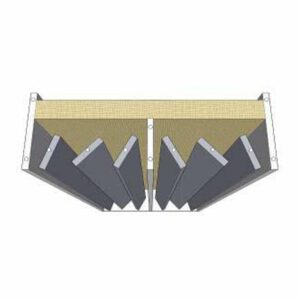
 Sound traps with diffuser- If a good look is important146 € – 155 € +Vat
 -
 Flexi acoustic panel with adjustable wooden slats194 € – 287 € +Vat



Denon AVR-X2700H features
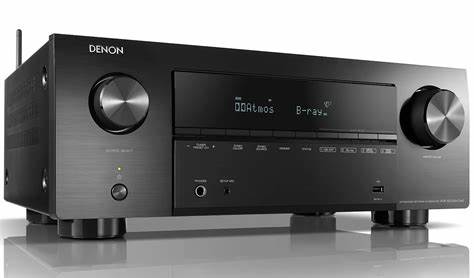
The channel configuration is the one of the previous model. There are seven channels, and the output power reaches 95 W with 8 ohm speakers and 125 W with 6 ohm alternatives, so it is possible to achieve 7.2 and 5.2.2 channel systems. PlayStation 5 and Xbox Series X game consoles can also be connected to the amplifier.
This Denon device has a very pleasant sound for any type of movie or music. The receiver masterfully transmits sound from one speaker to another, helping you to fully immerse yourself in the scene. I was impressed with how the Denon AVR-X2700H controlled the depth of the two subwoofers in the 7.2-channel configuration, and how clear the sound was reproducing the sound of special effects. Denon has been a major player in the home theatre receiver category in recent years. This is not at all surprising, as the brand’s units have not disappointed us either in our tests so far.
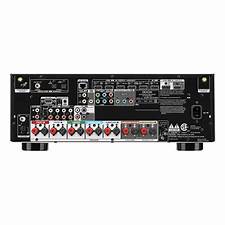
There may be only one HDMI 2.1 certified input, but the other five were not overlooked. All are compatible with Variable Refresh Rate (VRR), Quick Frame Transport (QFT) and Auto Low Latency Mode (ALLM), the latency-minimizing technologies to meet the needs of next-generation contents.
It also handles the full suite of HDR standards, with HDR10+, HDR10, HLG and Dolby Vision technologies. Both HDMI outputs are also 2.1 certified, so those lucky enough to have both a TV and a projector in their home theatre system can enjoy 8K/60Hz and 4K/120Hz when using both. eARC (Enhanced Audio Return Channel) is also supported.
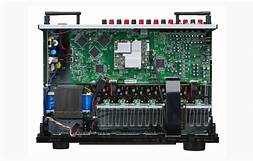
For 3D sound formats, the AVR-X2700H is not as high quality as the higher-end models, but Dolby Atmos, Atmos Height Virtualization, DTS:X and DTS Virtual:X sound formats are supported. For those wanting to decode IMAX Enhanced and Auro-3D soundtracks, you’ll need to opt for the Denon AVR-X3700H, or an even more serious AV receiver.
Voice control is available via Alexa, Google Assistant and Siri-a compatible devices, as well as AirPlay 2, HEOS, Spotify and Tidal services.
One of the great new features on this device is that Denon’s 2020 X-Series AVRs are now “Roon-tested” devices, meaning Roon music playback is also possible.
Bluetooth connectivity has also been revamped, so the AVR-X2700H can control audio to wireless headphones at the same time as its speakers.
Sound
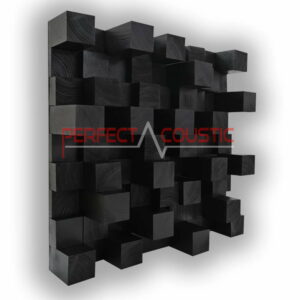
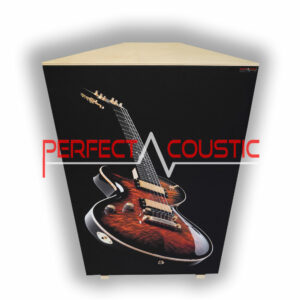
The testing site was a large cinema room with acoustic panels on the walls and ceiling. Diffuser front panels as well as printed panels ensured the right sound quality. Cube bass trap panels were used in the corners. The acoustic curtains not only improved the sound, but also act as a blackout curtains, which is an important requirement for a room designed to fulfil the needs of the seventh art. Although the Denon amplifier we tested has a room calibration system, it is not enough to achieve perfect acoustics. If the walls and glass surfaces of the room are not treated acoustically, it is not possible to achieve optimal sound quality. Room calibration programmes are only effective if rooms are also acoustically treated. If this is done, then fine-tuning with calibration software can produce a truly flawless sound. We tested the amplifier with a pair of Fyne Audio F302 loudspeakers.
-
Skyline diffusers 60x60x14cm118 € +Vat
-
Decorative acoustic panels (corner bass)175 € +Vat


As a member of Denon’s 2020 X-Series, the AVR-X2700H also features Audyssey speaker calibration technology, just like its bigger brothers. However, MultEQ XT measurements require only a few tweaks before we’re completely satisfied with the setup.
If we had to use one word to describe the receiver’s sound, it would be ‘confident’. The AVR-X2700H doesn’t try to overly impress as a lower budget amp, with explosions and thunderous lows delivered.
The two woofers in the 7.2 configuration ring out when you need them to, and never spoil the crystal clarity of the music or the surround effects.
Even when listening to music, we experienced a clear, waving sound with deep, powerful basses.
Judgment
This AV receiver should be the pride of the manufacturer. There are many cheaper AVRs out there, but none like this one. The sound improvements over its predecessor are striking. Denon’s engineers have done it again. In terms of appearance, it looks almost identical to its predecessor, but that’s okay. The familiar Denon shape has already won the approval of many. The sound quality is excellent, with good dynamics, clarity, three-dimensionality and sufficiently intense bass notes. It’s a great device, the only drawback is perhaps that it’s not compatible with Sonos products.
G.H.
Written by Róbert Polgár