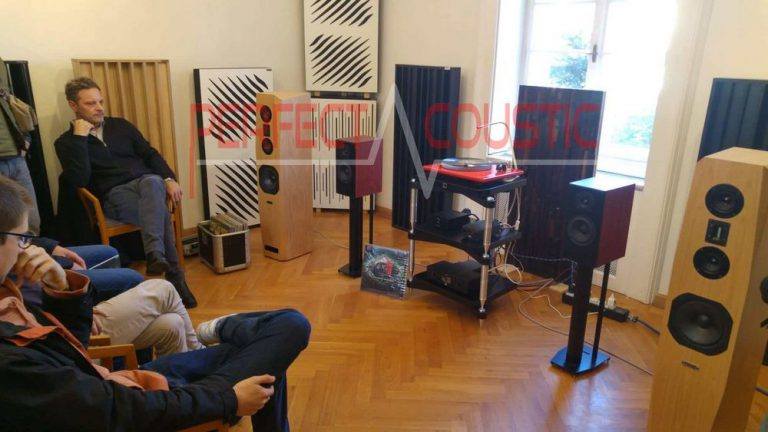
absorber
The science of acoustic absorbers:
⦁ Why is it worth designing the sound first of all?
⦁ Solution to the problem of acoustics
⦁ How to determine sound absorbers
⦁ Comparing different bass traps
In this overview we summarise how the broadband acoustic absorbers operate and how to choose one the most up to the job. Furthermore, we give basic guidance where to use them and how to compare them with other sound absorbing products available on the market.
This webpage does not want to make you become an expert, we just try to provide general information on the science in question and its intended application. Read our posts and visit our new products on our site. Search for any acoustic items, and find the right device for you to create the terms and conditions of ideal acoustics.
-


-
 Flexi acoustic panel with adjustable wooden slats194 € – 287 € +Vat
 -
 Sound absorber leather membrane49 € – 253 € +Vat
Why should we design sound?
Generally speaking, the design of the sound helps to improve clarity and to make communication audible and clear.
To put in a simpler way: we need to circumvent the disorder of sound to hear the message clearly. In a church the real challenge is to hear the spoken word; in an airport it is a matter of rather important flight information.
The safety warnings shall be heard by all workers in a factory. And we just want to try to decrease the echo in order to make the communication between staff and customers more comfortable in a hotel lobby or a restaurant.
In an audio studio the control of acoustics allows us the same way to create a predictable result in order to record quality sounds.
Without acoustic design
Without acoustic design the sound bounces from the walls, floor and ceiling and reaches the point where the room is not able to dampen and diffuse energy.
For example, there is a big difference between a teacher talking silently in a classroom and somebody shouting in a room full of excited children. If they exceed the natural threshold of noise absorption of the room, the conversation and communication will not be clear and audible, thus the room’s acoustic design require much more attention.
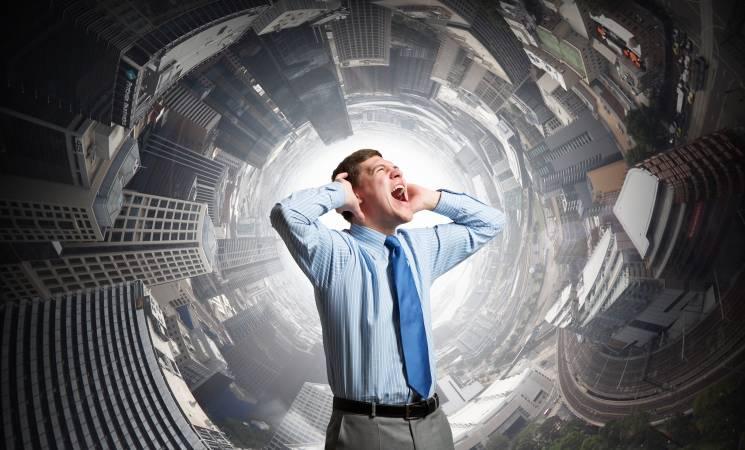
The excess of noises generates an effect called “ear fatigue”, when we must highly concentrate while listening, and we must talk louder in order to hear and overcome the other competing sounds.
-
-


-
3D Sound absorbing panels – Size: 60x60x10cm 3kg49 € – 59 € +Vat
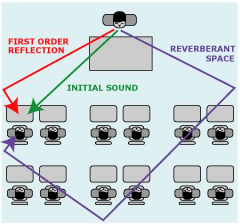
The bouncing sounds compete the rest:
The acoustic absorbing panels control the echo:
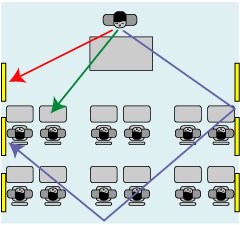
We call these reflected sounds reflections. These can be of primary or secondary reflections, which are reflected from the near surfaces, or secondary reflections, which generate an echoing field. Usually the sound pressure or the direction of the reflected sound must be captured or diverted by mounting acoustic panels on the wall or hanging them from the ceiling.
By adding sound panels you can easily modify the echoes of the sound’s area, which results in a comfortable and relatively effective communication.
The generic types of echo are as follows:
Direct sound
The direct or initial sound is the sound coming from the mouth of an individual, from a device by which the music is played, or from the loudspeakers. This sound is usually the most important.
The reflections occur when the sound reverberates on the near walls. As they usually arrive some seconds after the direct sound, they may disturb the so-called phase interruption or comb filtering, and may make the understanding of human voice more difficult.
The control of the primary reflections is usually the target of the first action plan. Decreasing the reverberation period usually depends on the sound absorption of the room. The more broadband acoustic absorbers you mount the more energy they will dampen.
-
-
Absorption panels with diffuser-Two in one62 € – 296 € +Vat
-
3D Sound absorbing panels – Size: 60x60x10cm 3kg49 € – 59 € +Vat
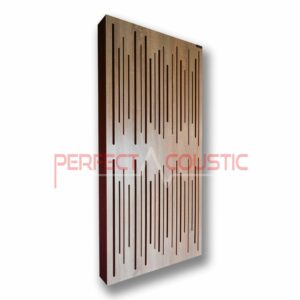
Rattling echoes without broadband acoustic absorbers
If you clap your hands in an empty room you will hear fluttering sounds on the wall, the ceiling and the floor. Mainly the parallel wall surfaces cause the echo of clapping and allow the retention of the echo.
It is easy to decrease the fluttering echo if we put broadband sound absorbers opposite each other on parallel walls so that the echo wont last.
We mentioned broadband absorbers above, because the clapping is over 1000Hz, therefore we can dampen this frequency more evenly only by using broadband absorbers. Nevertheless, we cannot control the reverberation of lower frequencies.
Secondary reflections or echoes
You can hear the long echo in an old church building. If we go back to the past before the area of modern loudspeaker systems, we can observe how churches created the big and spacious surround sounding using deliberate reflections on walls to convey intended messages. It is particularly effective if you listen to a choir or Gregorian songs.
Also classical music makes advantage from a long and echoing space as it enables the musical instruments to stimulate the room. If we control the reverberation periods we increase the sound absorption capacity of the room.
The more sound absorbing panel you mount the more energy they will reduce.
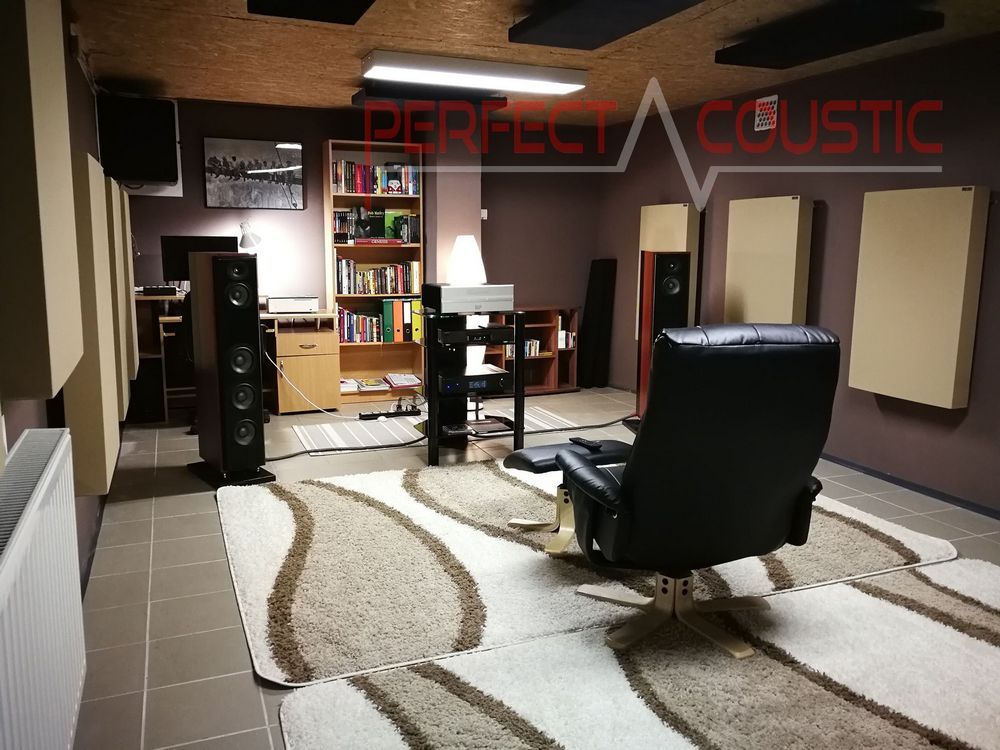
Sound absorption with acoustic panels
When you play music loud put your hands on the loudspeaker, the floor, the near furniture or even on the window and you will feel the vibrations. The sound energy goes through the solid materials or fluids in the form of vibrations and when it sets the medium in motion it will inevitably produce heat.
The sound absorption is in fact an energy transfer function. The scientific term of this phenomenon is called thermodynamic transfer.
The use of materials is very important
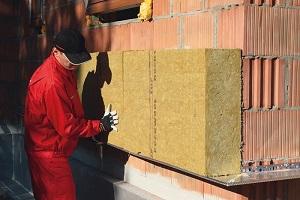
When the sound penetrates the broadband absorber, the acoustic rock wool fibres within the panel are vibrating. The same thermodynamic transfer is generated inside the rock wool.
As we talk about a high-density fibrous structure the sound that goes through it will significantly decrease and will transform to heat due to its density. Therefore, by using broadband absorbers the echo will quickly decrease in a room.
Absorption of low frequencies using sound absorbing panels:
In the world of acoustics it is difficult to decrease the basses or the low frequencies due to their long wavelength. Without sufficient density bass tones will go through almost everything.
That means that the production of basses not only requires more energy (think of the tail of the elephant and the mouse) but it is also much more difficult to stop it once it has started (think of trying to stop a freight train compared to a bicycle).
The high frequencies cause less trouble as the shorter wavelength sounds are less stronger than the low ones. That is why the light specific weight foams dampen this sound energy easily, but basses go through them easily.
The simplest way to dampen low frequencies
The simplest way to attenuate low frequencies is increasing the thickness and density of the panels. We can more or less estimate the necessary thickness of the sound absorbing elements by using a calculation of quarter wavelength.
But the actual acoustic testing usually shows surprising results. Unless the panel is dense a great amount of bass tones will pass through smoothly.
This is the problem of low-density foam, it is ineffective in absorbing bass notes. On the other hand, if bass traps are too dense, the high frequencies will be reflected back into the room.
The sound absorbing elements are designed for both, as they provide balanced absorption.
The bass notes contain more energy:
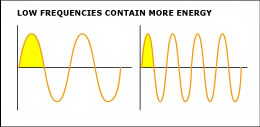
These two charts compare the low and high frequencies with the same amplitude. Take into account that the longer low frequencies contain more energy as it is shown in the yellow area. As there is more energy in the sound wave it will be more difficult to attenuate or regulate the bass.
Calculation of quarter wavelength
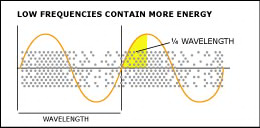
We call “calculation of quarter wavelength” the mathematics used for prediction of the low frequency performance of elements, where the thickness of the panel equals to the 1/4 of the wavelength of the lowest frequency, plus the factor of the angle of incidence. The thickness of the panel plays an important role.
-
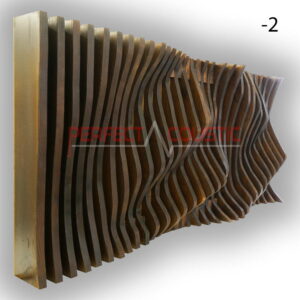
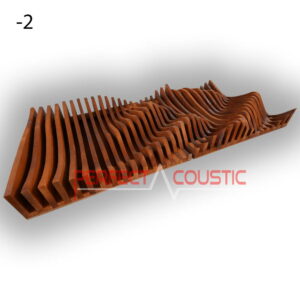
Parametric Wall Art Panel (Diffuser)327 € – 426 € +Vat
-
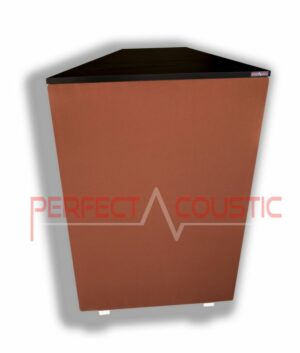
 Corner bass trap with membrane-108x64x23cm135 € – 142 € +Vat
 -
 Bass acoustic wall panels with double leather membrane83 € – 260 € +Vat
The solution to acoustics issues
The actual process can be simplified in four steps:
⦁ Specify the scope of the problem.
⦁ Choose the appropriate acoustic element to solve the problem.
⦁ Estimate your available budget.
⦁ Install the sound absorbing device in the strategically most important areas for a maximum efficiency.
First you should find the place in the room where the sound is distorted by identifying the frequency that created it. In other words, you should consider what frequencies you try to dampen before you simply mount some bass traps on the walls and expect them to operate the way you wanted.
For example, it is very important to balance the sound absorption of the whole sound range in a studio, in order to obtain optimum sound recordings also using different audio systems. In this case the goal is to create a neutral listening environment.
The desired linearity is important in the room also in case of home theatres where you should ensure that all central channels that are in dialogue be crystal clear.
In a classroom, an auditorium or an office, the human voices are transmitted, therefore the acoustic design must take into account also the original sound.
Human voice:
The next charts show the measurements of sound of a typical human voice, and show how the sound energy changes depending on loudness. You will notice that by the increase of sound level the energy will increase in the middle band.
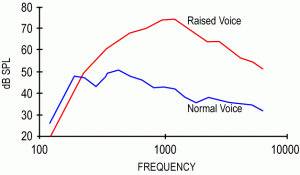
The chart shows the range of a typical male voice that keeps the most of the energy in the middle range between 400Hz and 1000Hz and the harmonics extend to 3500Hz.
If we take a closer look at the chart, we can see that the most energy of human voice is between 300Hz and 1500Hz.
This is why it is important to choose the appropriate panels for the task, and opt for the one, which actually operates within this range, such as the broadband acoustic panel.
If only the sound of speech is needed to be designed, we do not advise to choose the leather membrane that dampens the sound only under 600Hz, since the higher frequencies would freely flutter in the room.
Similarly, it would be a wrong decision to choose an acoustic foam, because these attenuate the sound only above 800Hz.
In this case the best choice is to install broadband bass traps:
In the case of absorbers usually the sound absorption coefficient determines the selection of the appropriate sound absorption panel. The specification shows that if the value of sound absorption is 1,0 in a given frequency, the acoustic panel will be able to dampen the sound 100% in the given frequency. The value 0.5 means absorption of 50%.
About acoustic foams:
The broadband absorbers are made of high-density acoustic wool of 90kg/m3, while most of foam panels are made of low-density polyethylene of 10-15kg/m3. As people cut the most part of foams to create an artistic design the density of the foam will further decrease due to the huge air gaps.
The final density of the majority of foams is no more than slightly above 8kg/m3. As the density of broadband acoustic panels is more than 10 times of that, no wonder that the polyethylene foam cannot reduce basses.
Don’t believe if anybody states that the acoustic foam or xps can dampen basses even with results measured for bass traps. Physics is not belied, whatever publicity a writing receives.
In my point of view, the most important components of acoustic design are sound absorption and noise reduction measures. In order to have a calm and peaceful night or day, provide adequate sound insulation. The free movement of sounds in the air must be controlled.
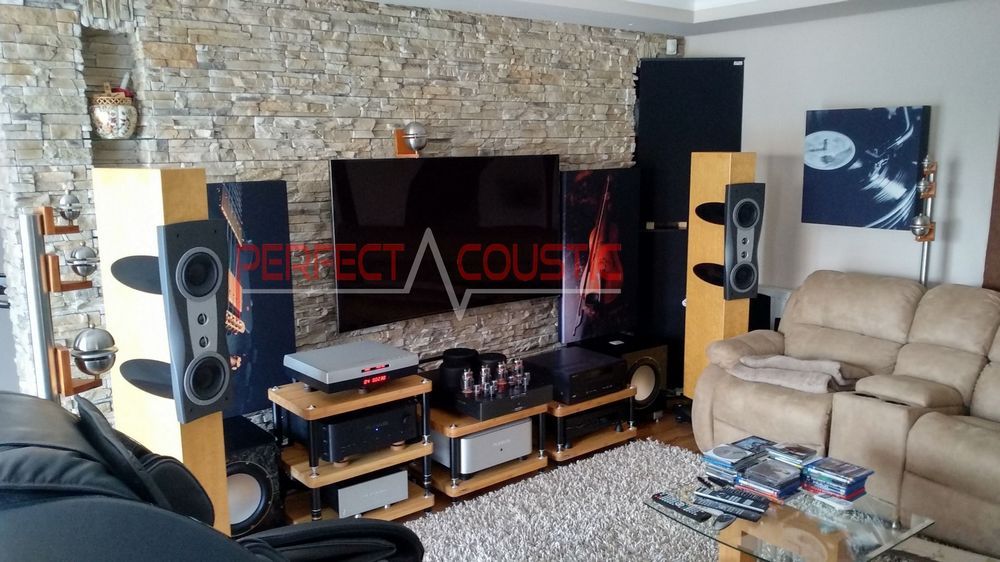
Let’s move on
If we go further and compare the sound energy with that of the most acoustic panels, we can clearly see that the broadband elements provide absorption of 95% up to 100 Hz, while the foam panels can attenuate 95% at not lower than 1000Hz.
This emphasises the importance of dampening our target frequency in the appropriate frequency range. (Most of the popular manufacturers offer a wide range of products. Before taking a decision check the technical description, the use of material and the weight of the product!)
Depending on what kind of frequency or noise you try to diminish, you have to choose a bass trap which operates within a given frequency range. The thickness of acoustic panels is usually of 6-11-13-20 cm.
People usually use the thinner acoustic panels for absorbing the middle and high frequencies while the thicker panels from 11cm to attenuate the low frequencies.
-
-
 Bass sound dampening panels with wood membranes91 € – 268 € +Vat
 -
Acoustic ceiling tiles70 € – 80 € +Vat
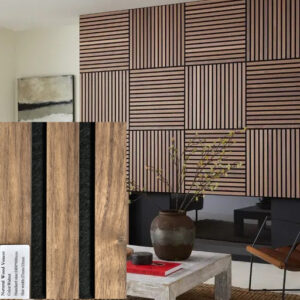
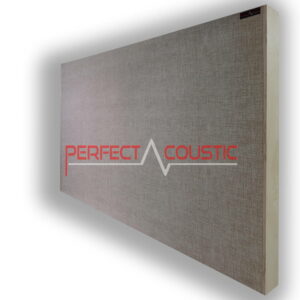
Selection criteria for acoustic absorbers:
1. 6cm for higher sound range in offices and restaurants or for rattling echoes in studios
2. 11cm in locations where music is played, and for controlling the primary reflections, where we want to attenuate in a broadband range.
3. 13cm 20-30-40cm for absorbing bass notes, where the broadband soundproofing devices do not dampen the low frequencies sufficiently.
Example 1:
Suppose a dot matrix printer causes a problem in an office, where the high frequency echo is reflected from the wall and causes annoying reverberation. As this grating sound is mainly in the higher frequencies, the thinner broadband soundproofing of 6cm would be the correct option.
Example 2:
Take a multifunctional living room or hall used for dance classes and for community meetings sometimes. You have a limited budget. Broadband sound absorbing devices in thickness of 11cm, which provides excellent sound absorption in the whole bandwidth of the sound range, may be the right choice and are very efficient for absorbing excess of musical sound.
How to design sound absorbers
Put a small acoustic panel in a high-school and you will probably not hear any changes. Put one million acoustic panels on the walls and ceilings and the sound will be completely dead. Most of the room designs is somewhere between these two. That is why it is recommended to follow the so-called reverberation curve.
The reverberation period indicates how you cover the walls and absorb sound. The efficiency will slowly increase by rising the quantity of absorbers on the walls or by increasing the number of acoustic panels in the given room.
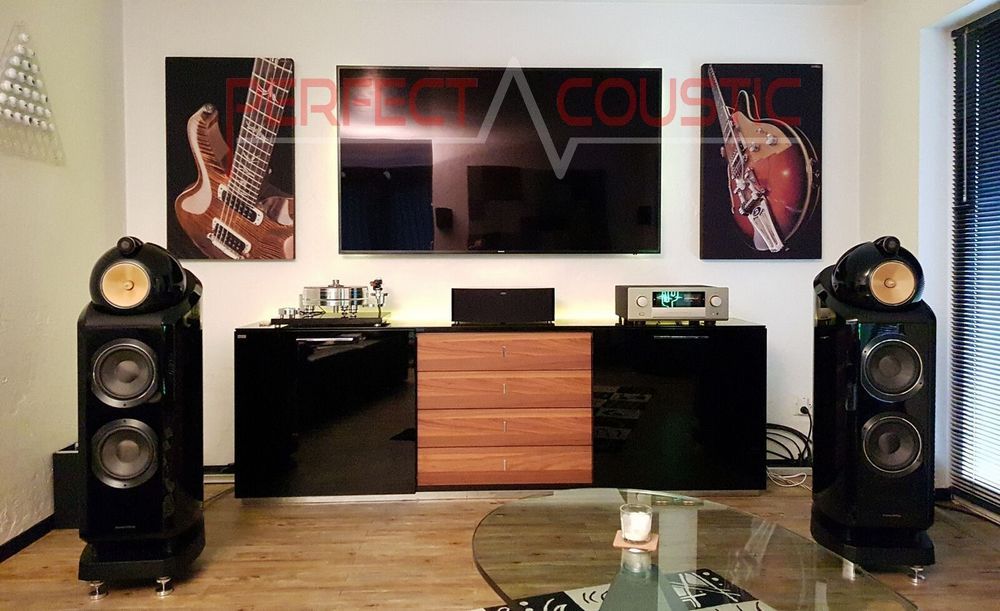
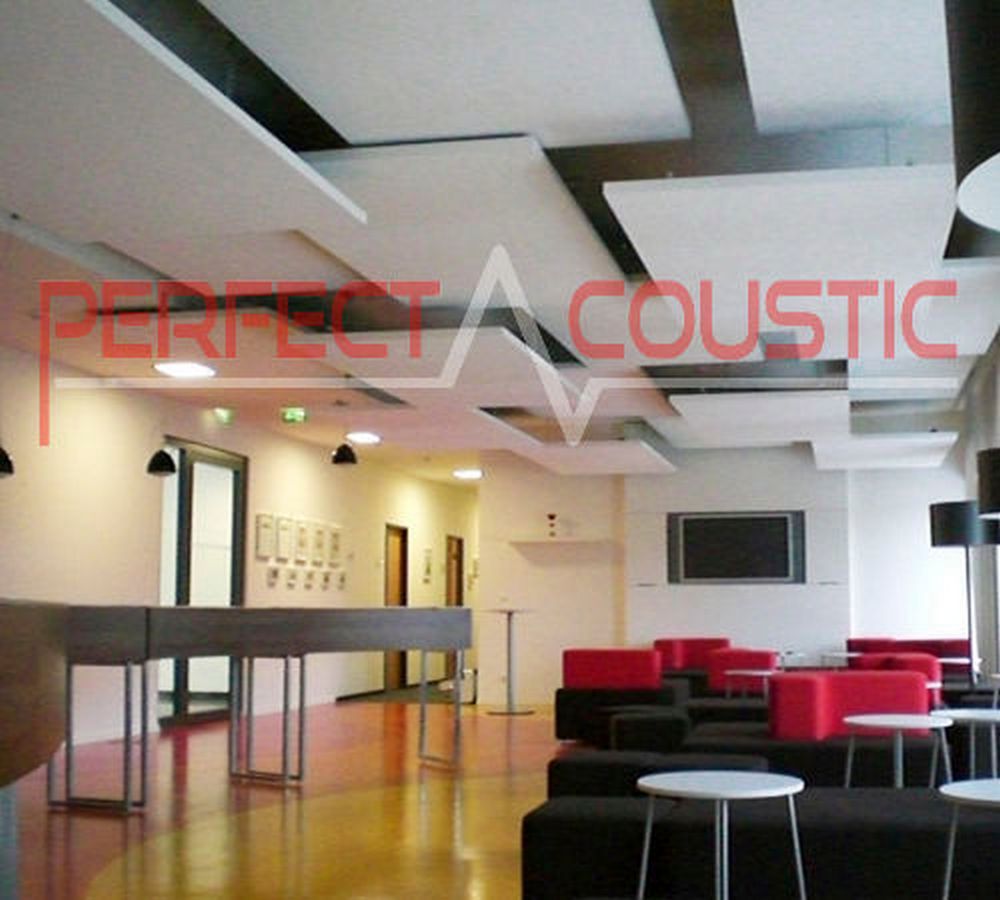
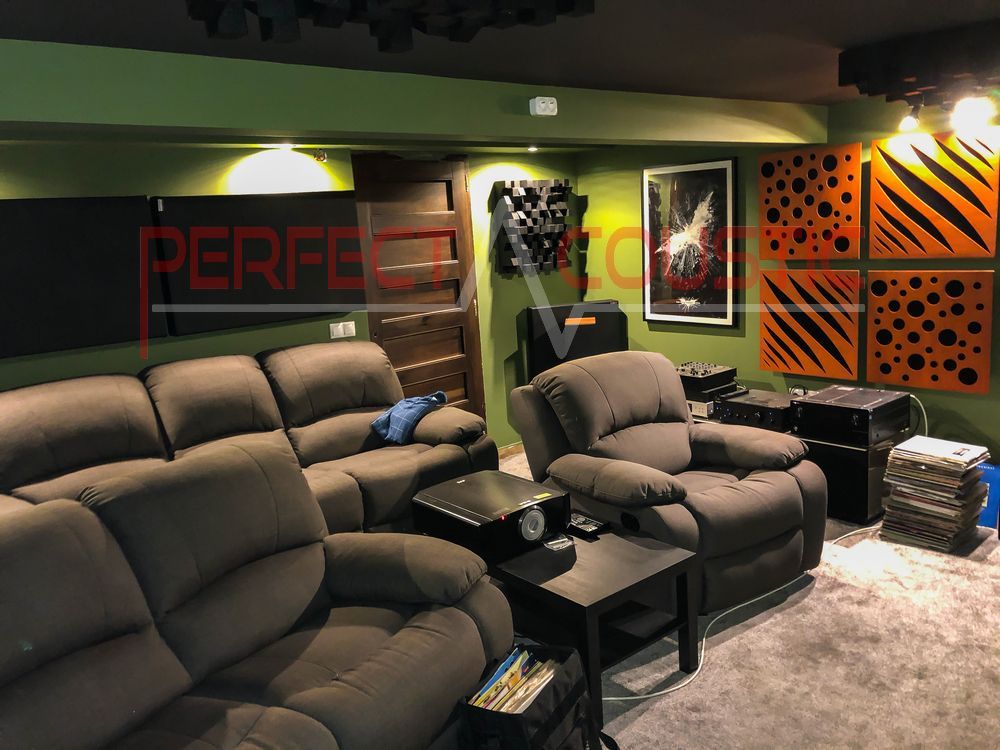
Reaching a certain point, from a cave-like echoing chamber the room slowly turns into a comfortable environment. Thereafter, each time the effects will decrease when you add further acoustic panels, but adding acoustic panels does not mean anymore significant advantage. That means you have reached the threshold of over-dampening.
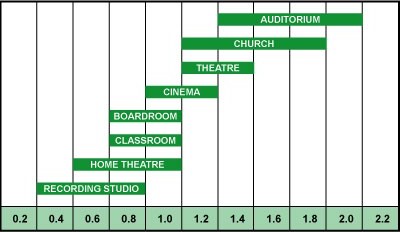
There are no absolute rules regarding “how many sound panels you should mount in order to achieve the required noise dampening work”. In case of “human voice” where the maximum clarity is required, the acoustic engineers usually talk about a reverberation period shorter than 1 second. In bigger rooms it can be longer.
In case of a concert hall designed for classical music, the long reverberation is usually preferred because the instruments combined create an atmosphere by stimulating the room and the audience. It can also be approached from the perspective of design, the better the acoustic device, the more pleasant the view!
-

-
Giga bass panel with membrane94 € – 129 € +Vat
-
Broadband sound panel-It can even be used as a ceiling element44 € – 241 € +Vat
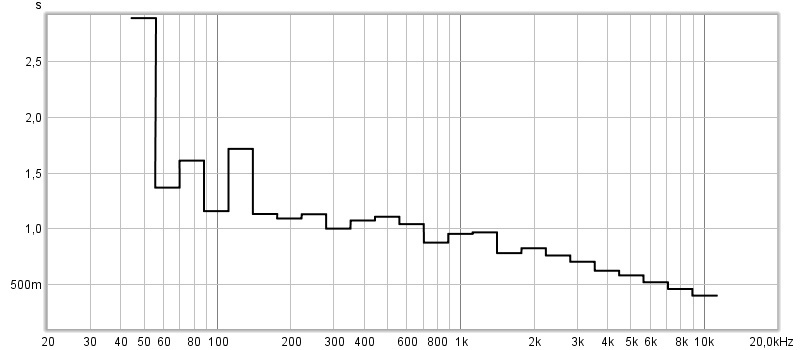
The reverberation time curve:
Reverberation period in halls of different sizes
The application, the common sense and the preferences determine the extent of use of wall sound absorbers. For example, if you work in a studio, you can create your own music in a rather enjoyable work environment.
On the other hand, if you design acoustics for a church, where the spoken word and rock bands alternate on stage, the bigger sound absorption devices are recommended. Start from 10% with a total coverage of 20%. If you are unsatisfied simply add some more. It is really so easy.
Comparing different acoustic absorbers
When dealing with the acoustics of a room, we usually try to design the sound reflections by mounting diffusers on the wall and ceiling where they are the most effective. This is usually performed with absorbers. You can choose from several types of acoustic panels on the market. Each of these items has its strength and weakness.
In order to make your selection work easier, we reviewed and compared each product, so go ahead and have fun reading.
Don’t forget to ask us for help wish you design your own studio or home!
G.H.
Written by Róbert Polgár
If you have any comments, please contact the author.