Q Acoustics QB12 Subwoofer Review
What is Q Acoustics Q B12?
The Q B12 is the company’s first subwoofer with a 30cm drive. For distortion-free, muscular and clear bass, Q Acoustics has combined this drive with an ultra-low-distortion 220W Class D amplifier and a 50mm audio coil and a closed, reinforced brace housing.
Design
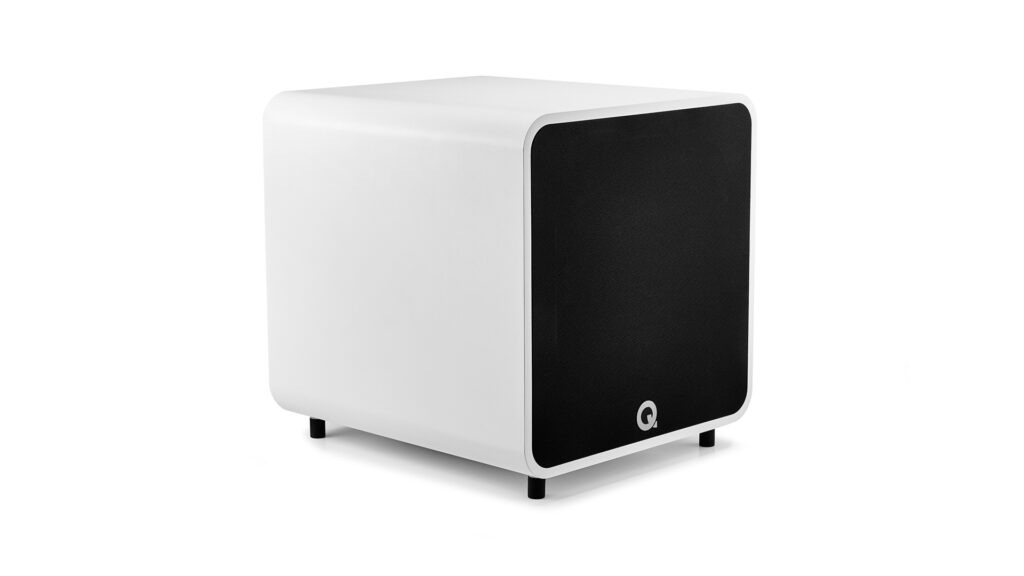
Available in black or white with a matt or glossy finish. Beneath the grille is a 30cm drive powered by a 220W Texas Instruments TPA3255 Class D amplifier, and a 36mm thick baffle provides maximum rigidity for the drive.
A unique die-cast aluminium heat sink on the back panel cools the amplifier and provides a stable power supply. The stiffener built into the MDF cabinet provides mechanical stability and reduces unwanted vibrations and resonances of the device during operation.
There’s also a 0/180 degree phase switch on the back, as well as level and cross changers that facilitate integration with other speakers; nevertheless, various settings are also needed to be made on the AV amplifier of course for best results.
It weighs 21.5 kg, has an impeccable construction and a closed cabinet. The QB12 is cube-shaped and quite large in size, so it requires relatively large space. This subwoofer works great with the Q Acoustics 3000 series.
-
 Skyline diffusers 60x60x14cm118 € +Vat
 -
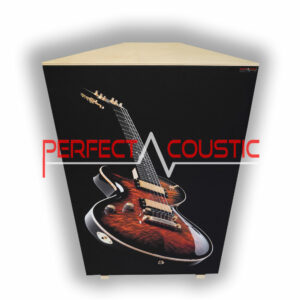
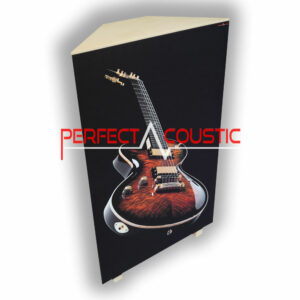
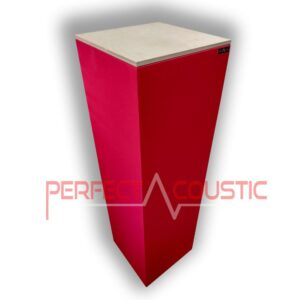
Decorative acoustic panels (corner bass)175 € +Vat
Connections and control
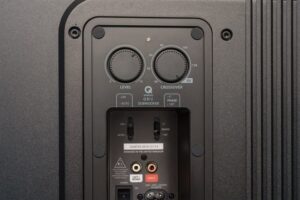
The metal front cover of the Q Acoustics Q B12 is fixed with magnets. Connectors and some controls are located on the back of the device in a small recess.
In this hidden area you will find a socket for the dual power cord and an on / off switch. There is even a phase switch and another to turn on or auto select the device, the latter activating Q B12 when it receives a signal.
A couple of RCA line-level inputs are located here, one of which acts as a mono / LFE input. Above the recessed area, there are two rotating discs to control level and crossover.
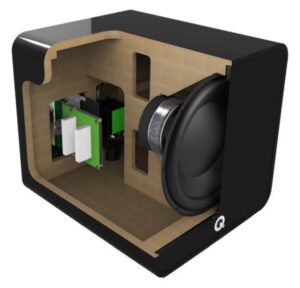
The Class D digital amplifier has a rated power of 220 W, a maximum power of up to 440 W, and a frequency response of 28-300Hz.
The Q B12 does not have an onboard EQ, but nowadays any decent AV receiver should be able to handle subwoofer integration and alleviate room sound errors.
Setup and operation
The Q Acoustics Q B12 is extremely easy to set up, mainly due to its easy connection and control.
Sound quality
A smaller room served as site for our test. The subwoofer was paired with Q Acoustics 3020i speakers and a Denon amplifier. Sound-absorbing leather membrane panels and rustic sound diffusers have been added to the walls of the room to improve acoustics quality, and membrane corner elements in the corners ensured the right sounding.
The Q B12 has proven to be a serious subwoofer: combined with the pair of Q Acoustics 3020i bookshelf speakers, the Q B12 provided for a balanced system supporting the other speakers and filling the lower frequencies where necessary. The basses were subtle, very detailed, and dynamic. Due to the closed system, we could expect very sensitive basses.
The subwoofer provided accurate, detailed and truly dynamic sound.
The Q B12 work is subtle: it tries to create a cohesion instead of blowing our hair with pounding basses.
Sometimes, however, it seemed that it would have been beneficial to have more, lower-end extensions with one touch. Most of the time, the subwoofer did a great job, but occasionally, when really intense depths would have been needed, the lack of raw power was obvious. The SVS SB 16 subwoofer performs better at this level.
-
Cubic acoustic sound panels80 € – 109 € +Vat
-
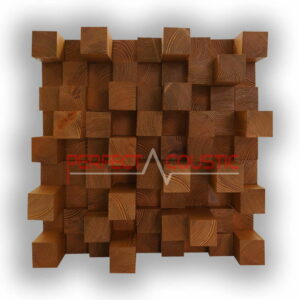
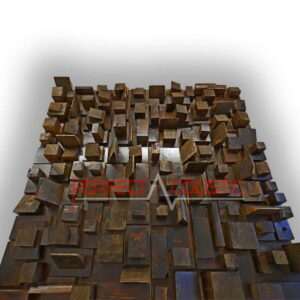
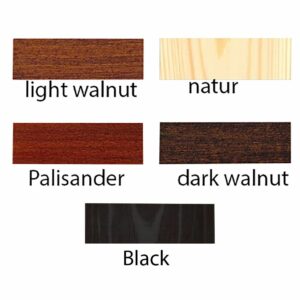
Rustic-Vintage sound diffuser-Made of real pine65 € – 129 € +Vat
Why use a subwoofer?
The primary function of a subwoofer is to produce sounds for low frequencies. In order for such a low frequency sound to be emitted with the required force, a large diaphragm and a large diaphragm deflection are required. For a smaller speaker, the diaphragm needs to move more to produce the same volume. Therefore, the speakers are larger than the other speakers. A larger subwoofer can produce lower frequencies. Although many brands offer 3-way speakers, only subwoofers can radiate pounding, wall-shattering bass. If you like intense bass sounds while listening to music or watching movies, you might want to get a subwoofer as well. It can also be said that with 2 subwoofers, the frequency response and stereo stage image will be even more optimal and balanced, and of course the performance will be much higher. In addition, the 2 subwoofers configuration provides ideal sound quality for a variety of listening positions. It matters a lot where we place the subwoofers though. It doesn’t matter how far you place them from the listener position or the wall. If possible, do not place it in the immediate vicinity of walls, it is recommended to keep a distance of 20-30 cm between the wall and a subwoofer.
Summary
It’s a high-performance subwoofer that does the job it was designed to do: increase the low-end performance of the brand’s Concept and 3000i series speakers. The Q B12 integrates seamlessly with the 3010i or 3020i speakers, creating a balanced low-frequency sound.
G.H.
Written by Róbert Polgár