bass traps description
The role of bass traps:
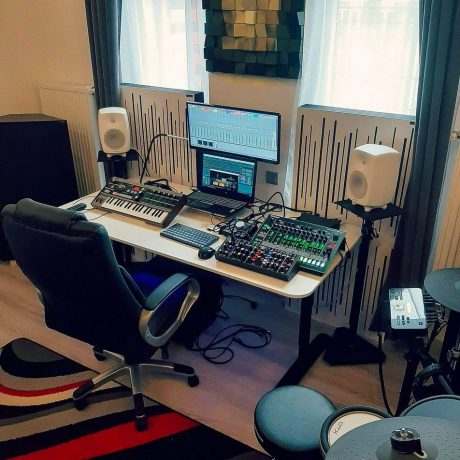
Acoustic treatment is undeniably an essential task. In a home studio, the best solution for undisturbed studio work is to use deep sound absorbers.
For a clear sound and excellent acoustics, a standard bass trap, a membrane bass trap, or a polar bass absorber, is a must. Using such absorbers, we can perform the main and at the same time the most difficult task in acoustic treatment: isolating the basses.
Why is it necessary to isolate bass notes?
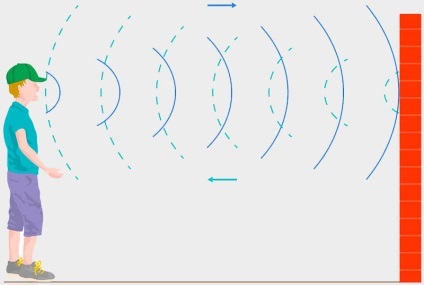
For bass notes below 150 Hz, the reflection of the wave of sound from a surface to the space increases. In practice, this means that we do not hear the true quantity and quality of the low frequencies, but the sound of the room. Distorted basses can ultimately damage the music experience, especially the audio recording quality in a studio, therefore, it is absolutely necessary to improve the acoustics of the given room.
-

 Corner bass trap with membrane-108x64x23cm135 € – 142 € +Vat
 -
 Giga bass panel with membrane94 € – 129 € +Vat
 -
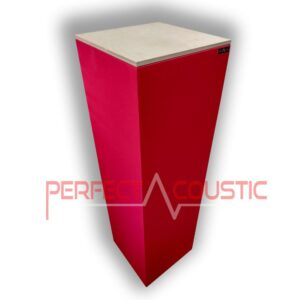
Bass absorber corner element 108x64x23cm115 € – 123 € +Vat
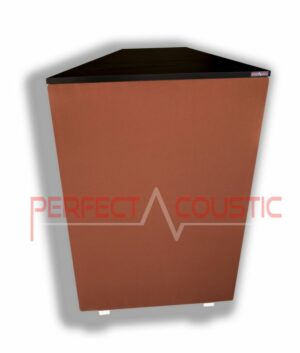
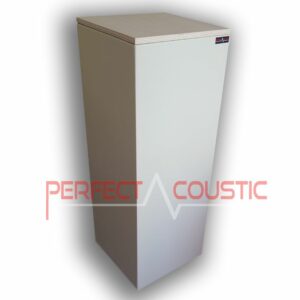
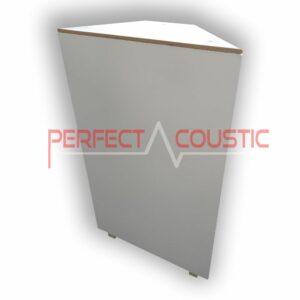
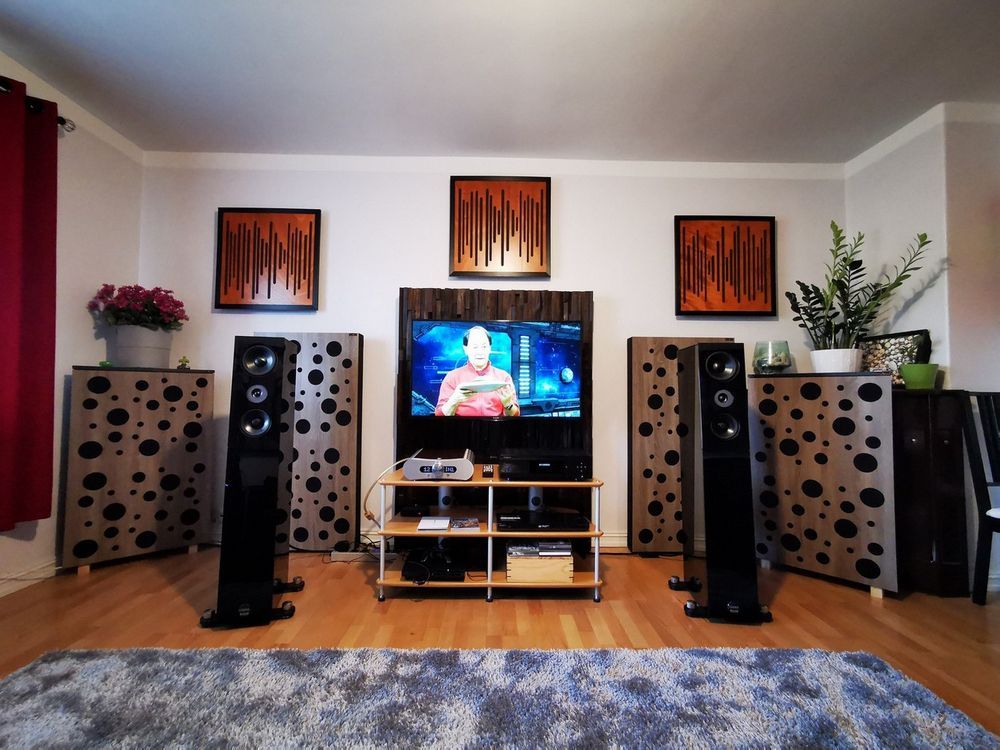
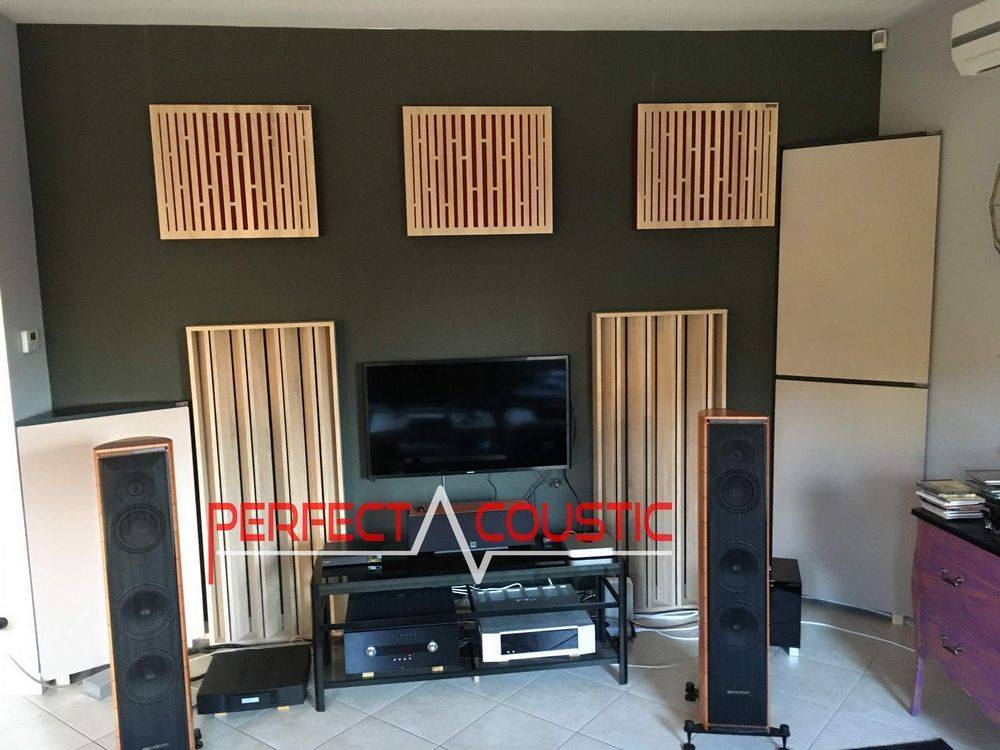
At Perfect Acoustic we work with the best wood material to build bass traps. The corner bass traps are designed for the corners and for a better fitting. These types of acoustic panels can control the sound energy, and help creating the best acoustic conditions in our own audio recording studio, but they can also be used in our homes.
How can membrane and corner bass traps help in the acoustics treatment?
Membrane and corner bass traps are primarily used to suppress echoes and standing waves. The bass trap and the corner bass absorber are acoustic elements that reduce excessive sound waves in a narrower frequency range. Unlike other absorbing acoustic panels – broadband acoustic panels cannot effectively attenuate bass frequencies – membrane bass traps absorb basses significantly more efficiently in the low frequency range. The most problematic area is the corner, as it is where most of the deep sounds are accumulated. Without handling the acoustics, the sound wave is reflected back into the space from the smooth, hard wall surfaces, creating an unpleasant echo. The best solution to acoustic issues of corners is to use corner bass absorbers. In a studio, we need to control sound energy if we want to achieve the optimum results.
Designed for sound insulation and absorption, acoustic elements are made of high quality material, and their thickness insulate well low frequencies. They are made of real wood and contain acoustic wool, which has also excellent sound insulation properties. Thanks to the careful finish and precise fit, after proper acoustic measurements and precise adjustment, we can get a cleaner, more airy, more lifelike and more pleasant acoustics at home, or in a studio.
Use of materials
Many people think that buying the best quality, top price studio monitors and standing speakers for your studio is enough for optimal acoustics.
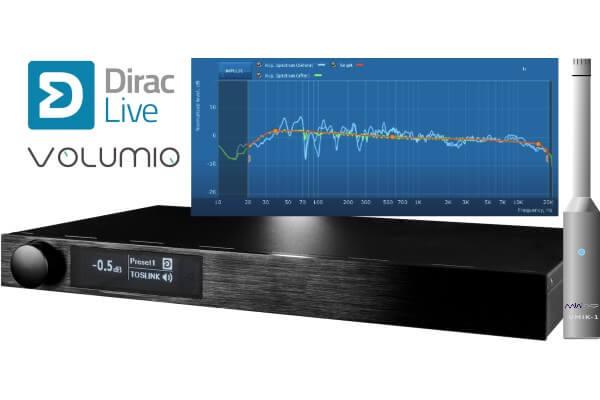
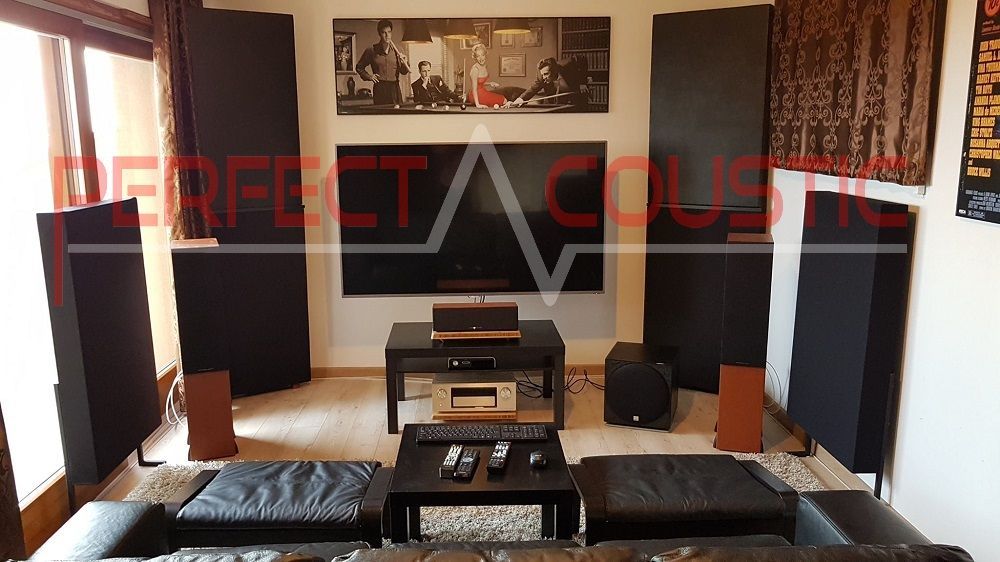
However, this is not the case. Even with the best audio equipment, speakers cannot provide the best performance if the acoustics of the room are poor. The AV-receivers come with room calibration software, but these programs can only control the sound pressure, they cannot eliminate the echo of the space. In an audio studio, the proper placement of the studio monitors and the speakers is also very important as it largely determines sound quality. Properly tuned speakers, optimal sound pressure, and flawless acoustics work hand in hand to reach optimum possible sound quality. Our corner bass traps are designed for the improvement of the acoustics in any room, studio or home cinema.
-

-
Cubic acoustic sound panels80 € – 109 € +Vat
-
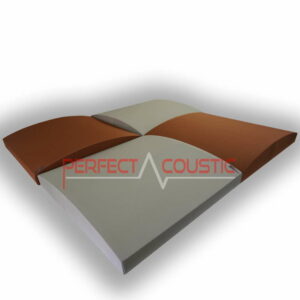
3D Sound absorbing panels – Size: 60x60x10cm 3kg49 € – 59 € +Vat
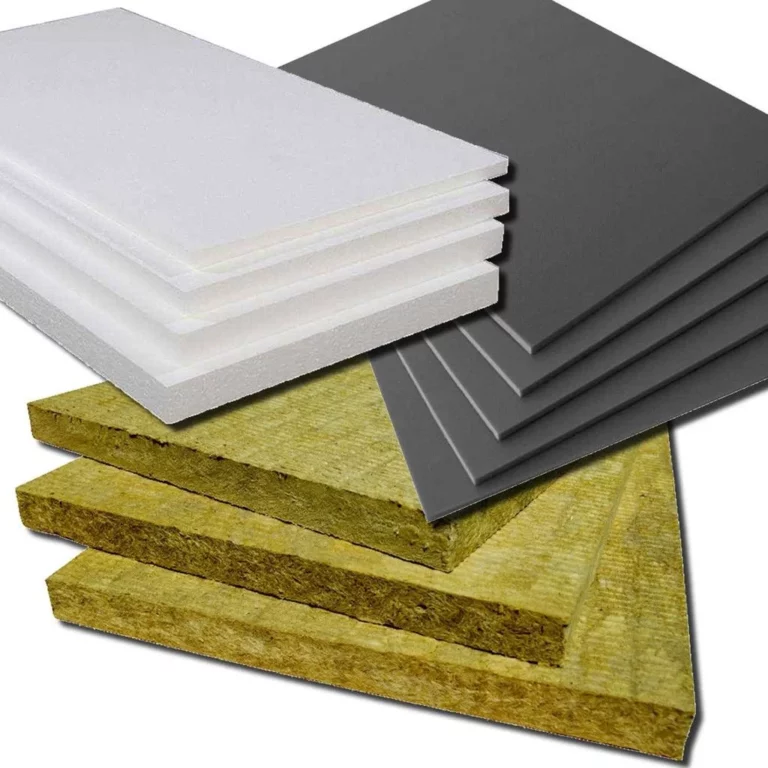
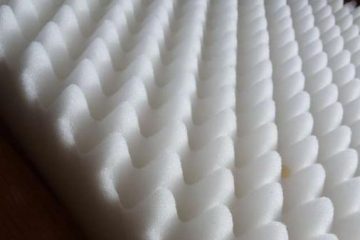
Why are foam, acoustic foam, polystyrene not effective in improving room acoustics and to insulate deep tones?
Bass sound waves are longer than the length of high frequencies. The insulation of bass notes requires acoustic panels made of other types of materials for the walls, and for the corners. Deep basses can only be tamed by dense, fibrous, high-density materials, or an acoustic membrane, such as real wood with acoustic wool lining.
When we build a studio, we often make the mistake of gluing the walls entirely with acoustic foams, but the effect is well below expectations. As a matter of fact, the contrary effect can be observed, as the soft, lightweight foam, polystyrene, acoustic foam absorb the higher frequencies, so the low frequencies are more dominant, which we originally wanted to attenuate. Do not opt for cheap sponge and foam panels that are not suitable for deep sound isolation, as these types of panels are not effective at all. In addition, they can only be attached to the wall surface using glue, and the glue cannot be completely removed from the wall surface afterwards. Don’t waste your energy and money on such useless products. On the other hand, the wood absorbers can be simply placed on the walls or in the corners.
How to use membrane bass traps and corner bass absorbers?
- Basses should be muted first in the corners, then on the side walls – especially the front wall – and behind the listening area.
- If possible, do not place bass traps directly against the wall, keep a distance of at least 10 cm.
- We must not forget one of the most important parts of the room, the ceiling.
Because this area is empty, the standing wave can propagate without obstruction, causing large peaks and zeros at low frequencies.
Where can we use bass traps?
- The bass absorbers can be used in a studio, at home, in a theatre, or in a living room to improve acoustics.
- In cases where other absorber panels do not provide sufficient attenuation at low frequencies.
- In places where high frequencies are already over-attenuated against low frequencies.
If you can only buy one thing, you have to choose this!
To achieve excellent acoustics, we need to install multiple panels. If the characteristics of the room do not allow to place the right amount of acoustic panels, it is essential to use a membrane bass trap even in such cases, and corner handling is one of the main tasks!
The bass trap has the following benefits:
- It helps to provide a clearer, smoother, more lifelike sound.
- Best attenuation of the basses, the room fills with real basses required for listening to music or for watching a movie.
- It is a decorative accessory for the living room or the studio.
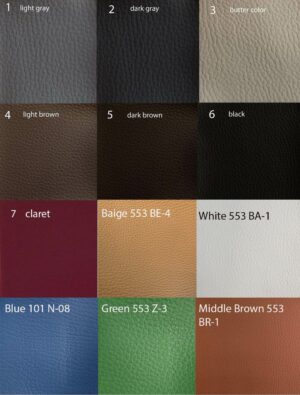
- In addition to creating the best sound, we also pay special attention to the look. We use top quality materials — wood, leather, imitation leather, acoustic velvet, cotton, wool — and we also implement your custom ideas — own photo, printed design, custom size, etc.
Why are membrane subwoofer traps made by Perfect Acoustic the best options?
-
-
Sound traps with diffuser- If a good look is important146 € – 155 € +Vat
-
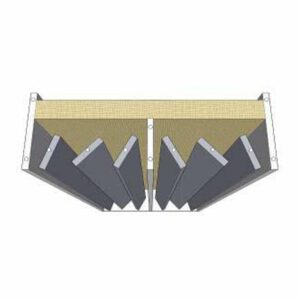
Decorative acoustic panels (corner bass)175 € +Vat
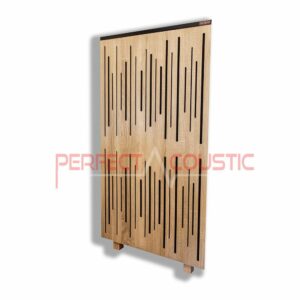
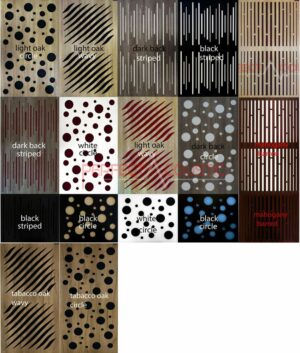
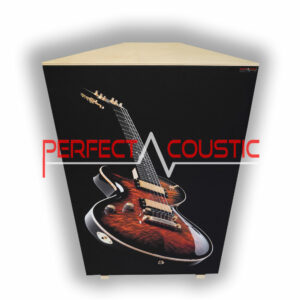
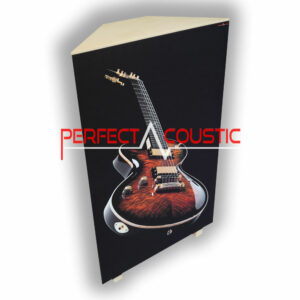
Made with expertise and experience
In addition to our high level of professional expertise, we also use the learn of previous years in the design and manufacture of our products.
With the maximum efficiency reached by our unique technology, we are proud that our bass traps have the highest sound absorption and insulation coefficient available on the market.
Wonderful design and built
When manufacturing our special, deep-based, made-to-measure membrane bass traps, we pay special attention to both, their acoustic efficiency and their aesthetic appearance. In addition to the materials we design and use, it is important that our products match the style of your studio, living room or home theatre.
Practical accommodation, simple setup, effective performance
In addition to acoustic efficiency and aesthetic appearance, we also strive for practical accommodation. Due to their size and weight, our bass traps can not only be mounted on the walls, but also stand on their own or be stable alone in the corners.
Thus, they can also be used as mobile panels.
Our panels are supplied with screws to facilitate wall or ceiling mounting.
What types of materials do we use?
Depending on the type, bass traps can be made of wood or imitation leather. The biggest problem is the dampening of low frequencies below 70 Hz, since fibrous, absorbing materials are not appropriate.
However resonating membrane bass trap sheets made of wood or leather can tame unwanted low frequency sound waves up from 30 Hz.
Wood membranes work between 30Hz and 200Hz, imitation leather membranes mitigates frequencies between 30Hz and 600Hz.
Appearance of our products
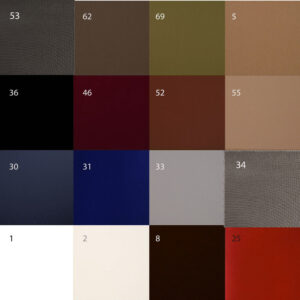
Besides effectiveness, we pay a special attention to design, offering a wide range of styling:
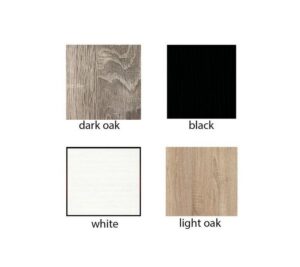
- Acoustic velvet/silk in 16 different colours
- Imitation leather in various colours and textures
- Optional printed designs from our stock
- Own photo option
- Custom made sizes
- Designing hidden absorbers
Importance of materials used:
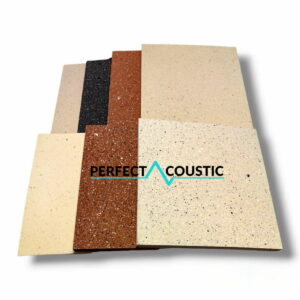
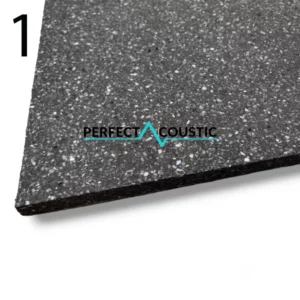
Effective bass absorption requires the right raw materials. Acoustically ideal materials have a flexible, perforated or porous structure and a high bulk density. Such materials include the hardwoods we use, plywood, laminated furniture board, acoustic wool, and textiles designed for acoustic purposes. In addition to its anti-dust properties, acoustic silk is a flexible, durable fabric, as is acoustic imitation leather. Cellular materials, such as styrofoam, are not suitable for either sound absorption or sound insulation.
-
-
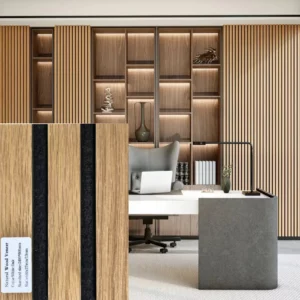
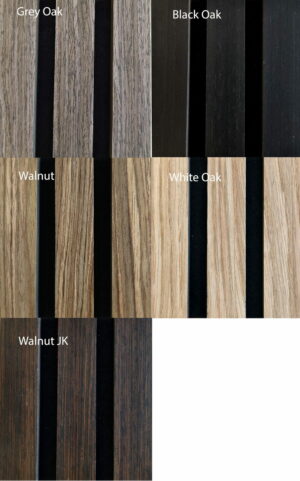
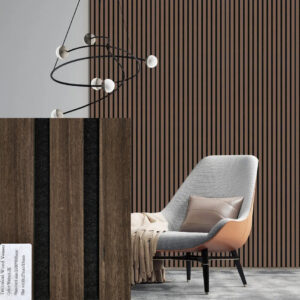
 Flexi acoustic panel with adjustable wooden slats194 € – 287 € +Vat
 -
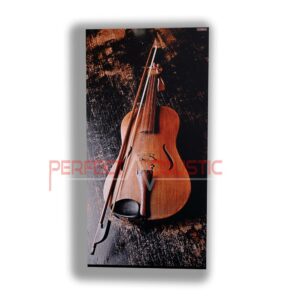
 Wall art panels87 € – 183 € +Vat

We cannot completely eliminate the basses!
Bass sounds are needed for the best and most harmonious sound, for proper acoustics, but you definitely need to manage the range of bass notes so as not to spoil the sound experience. Let’s start with the corners. It is advisable to adjust the amount of bass absorbers to the size and shape of the room. The most problematic in this respect are the smaller, square or rectangular rooms, as the proximity of the walls amplifies the echoes. It is a good idea to seek for an expert advice on exactly how many sound-absorbing panels are needed and where they are recommended to be placed. Excessive attenuation can be avoided as the goal is not to create a so-called “deaf room”. Acoustic measurements can be used to determine exactly where, what kind and how many acoustic elements are needed.
Thanks to the wide range of colours and patterns, as well as sizes, our acoustic sound-absorbing panels also stand out as decorative interior design elements. You will find several excellent absorbent types in our online shop. You can also find a detailed description of the product on the product’s page. If you need more help, please e-mail us. The consultation is absolutely free of charge.
G.H.